Bulk ingredient sourcing

Fruit ingredients that make products taste alive.

Bulk juice concentrates, fruit and vegetable purees, concentrated purees and NFC juices for beverage, brewing, dairy, bakery, confectionery, sauces and food manufacturing programs across the United States.

Three ingredient families

Choose the format that fits the formulation.

Concentrates deliver high soluble fruit solids with less water, purees retain pulp and fruit body, and NFC juices stay closer to natural single-strength juice. The right choice depends on flavor, texture, processing, storage, freight and formulation economics.

🍎

Juice Concentrates

Concentrates are made by removing a substantial portion of the natural water from juice. They provide efficient fruit solids and flavor while reducing ingredient volume.

Buyers commonly compare Brix, acidity, pH, specific gravity, clarity, color, reconstitution ratio and microbiological specifications.

Common uses: beverages, brewing, bakery, sauces, confectionery and fruit preparations.

Browse concentrates →
🥭

Fruit & Vegetable Purees

Purees retain more suspended fruit solids, pulp and fine fibers, giving products fuller fruit body, visual identity and texture.

Technical evaluation can include Brix, pH, acidity, viscosity or Bostwick consistency, screen size, seed status and color.

Common uses: smoothies, yogurt, frozen desserts, bakery fillings, sauces and fruit preparations.

Browse purees →
🍊

NFC Juices

Not-from-concentrate juice stays near natural single-strength concentration rather than being concentrated and later reconstituted.

NFC projects commonly evaluate natural Brix, acidity, pulp or clarity, processing method, storage temperature and packaging.

Common uses: premium beverages, smoothies, cider, brewing, dairy drinks, sauces and juice blends.

Browse NFC juices →
Popular starting points

Fruit-forward ingredients, organized for fast discovery.

Start with the fruit and format closest to your formulation, then confirm the current specification, origin, packaging, certification and commercial availability.

Fruit profiles & commercial reference points

Different fruits bring different solids, acidity, color and texture.

🍎

Apple

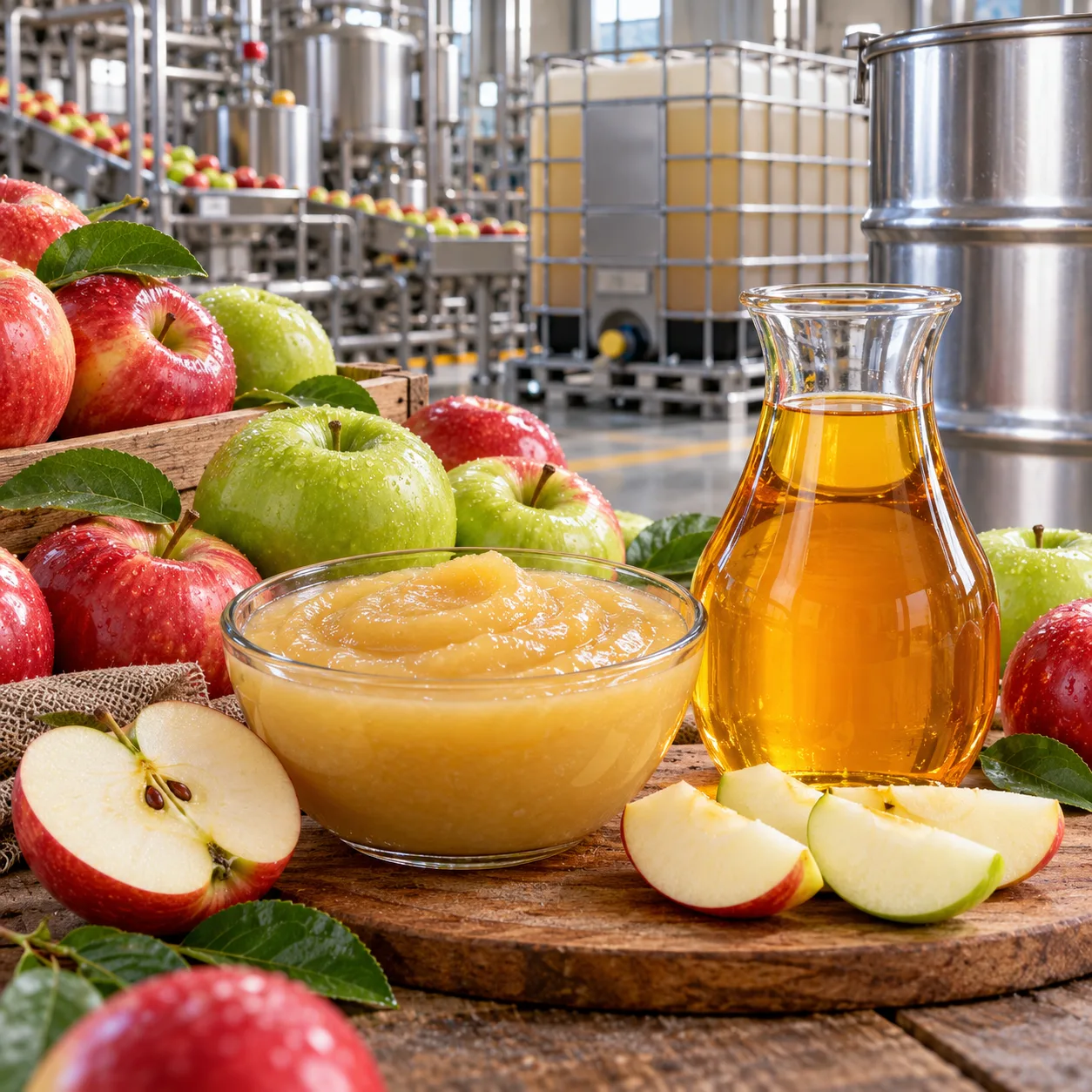
Apple offers mild fruit flavor, natural sweetness and predominantly malic acidity. Its restrained profile makes it useful both as a primary flavor and as a supporting fruit base.

Clarified apple concentrate is commonly supplied around 70° Brix. Commercial specifications may also define malic-acid-based acidity, pH, specific gravity, color and microbiological limits.

Industrial uses: beverages, cider, bakery fillings, sauces, confectionery and blended fruit systems.

🍷

Pomegranate

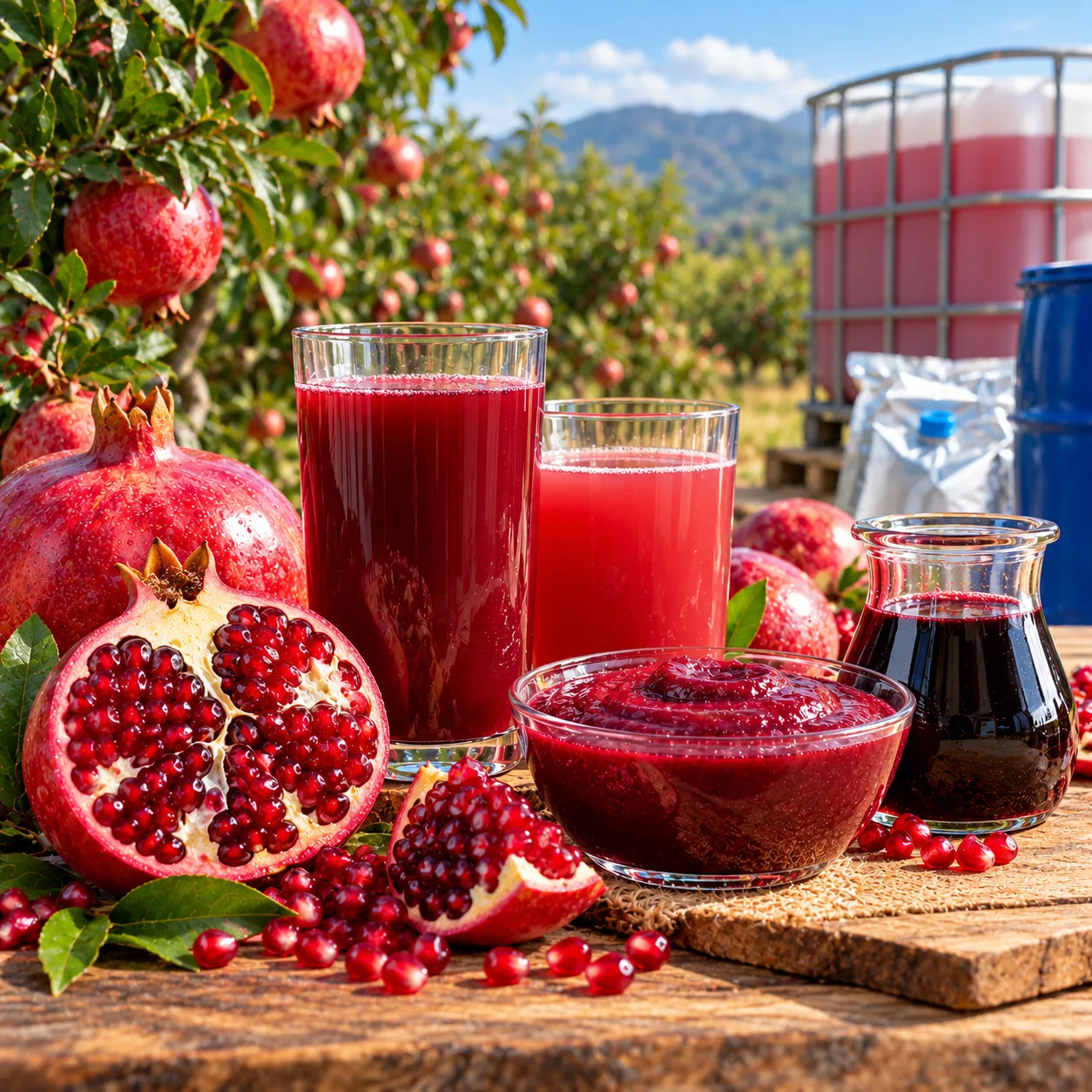
Pomegranate provides dark red color, pronounced tartness and a distinctive sweet-tart fruit profile. It is considerably more acidic and intense than mild fruits such as apple or white grape.

Commercial pomegranate concentrate is commonly available around 65° Brix, with supplier examples showing acidic pH and substantial citric-acid-based titratable acidity.

Industrial uses: functional beverages, cocktails, sauces, dressings, confectionery, fruit preparations and brewing.

🥭

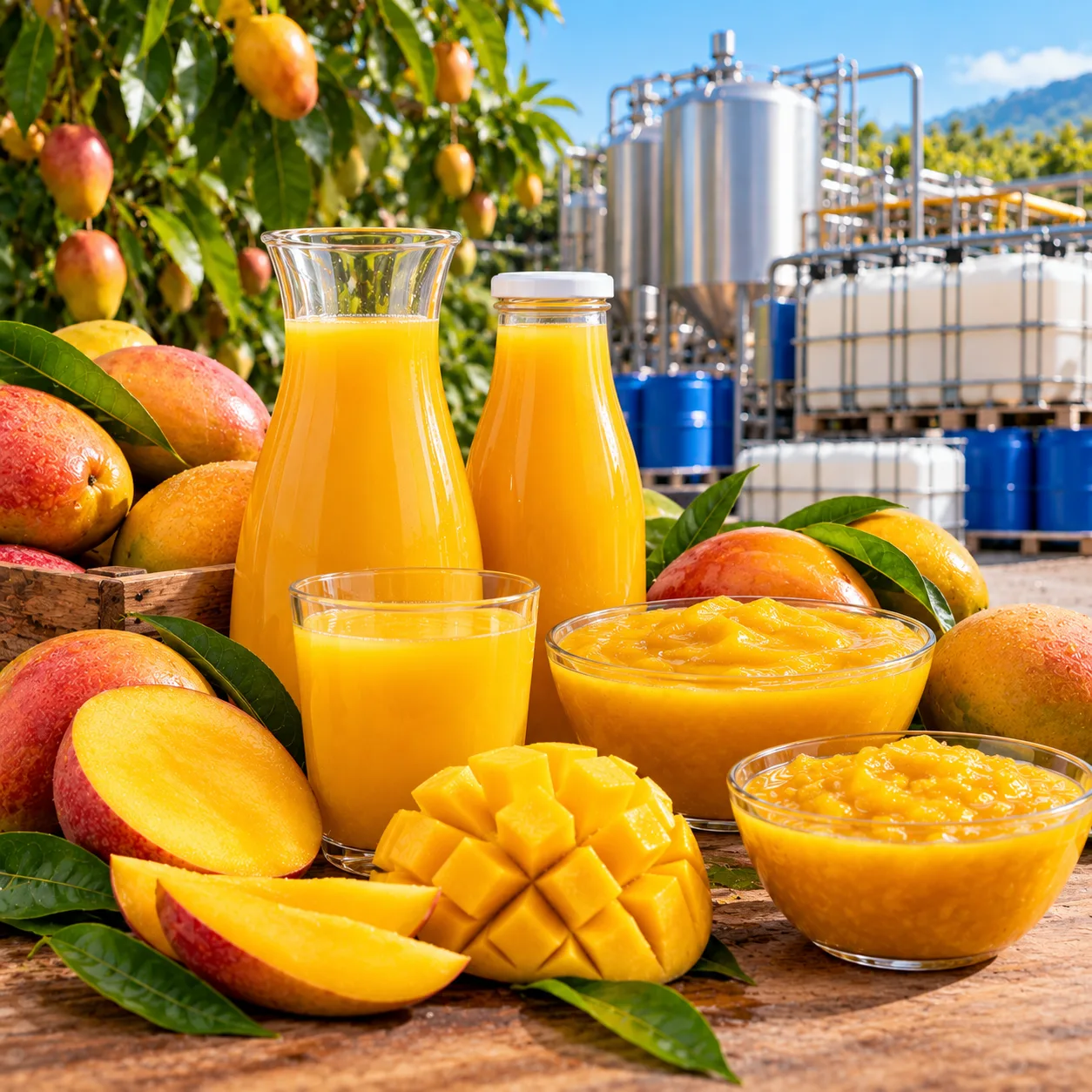
Mango

Mango supplies ripe tropical aroma, yellow-orange color and significantly more body than clarified juice ingredients.

Single-strength mango puree commonly falls around 14–16° Brix depending on variety, while commercial concentrated mango puree is widely available around 28° Brix.

Industrial uses: smoothies, yogurt, beverages, frozen desserts, sauces, bakery fillings and tropical blends.

🍓

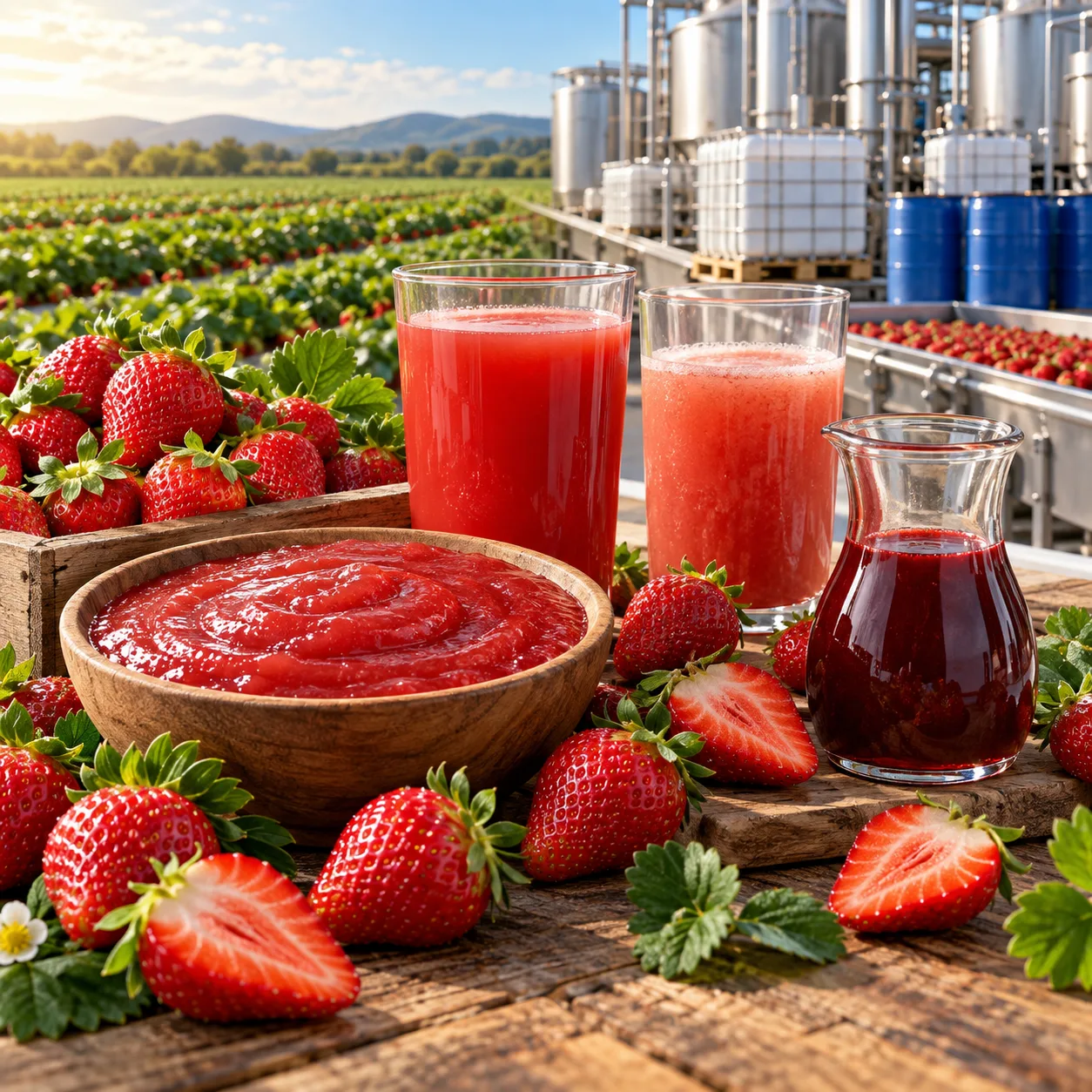
Strawberry

Strawberry puree provides recognizable berry aroma, red color and fine fruit pulp. Seeded and seedless specifications may be available depending on processing requirements.

Commercial single-strength strawberry puree is commonly around 8° Brix, with specifications also covering acidity, pH, screen size, seed status and viscosity.

Industrial uses: yogurt, smoothies, bakery, jams, frozen desserts, confectionery and fruit preparations.

🍊

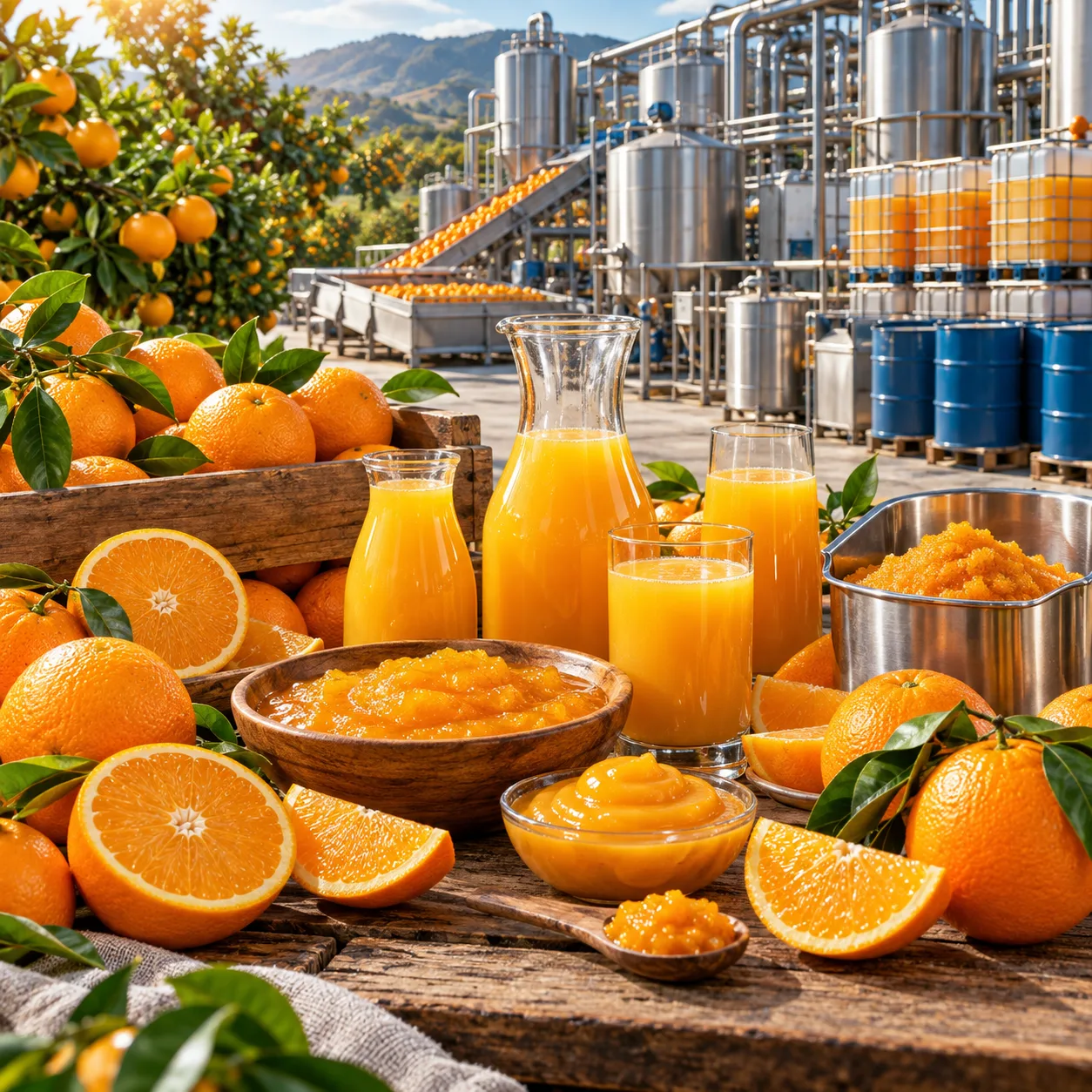
Orange

Orange provides familiar citrus aroma, natural sweetness, citric acidity and varying amounts of pulp or cloud depending on the format.

NFC orange remains near natural single-strength solids, commonly in the low-teens Brix range, while orange juice concentrate is supplied at much higher soluble solids.

Industrial uses: juice beverages, carbonated drinks, dairy beverages, frozen desserts, sauces and brewing.

🍒

Tart Cherry & Passion Fruit

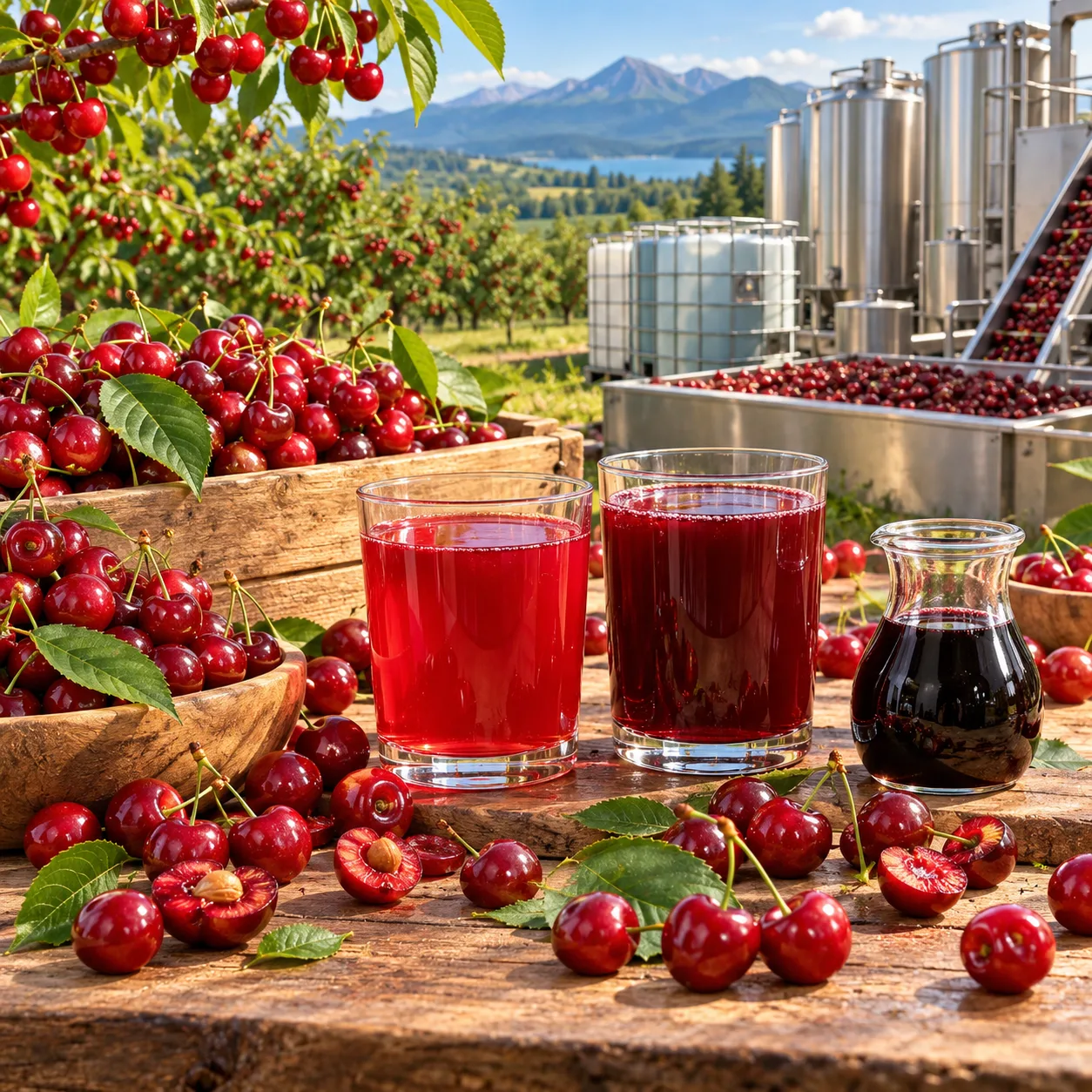
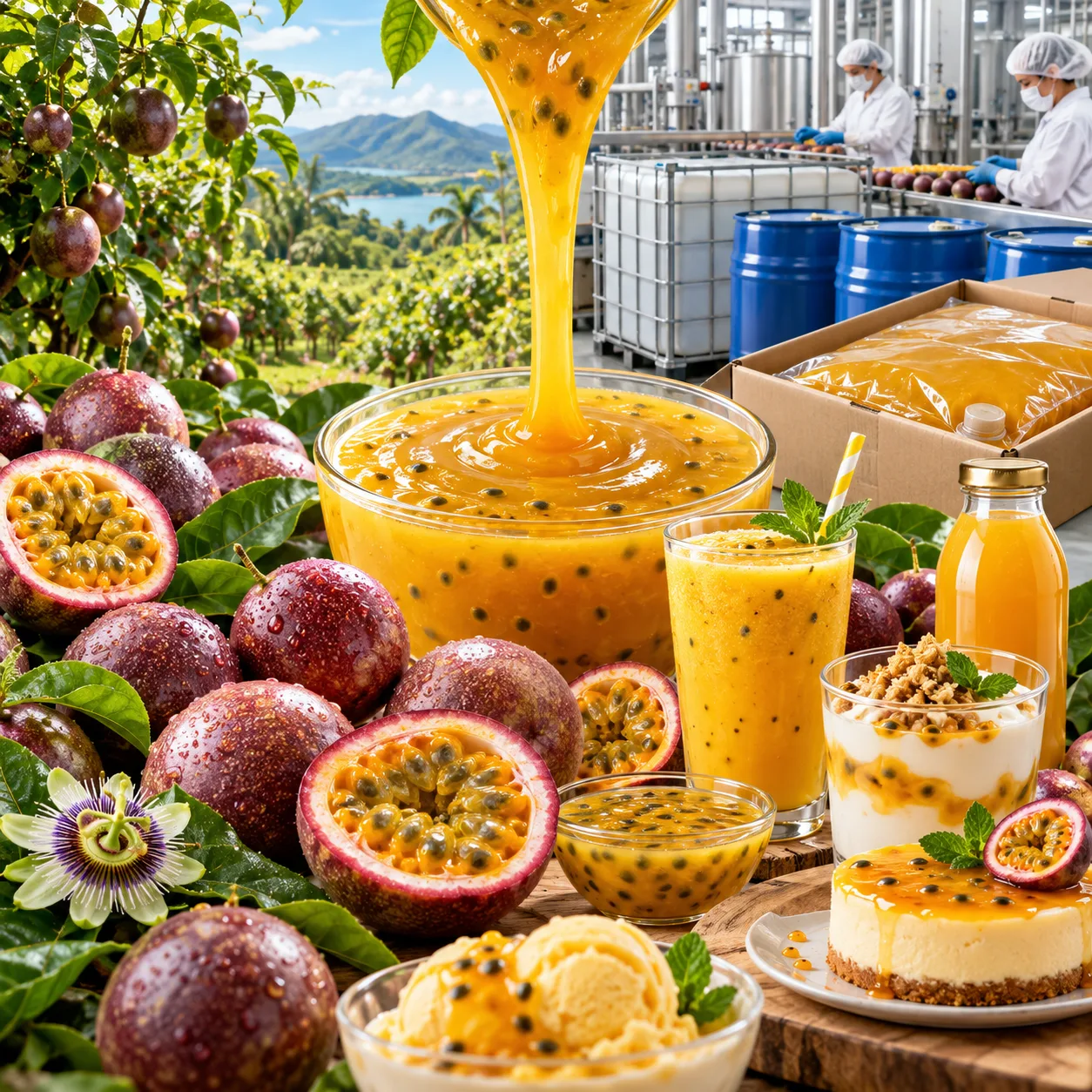
Tart cherry offers strong red-fruit flavor and malic acidity, while passion fruit delivers highly aromatic tropical character and pronounced natural acidity.

Both work well where the formulation needs a fruit ingredient with enough sensory intensity to remain recognizable after blending or processing.

Industrial uses: beverages, brewing, confectionery, bakery fillings, sauces, dairy and fruit preparations.
Specification note: Technical values above are representative commercial examples rather than guaranteed specifications. Fruit variety, crop, origin and processing method affect Brix, acidity, pH, color, viscosity and flavor. Current supplier specifications and certificates of analysis should govern commercial purchasing.
Technical buying criteria

What procurement and product-development teams should compare

Two products with the same fruit name can behave differently in a commercial formulation. The product format and current technical specification should therefore be reviewed together.

  • Brix / soluble solids: concentration, fruit solids, reconstitution and yield.
  • Titratable acidity: total acid contribution and flavor balance.
  • pH: relevant to formulation, processing and finished-product behavior.
  • Specific gravity: useful for pumping, dosing and weight-to-volume calculations.
  • Clarity / turbidity: important for clear and cloudy beverages.
  • Pulp / screen size: relevant to purees, NFC juices and processing equipment.
  • Viscosity / Bostwick: particularly important for puree and concentrated puree.
  • Color: important for berry, cherry and pomegranate ingredients.
  • Microbiological limits: should match the buyer's manufacturing and quality program.
  • Ingredient statement: confirms the actual composition.
  • Origin and crop: useful for traceability and supply planning.
  • Certification: conventional, organic, Kosher, Halal or other customer-specific needs.
Major industrial applications

Fruit ingredients across the food and beverage plant.

Beverages

Juice drinks, carbonated soft drinks, sparkling water, smoothies, tea, lemonade, sports drinks, energy drinks, functional beverages, cocktail mixes and mocktails.

Brewing & Fermentation

Craft beer, hard cider, kombucha, fruit wine and mead use fruit ingredients for fermentable sugars, aroma, acidity, color and post-fermentation blending.

Dairy & Plant-Based

Yogurt, drinkable yogurt, cultured products, dairy desserts and plant-based foods can use purees and fruit preparations for flavor, body and color.

Bakery

Cakes, muffins, pastries, doughnuts, pies, fillings, swirls and glazes use concentrates or purees according to the desired water contribution and texture.

Confectionery

Gummies, fruit gels, chocolate centers, fondants and chews use berry, citrus, cherry, pomegranate and tropical ingredients for concentrated flavor and acidity.

Frozen Desserts

Ice cream, sorbet, frozen yogurt, frozen beverages and fruit variegates use puree and juice formats for flavor, color and texture.

Sauces & Dressings

Barbecue sauces, vinaigrettes, marinades, dipping sauces and glazes use fruit for sweetness, acidity, color and savory flavor contrast.

Jams & Fruit Preparations

Purees contribute fruit body and pulp while concentrates can increase soluble solids and strengthen fruit flavor in commercial preparations.

Prepared & Specialty Foods

Fruit-and-grain products, selected baby and toddler foods, foodservice preparations, snacks and prepared foods use fruit ingredients where the format fits the finished product.

Explore industrial applications

Application intelligence

From brew house to bakery line.

The resource center translates ingredient format into practical formulation, processing and sourcing considerations. Explore 200 application articles split evenly between juice concentrates and fruit purees.

  • Brewing, cider, kombucha and wine
  • Soft drinks, functional beverages and smoothies
  • Dairy, plant-based and frozen desserts
  • Bakery, confectionery, sauces and snacks
  • Foodservice, prepared foods and fruit preparations
Explore 200 application articles
Built for procurement teams

Ask better sourcing questions.

Build inquiries around ingredient format, Brix, acidity, pulp or clarity, processing style, pack size, storage, origin, certification, documentation and delivery requirements.

Aseptic options Frozen options Conventional Organic Bulk pack Commercial quantities
Open technical resources →
Commercial sourcing

Packaging, storage and usable solids affect the real cost.

Bulk fruit ingredients may be offered in pails, bag-in-box systems, lined drums, totes or larger programs. Depending on the product, storage may be frozen, refrigerated or aseptic.

A concentrate and an NFC juice made from the same fruit can have very different freight and warehouse economics because NFC contains substantially more natural water. Puree may require different pumping and handling again because of its viscosity and pulp.

For meaningful commercial comparison, consider Brix, usable fruit solids, pack weight, freight, storage temperature, minimum order quantity, certification and plant handling—not only the quoted price per pound.

A useful sourcing inquiry includes the fruit, format, approximate initial and annual volume, application, delivery destination, preferred packaging, storage capability and critical technical requirements.

Have a target ingredient in mind?

Send the fruit, format, quantity, application and destination. Add your target Brix, acidity, packaging or certification requirements if already known.

Start an inquiry
Frequently asked

Questions commercial buyers often ask

What product formats are available?

The portfolio covers bulk juice concentrates, fruit and vegetable purees, concentrated purees and pastes, and selected NFC juices. Availability, pack size, origin and certification can vary by item and season.

What technical specifications should buyers review?

Important parameters can include Brix, pH, titratable acidity, specific gravity, color, clarity or pulp, viscosity, microbiological limits, origin, packaging, storage condition and certifications.

What are some representative commercial Brix levels?

Examples include apple juice concentrate around 70° Brix, pomegranate concentrate around 65° Brix, single-strength strawberry puree around 8° Brix, mango puree concentrate around 28° Brix and NFC orange juice in the low-teens Brix range. Actual values vary by product and supplier.

When should I choose puree instead of concentrate?

Puree is generally preferred when the formulation needs more fruit body, pulp, texture or visible fruit character. Concentrate is useful when high soluble fruit solids with less added water are more important.

When is NFC juice useful?

NFC can be useful when the project calls for a direct single-strength juice format and the formulation can accommodate its natural water content.

Can you source organic ingredients?

Organic options may be available for many products. Ask for the current certification, origin, pack format and product-specific documentation before purchase.

Which industries use these ingredients?

Applications include beverages, brewing, dairy, bakery, confectionery, frozen desserts, jams and fruit preparations, sauces, marinades, prepared foods and selected nutrition products.

What order sizes can you support?

Pack and minimum-order requirements vary by product and supply program. Commercial formats can include pails, bag-in-box, drums, totes and larger bulk programs.

Do you support product-development inquiries?

Yes. Share the application, target fruit profile, required format, approximate volume, destination, timing and any technical or certification requirements so the request has the right commercial context.

Are the specifications on this page guaranteed?

No. The technical values shown are representative commercial examples. Final purchasing should be based on the current supplier specification, certificate of analysis and transaction-specific documentation.