Passion Fruit Puree
Passion fruit puree for commercial food and beverage manufacturing, delivering intense tropical aroma, pronounced natural acidity, bright yellow-orange color and high flavor impact in a smooth fruit base.
An intensely aromatic tropical fruit with distinctive acidity.
Passion fruit (Passiflora edulis) grows on climbing vines and contains a highly aromatic pulp surrounding numerous edible black seeds. Its sensory profile is unusually intense, combining tropical fruit aroma, sharp acidity and natural sweetness.
Commercial production commonly uses yellow passion fruit (Passiflora edulis f. flavicarpa) as well as purple-fruited cultivars. Yellow types are widely processed for juice and puree because of their strong aroma, juice yield and characteristic acidity.
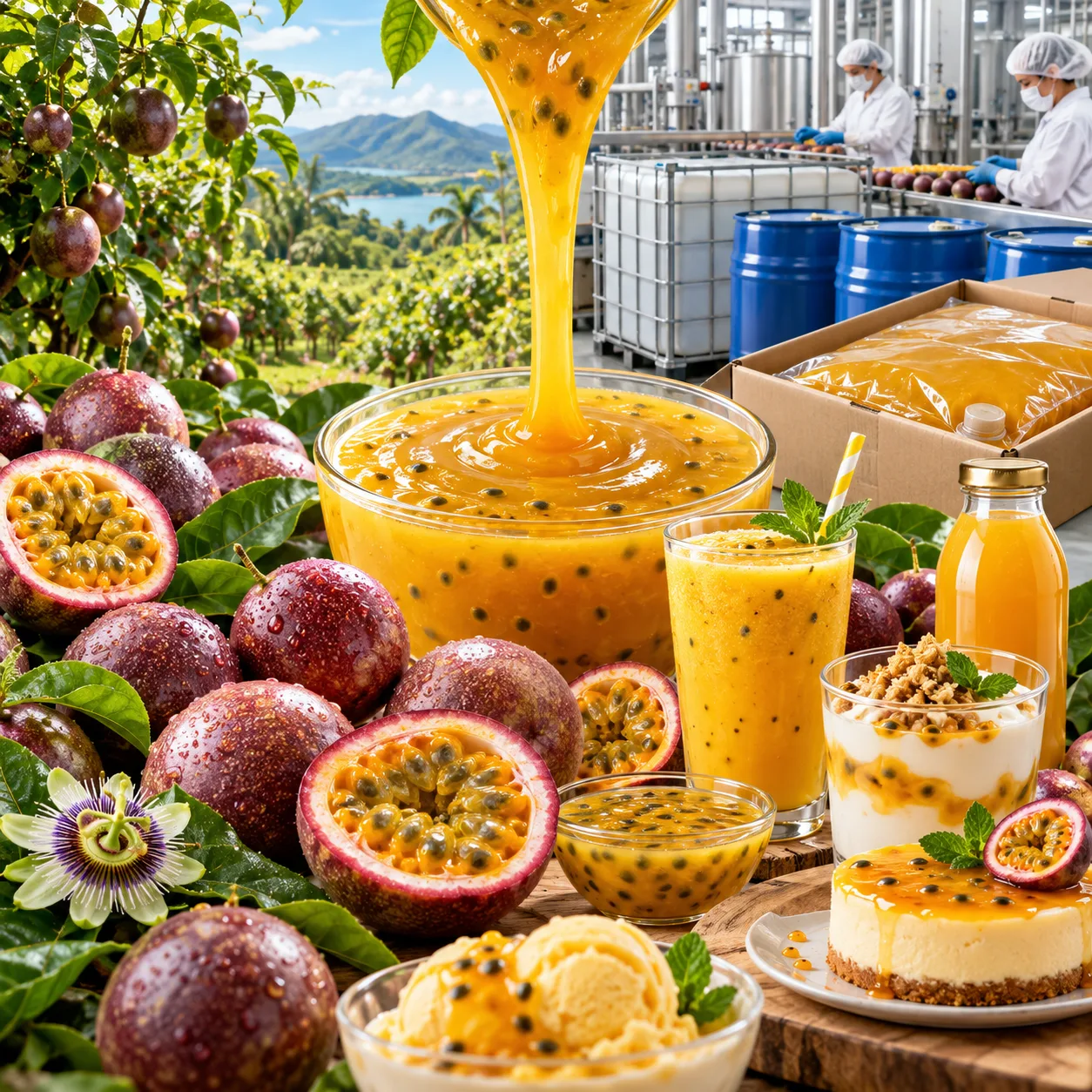
For industrial puree production, ripe fruit is washed and opened before the pulp is separated from the rind. The pulp is screened to remove most or all seeds, blended for consistency, pasteurized and then packed aseptically or frozen depending on the commercial program.
- Strong tropical aroma with sweet-tart passion fruit flavor
- Yellow to orange-yellow natural appearance
- High natural acidity compared with many fruit purees
- Seedless commercial puree is widely available
- Conventional and certified-organic options may be available
- Aseptic and frozen supply formats depend on supplier capabilities
Key parameters for commercial qualification.
Passion fruit puree specifications vary according to fruit variety, maturity, geographic origin, screen size and processing method. Seedless single-strength puree commonly falls within the following indicative commercial ranges.
Soluble Solids / °Brix
Commercial single-strength seedless passion fruit puree commonly falls around 12–16 °Brix. Some specifications distinguish between direct refractometer Brix and acidity-corrected Brix.
pH & Titratable Acidity
Passion fruit is naturally highly acidic. Commercial puree commonly falls around pH 2.5–3.3, with titratable acidity often approximately 3–5% expressed as anhydrous citric acid.
Brix / Acid Ratio
The relationship between soluble solids and acidity is useful for evaluating perceived sweetness and tartness. Ratio can vary by origin and maturity and is important in beverage and dairy formulation.
Seeds & Pulp
Industrial puree is commonly screened to remove seeds while retaining fine fruit pulp. Screen specification, fine-pulp percentage and residual seed tolerance should be confirmed when texture is critical.
Color & Sensory Profile
Typical appearance is yellow to light orange with an intense, characteristic tropical aroma. Flavor should be strongly passion-fruit-like without fermented, oxidized, scorched or otherwise objectionable notes.
Microbiological Criteria
Commercial specifications commonly establish limits for total viable count, yeast and mold, with stricter values generally associated with properly processed aseptic products.
These values are commercial reference points rather than universal specifications. Confirm Brix, corrected Brix, pH, acidity, pulp, screen size and microbiological limits against the supplier's current specification and lot-specific COA.
Define the puree grade, processing method and pack format.
Seedless vs. Seeded
Seedless puree is generally preferred for beverages, dairy products, sauces and smooth fillings because it eliminates hard seed particles. Products retaining seeds may suit specialty culinary or visual applications.
Aseptic vs. Frozen
Aseptic passion fruit puree is pasteurized and filled into sterile packaging, while frozen puree depends on a maintained cold chain. Storage temperature and shelf life should be confirmed for the exact product.
Packaging & Handling
Commercial programs may include approximately 20 kg aseptic bag-in-box units and industrial drums around 200 kg, with pails or other formats available depending on supplier and market.
Storage & Shelf Life
Some aseptic products are supplied chilled and may offer approximately 12–24 months of unopened shelf life under recommended conditions. Frozen formats commonly require storage around -18°C.
Documentation
Commercial qualification may require a technical specification, certificate of analysis, nutritional information, allergen statement, country-of-origin declaration, microbiological data, traceability records and applicable organic or food-safety certifications.
Origin & Crop
South American and other tropical origins are important commercial sources. Variety, climate and fruit maturity can affect Brix, acidity, aroma, yield and color, so buyers should qualify the specific supply program.
Major uses for passion fruit puree.
Smoothies & Juice Beverages
Passion fruit puree provides intense tropical flavor and acidity in smoothies, nectars, juice drinks, lemonades and multi-fruit blends. Its high flavor impact allows relatively modest inclusion levels.
Functional & Wellness Beverages
The strong tropical profile works well in functional drinks, nutrition beverages, beverage shots, sports products and botanical blends, particularly with citrus, mango, pineapple and berry ingredients.
Carbonated Drinks & Mocktails
Passion fruit is widely suited to sparkling beverages, mocktails, cocktail mixers and flavored waters where its aroma and acidity remain noticeable even after dilution and carbonation.
Yogurt & Cultured Dairy
Applications include stirred yogurt, fruit preparations, cultured drinks and desserts. The puree's substantial acidity should be considered when managing dairy protein stability and final pH.
Plant-Based Foods
Passion fruit puree works well in coconut, oat, almond and other plant-based yogurts, beverages and desserts where its strong flavor can balance creamy or cereal-based ingredients.
Ice Cream, Sorbet & Frozen Novelties
Passion fruit is particularly well suited to sorbet, ice cream, frozen yogurt, fruit bars and dairy-free desserts because its acidity and aroma remain pronounced in cold formulations.
Bakery & Pastry Fillings
Puree can be used in cake fillings, pastries, glazes, creams and dessert preparations. Its tartness pairs especially well with chocolate, coconut, vanilla, mango and other tropical flavors.
Confectionery & Fruit Snacks
Gummies, jellies, fruit chews, candies and fillings can use passion fruit puree for concentrated tropical flavor and natural acidity, with solids adjusted according to the cooking process.
Sauces, Syrups & Fruit Preparations
Applications include dessert sauces, beverage syrups, toppings, coulis-style products and fruit preparations for dairy, bakery, foodservice and beverage manufacturing.
Craft Beer & Fermentation
Passion fruit puree is widely suited to fruit beer, sour ale, mead, kombucha-style beverages and other fermented products, contributing fermentable sugars, acidity and intense tropical aroma.
Dressings & Savory Sauces
Its high acidity and tropical character can be useful in salad dressings, dipping sauces, marinades and savory-sweet glazes paired with chili, ginger, citrus, seafood or poultry.
Foodservice & Catering
Bulk puree provides a consistent base for beverages, desserts, sauces and culinary preparations without the labor and yield variation associated with cutting and straining fresh passion fruit.
Plan around high acidity, intense aroma and pulp content.
Sugar-Acid Balance
Passion fruit is substantially more acidic than many tropical fruits. Brix and titratable acidity should be evaluated together when setting sweetener levels or blending with lower-acid ingredients.
Dairy Protein Stability
The naturally low pH can affect milk proteins and some plant-based protein systems. Fruit preparations, stabilizers and controlled addition sequences may be needed to achieve the desired finished texture.
Aroma Retention
Passion fruit's volatile aroma compounds are a major part of its sensory identity. Excessive thermal exposure can reduce fresh tropical notes, so process conditions should be validated at production scale.
Pulp & Separation
Fine suspended pulp may settle in low-viscosity beverages. Homogenization, stabilizers or controlled agitation can be considered when consistent suspension is required.
Build a complete passion fruit puree inquiry.
Define the puree
Specify seedless or seeded puree, target Brix, pH or acidity, pulp or screen requirements, color, sensory expectations and microbiological criteria where applicable.
Select the supply format
Indicate whether aseptic or frozen puree is required and identify the preferred bag-in-box, pail, drum or other industrial packaging format.
Provide volume & destination
Include conventional or organic status, estimated shipment or annual volume, delivery destination, required timing and whether material is needed for samples, pilot trials or continuing production.
Compare suppliers against the complete requirement.
Passion fruit is an agricultural ingredient and natural variation occurs between varieties, crops and origins. Technical specifications, certifications, packaging, storage requirements, availability and commercial terms should be confirmed against the current supplier specification and quotation before purchase.
See how puree ingredients perform in commercial formulations.
Questions passion fruit puree buyers often ask
What is bulk passion fruit puree used for?
Commercial applications include smoothies, juices, functional beverages, dairy and plant-based products, bakery fillings, fruit preparations, confectionery, frozen desserts, sauces, fermented beverages and foodservice products.
What Brix is typical for passion fruit puree?
Single-strength seedless passion fruit puree commonly falls around 12–16 °Brix. Exact purchasing limits vary by fruit variety, maturity, origin and processor.
What pH is typical for passion fruit puree?
Passion fruit puree is naturally highly acidic and commercial products commonly fall around pH 2.5–3.3. Titratable acidity is often approximately 3–5% as citric acid.
What is the difference between yellow and purple passion fruit?
Yellow passion fruit is widely used for commercial juice and puree processing and is generally highly aromatic and acidic. Purple passion fruit can have a somewhat sweeter and more aromatic profile. Exact characteristics depend on cultivar and growing region.
Is commercial passion fruit puree seedless?
Many industrial passion fruit purees are finely screened to remove seeds and coarse particles, producing a smooth seedless puree. Buyers should confirm screen size, seed tolerance and pulp specification for the exact product.
What is the difference between aseptic and frozen passion fruit puree?
Aseptic passion fruit puree is pasteurized and filled into sterile packaging, while frozen puree relies on controlled frozen storage. Packaging, shelf life and storage requirements depend on the supplier program.
Is organic passion fruit puree available?
Organic passion fruit puree may be available depending on crop, origin and supplier program. Buyers should request current organic certification and product-specific documentation.
What information should I provide for a quote?
Provide the required passion fruit puree format, conventional or organic status, approximate quantity, target Brix, pH or acidity requirements where relevant, preferred packaging, destination, timing and required documentation.