Mango Puree
Smooth mango puree for beverages, dairy, baby food, bakery, confectionery, frozen desserts and fruit preparations, with Alphonso, Totapuri, conventional, organic and aseptic options subject to availability.
Rich tropical aroma, natural sweetness and smooth fruit body.
Mango (Mangifera indica) is a tropical stone fruit with a large central seed surrounded by aromatic yellow-to-orange flesh. Ripe fruit develops natural sugars, acidity and a characteristic tropical aroma that varies substantially by cultivar.
Commercial puree is normally produced from fully mature mangoes that are inspected, ripened where required, washed, destoned, pulped and refined before thermal processing and aseptic filling or freezing. The puree retains natural pulp and therefore contributes more body and texture than clarified mango juice.
- Botanical species: Mangifera indica
- Golden-yellow to orange fruit color depending on cultivar
- Sweet tropical flavor balanced by natural acidity
- Alphonso, Totapuri, Kesar and other varieties may be offered
- Single-strength and concentrated puree formats are available
- Conventional and certified organic grades may be available
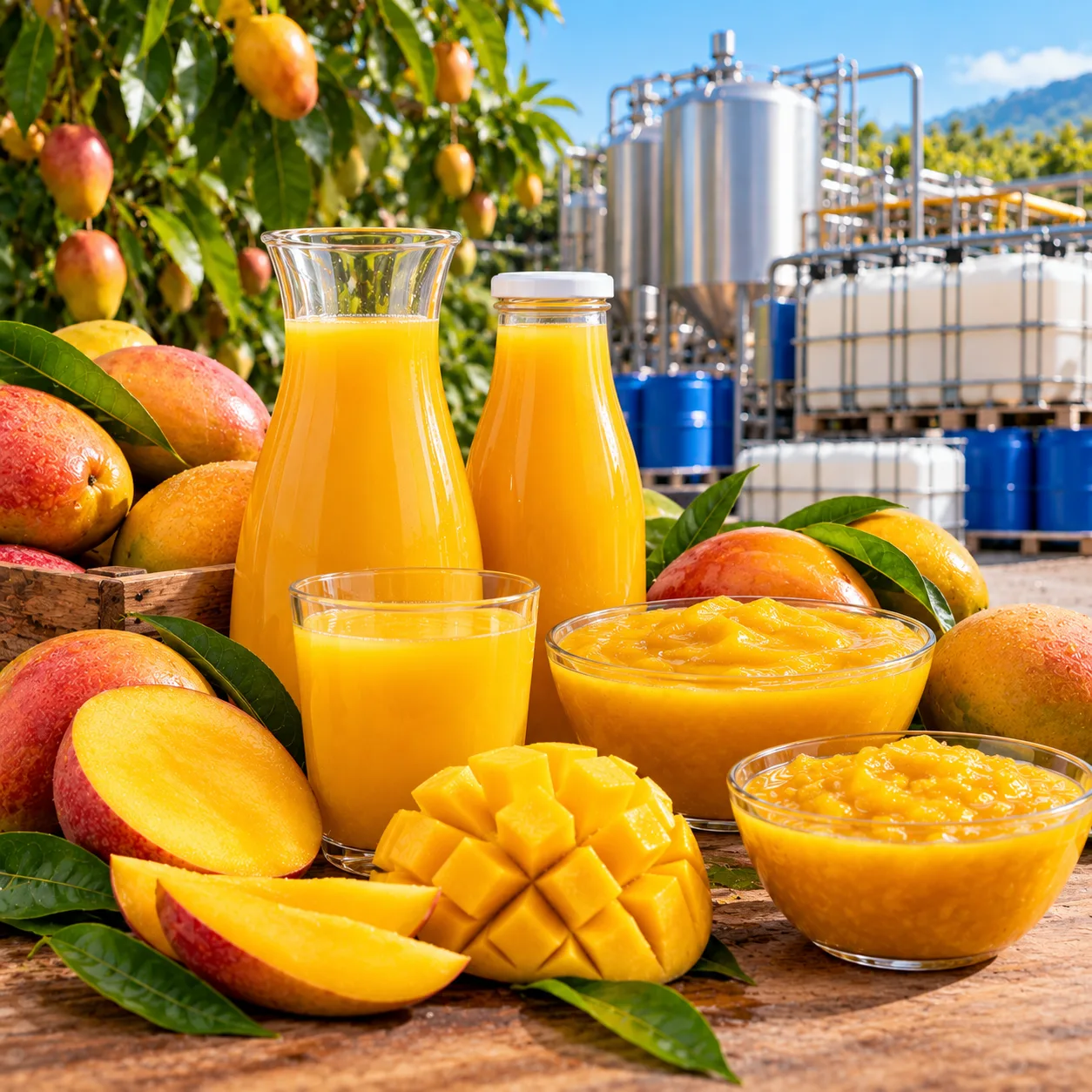
Variety can matter as much as the basic puree specification.
Alphonso
Alphonso is selected where a rich aromatic profile, orange-yellow color and pronounced premium mango character are priorities.
Commercial Alphonso puree is commonly specified at a minimum around 16 °Brix, with individual supplier ranges extending toward 18–20 °Brix.
Totapuri
Totapuri is widely processed for industrial puree because of its availability, consistent processing performance and distinctive sweet-tart mango profile.
Commercial single-strength Totapuri puree commonly starts around 14 °Brix and is widely used in beverages, dairy and other high-volume applications.
Kesar & Other Varieties
Kesar, Neelam, Sindhura and other mango varieties can provide different balances of color, aroma, sweetness and acidity.
Where mango identity is central to the product, specify the cultivar rather than purchasing only against a generic “mango puree” description.
Mango variety, maturity, growing region and crop year influence Brix, acidity, color, aroma and viscosity. Supplier-specific specifications should therefore take precedence over broad category averages.
Key parameters used in industrial mango puree purchasing.
Industrial mango puree is commonly evaluated using Brix, pH, titratable acidity, Bostwick consistency, color, flavor, specks and microbiological limits.
Physical & Chemical Parameters
- Refractometric soluble solids expressed as °Brix
- pH and titratable acidity as citric acid
- Bostwick consistency at controlled temperature
- Golden-yellow to orange-yellow color
- Characteristic ripe-mango aroma and flavor
- Brown- and black-speck limits
- Homogeneous texture without foreign matter
Published Commercial Examples
Totapuri specifications commonly list approximately 14–17 °Brix, pH 3.6–4.2, acidity around 0.40–0.70% as citric acid and Bostwick flow around 8–15 cm/30 seconds.
Alphonso examples commonly list at least 16 °Brix, pH around 3.5–4.0 and acidity approximately 0.45–0.90%, with comparable Bostwick consistency controls.
These are commercial reference ranges, not universal mango standards. Use the current supplier specification and lot-specific Certificate of Analysis for purchasing and production approval.
Single-strength and concentrated mango puree serve different needs.
Single-Strength Mango Puree
Single-strength puree maintains the natural pulp and water balance of processed ripe mango. It is particularly useful where authentic mango body, aroma and mouthfeel are important.
Depending on cultivar, commercial products commonly begin around 14 °Brix for Totapuri and around 16 °Brix for Alphonso.
Mango Puree Concentrate
Mango puree concentrate has part of its natural water removed while retaining pulp and fruit solids. Industrial products around 28–30 °Brix are commonly available.
Concentrate can reduce transport volume and is useful where a manufacturer needs stronger mango solids with less process water.
Mango puree contributes both flavor and significant body.
Bostwick Consistency
Mango puree is naturally viscous, so Bostwick flow is commonly specified for repeatable pumping, blending, filling and depositing.
Commercial single-strength products frequently fall around 8–15 cm in 30 seconds, depending on variety and supplier.
Screening & Texture
Refining removes peel, seed fragments and coarse fibers while retaining enough pulp to provide the expected mango texture.
Fine-screened products may be preferred for beverages, baby food and smooth dairy preparations.
Heat & Flavor
Excessive thermal exposure can reduce fresh mango aroma and create cooked notes. Formulators should evaluate the puree after the complete finished-product heat process.
Aroma retention can be especially important in premium Alphonso formulations.
Where mango puree is used commercially.
Nectars, Juices & Beverage Bases
Mango puree is a core ingredient in mango nectar, tropical juice drinks, smoothies, juice blends, lemonades and other still beverages.
Because of its substantial pulp and viscosity, dilution and suspension should be optimized according to the desired drinking texture.
Smoothies & Functional Beverages
Mango contributes natural fruit body, sweetness and tropical aroma to smoothies, nutrition drinks and fruit-forward functional beverages.
It blends particularly well with banana, pineapple, passion fruit, orange, peach, coconut and berry ingredients.
Yogurt & Dairy Products
Mango puree is widely used in spoonable yogurt, drinking yogurt, lassi-style beverages, fruit-on-the-bottom preparations, dairy desserts and cultured products.
Brix, acidity and puree consistency should be balanced with the dairy system and desired fruit-preparation texture.
Plant-Based Foods & Beverages
Mango works well in oat, coconut, almond and other plant-based drinks, yogurts and desserts because its strong fruit profile can complement cereal or nut base notes.
Protein stability and acidity should be validated in the complete formula.
Baby Food & Toddler Products
Fine-textured mango puree is used in infant fruit blends, pouches and toddler products, frequently with banana, apple, pear, peach or cereals.
Baby-food programs may require tighter pesticide-residue, microbiological, contaminant and traceability requirements.
Ice Cream, Sorbet & Frozen Desserts
Mango puree provides strong tropical flavor and natural color in ice cream, gelato, sorbet, frozen yogurt, ice pops and other frozen novelties.
Fruit sugars and puree solids should be included when calculating freezing point and total solids.
Bakery & Pastry Fillings
Applications include cakes, muffins, pastries, Danish fillings, cheesecakes, layered desserts and fruit-filled bakery products.
Concentrated puree can be useful where stronger mango flavor is needed without introducing as much water.
Confectionery & Fruit Snacks
Mango puree can be incorporated into gummies, fruit chews, jellies, fruit bars, fruit leather and confectionery fillings.
Moisture, acidity and fruit solids should be balanced with the product's gelling, drying or cooking system.
Fruit Preparations, Jams & Toppings
Mango puree is used in jams, preserves, compotes, dessert toppings, layered fruit preparations and bakery or dairy inclusions.
Puree can be combined with diced mango where both smooth fruit distribution and visible pieces are desired.
Sauces, Chutneys & Culinary Products
Mango's sweetness and acidity work well in chutneys, glazes, dressings, marinades, dipping sauces and sweet-savory culinary products.
Common complementary flavors include chili, ginger, lime, tamarind, curry spices and roasted ingredients.
Industrial formats from pilot quantities to full production.
Bag-in-Box
Smaller aseptic packs can support foodservice, development work and lower-volume production. Current commercial Alphonso programs include approximately 20 kg bag-in-box formats.
Aseptic Drums
The standard industrial format is a pre-sterilized aseptic bag inside a lined steel drum. Published Alphonso and Totapuri programs commonly use approximately 215 kg net weight per drum.
Frozen & Larger Bulk Supply
Frozen puree and larger-volume systems may also be available, depending on variety, supplier and annual program size.
Confirm storage temperature, pallet configuration and post-opening handling for the exact product quoted.
Aseptic products may support ambient unopened storage when produced under a validated process, but shelf life and storage instructions are supplier-specific. Follow the exact specification rather than assuming one storage condition applies to all mango puree.
Specify variety and concentration before comparing prices.
Technical Requirements
- Mango variety or acceptable blend
- Single-strength or concentrated format
- Target Brix and tolerance
- pH and titratable acidity
- Bostwick consistency
- Color and sensory expectations
- Speck and foreign-material limits
- Microbiological acceptance criteria
Commercial Requirements
- Conventional or certified organic grade
- Preferred country or region of origin
- Trial quantity and annual volume forecast
- Bag-in-box, drum or other bulk preference
- Aseptic or frozen receiving capability
- Delivery destination in the United States
- Required shipment timing
- Certification and documentation requirements
Do not compare Alphonso, Totapuri and mango concentrate on price per pound alone. Variety, Brix, aroma intensity, consistency, fruit yield and final dosage can materially affect the true cost in the finished product.
Documents commonly reviewed during supplier approval.
Technical Documentation
- Current product specification
- Lot-specific Certificate of Analysis
- Mango variety declaration
- Microbiological specification
- Complete ingredient declaration
- Storage and shelf-life information
- Packaging and handling specification
Certification & Supply Documents
- Organic certificate when applicable
- Food-safety certification information
- Baby-food documentation where required
- Kosher or Halal documentation when requested
- GMO status where required
- Country-of-origin and traceability information
- Commercial quotation and delivery terms
See how mango puree can perform in finished products.
Mango puree sourcing questions
What is commercial mango puree?
Commercial mango puree is produced from ripe mangoes that are washed, inspected, destoned, pulped and refined before thermal processing. It retains natural fruit pulp and provides the body, color and flavor characteristic of ripe mango.
What is the typical Brix of mango puree?
The specification depends on cultivar. Totapuri puree commonly starts around 14 °Brix, while Alphonso commonly starts around 16 °Brix. Individual crop and supplier ranges may be higher.
What are typical pH and acidity values?
Commercial mango puree generally falls around pH 3.5–4.2. Totapuri acidity is commonly around 0.40–0.70% as citric acid, while published Alphonso specifications often fall around 0.45–0.90%.
What is the difference between Alphonso and Totapuri puree?
Alphonso is generally selected for stronger aroma, richer orange-yellow color and premium mango character. Totapuri is typically golden-yellow, somewhat more tangy and widely used for large-scale beverage and dairy manufacturing.
What is mango puree concentrate?
Mango puree concentrate has part of its natural water removed while retaining pulp and fruit solids. Industrial products around 28–30 °Brix are commonly available and can reduce transport and formulation water compared with single-strength puree.
What is bulk mango puree used for?
Major applications include nectars, smoothies, juice drinks, yogurt, dairy and plant-based products, baby food, ice cream, sorbet, bakery fillings, confectionery, fruit bars, jams, fruit preparations, chutneys and sauces.
Why is Bostwick consistency important?
Bostwick testing measures how quickly the puree flows under defined conditions. It helps manufacturers control pumping, mixing, filling and finished-product texture between production lots.
Is organic mango puree available?
Yes. Certified organic mango puree is commercially available from selected processors. Variety, origin and current organic certification should be confirmed for the exact product being quoted.
How is commercial mango puree packaged?
Aseptic mango puree is commonly packed in pre-sterilized bags inside steel drums at approximately 215 kg net. Smaller commercial formats, including approximately 20 kg bag-in-box packs, are also available from selected processors.
What information should I provide for a quote?
Specify the preferred mango variety, single-strength or concentrated format, conventional or organic grade, approximate volume, packaging, destination and timing, together with requirements for Brix, pH, acidity, Bostwick consistency, color, microbiology, origin and certification.