Pomegranate Juice Concentrate
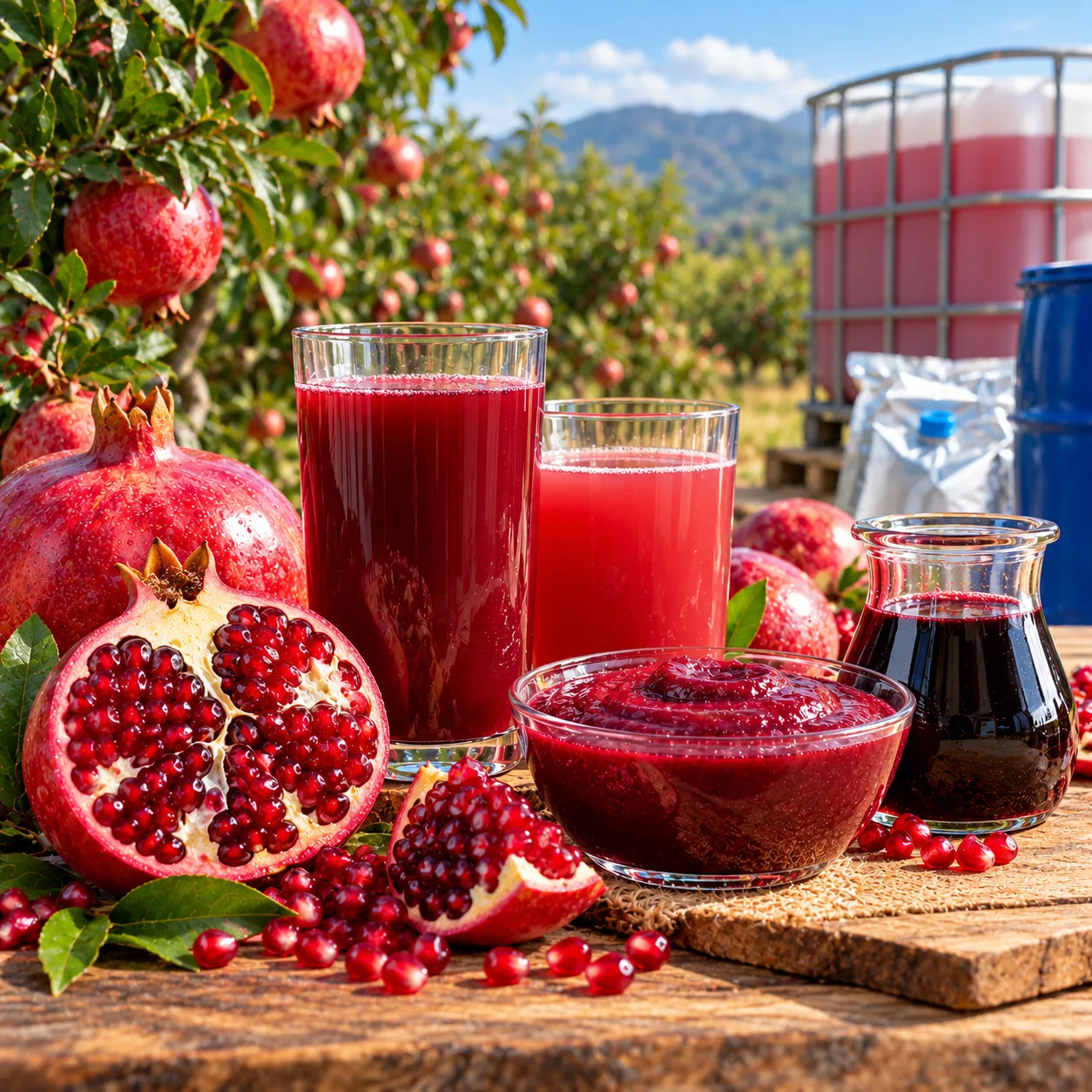
Concentrated pomegranate juice for commercial food and beverage manufacturing, delivering deep red fruit color, pronounced sweet-tart flavor and characteristic pomegranate complexity in a high-solids bulk ingredient.
A distinctive fruit with sweet-tart flavor and deep natural color.
Pomegranate (Punica granatum) is a round fruit with a tough outer rind enclosing numerous juice-filled arils. Each aril contains translucent to deep-red pulp surrounding a seed, and the juice is valued for its characteristic balance of sweetness, acidity, fruit aroma and mild-to-pronounced astringency.
Commercial varieties differ considerably in juice yield, soluble solids, acidity, seed hardness and color intensity. Fruit may range from relatively sweet and mild to sharply tart, which makes cultivar and growing region important when sourcing for consistent industrial production.
Juice concentrate is produced by extracting juice from sound ripe fruit, clarifying or filtering it as required and removing a substantial portion of the natural water. Concentration reduces freight and storage volume while retaining fruit solids, acidity and concentrated pomegranate character.
- Sweet-tart flavor with characteristic pomegranate aroma
- Ruby-red to dark red natural appearance
- Naturally acidic with potential tannic or astringent notes
- High-impact flavor for both primary and blended fruit systems
- Conventional and certified-organic options may be available
- Frozen bulk formats are widely used for high-Brix concentrate
Key parameters for commercial qualification.
Pomegranate concentrate characteristics vary according to cultivar, maturity, origin, extraction method and processor. Commercial high-strength products are commonly standardized near 65 °Brix, but the supplier's approved specification and lot certificate of analysis should control purchasing decisions.
Soluble Solids / °Brix
Commercial pomegranate juice concentrate is commonly supplied around 65 °Brix. Brix is a primary specification for concentration control, formulation calculations, reconstitution and commercial comparison.
pH & Titratable Acidity
Pomegranate is naturally acidic. Representative 65 °Brix concentrates commonly fall around pH 2.5–3.8, while titratable acidity may be roughly 3–8% as citric acid depending on fruit and supplier specification.
Color
Concentrate generally ranges from ruby red to deep dark red. Variety, extraction, heat exposure, oxygen and storage can influence the final color, making color control important in visible beverage and food systems.
Flavor & Astringency
The desired sensory profile is full flavored, fruity and characteristically pomegranate, combining sweetness, acidity and varying degrees of astringency without fermented, scorched or caramelized off-notes.
Clarity & Turbidity
Clarified concentrate is widely used in beverages and other applications where controlled haze is required. Turbidity or suspended-solids limits may be specified depending on filtration and finished-product appearance.
Microbiological Criteria
Commercial specifications typically establish limits for total plate count, yeast, mold and relevant pathogens. Required limits should correspond to the packaging, storage conditions and customer's downstream process.
These values are indicative commercial reference points only. Confirm Brix, pH, titratable acidity, color, turbidity, microbiological limits and sensory requirements against the current supplier specification and lot-specific COA.
Define the complete requirement before comparing offers.
Frozen Storage
High-Brix pomegranate concentrate is commonly stored frozen to help preserve flavor and color over extended periods. Representative commercial programs specify long frozen shelf life but considerably shorter refrigerated holding time after thawing.
Packaging & Handling
Industrial formats may include polyethylene pails, lined steel drums and other bulk containers. Package selection should match order volume, frozen-storage capacity and the manufacturer's rate of consumption.
Crystallization
High-solids pomegranate concentrate may develop natural crystals during refrigerated or frozen storage. Depending on the product, controlled warming and agitation can help return crystallized solids to solution before use.
Documentation
Product qualification may require a technical specification, certificate of analysis, nutritional information, allergen statement, country-of-origin declaration, microbiological data, traceability records and applicable organic or food-safety certifications.
Origin & Crop
Growing region, cultivar, harvest maturity and annual crop conditions influence sweetness, acidity, color, astringency and juice yield. Manufacturers may qualify multiple origins to support continuous supply.
MOQ & Supply Planning
Minimum order quantity, package configuration, current inventory, production lead time, annual requirement and delivery destination should be reviewed together when comparing commercial quotations.
Major uses for pomegranate juice concentrate.
Juices & Beverage Blends
Pomegranate concentrate is widely used in juice drinks, multi-fruit blends, lemonades, flavored waters and premium beverages. It pairs well with apple, grape, berry, cherry, citrus and tropical fruit bases.
Functional & Wellness Beverages
Pomegranate has strong consumer recognition in functional beverage concepts and is used in wellness drinks, nutrition beverages, sports products and fruit-based shots where an intense fruit identity is desired.
Energy Drinks & Beverage Shots
Its concentrated sweet-tart flavor and deep color work well in compact beverage formats, including energy drinks and fruit shots where relatively low inclusion levels can provide noticeable pomegranate character.
Kombucha & Fermented Beverages
Applications include kombucha-style products, fruit beers, cider blends, mead and other fermented beverages. Concentrate contributes fermentable fruit sugars together with acidity, color and flavor.
Dairy & Plant-Based Products
Pomegranate concentrate can be incorporated into yogurt fruit preparations, cultured drinks, dairy desserts and plant-based alternatives, usually balanced with sweeteners or other fruits to manage acidity and astringency.
Sauces, Glazes & Marinades
Its combination of fruit sweetness, acidity and slight astringency makes pomegranate suitable for glazes, reductions, marinades, barbecue sauces and savory-sweet preparations for meat, poultry and vegetable applications.
Syrups & Fruit Preparations
Concentrate can be used in beverage syrups, dessert sauces, toppings, fruit preparations and foodservice bases where manufacturers need strong pomegranate flavor without introducing large amounts of water.
Bakery & Snack Fillings
Applications include pastry fillings, cake layers, cereal bars and snack preparations where pomegranate's tart fruit profile can complement chocolate, vanilla, nuts and other berry ingredients.
Confectionery & Fruit Snacks
Gummies, jellies, fruit snacks, hard candies and confectionery fillings can use pomegranate concentrate for concentrated flavor, acidity and dark red fruit character.
Sorbet & Frozen Desserts
Pomegranate performs well in sorbet, frozen yogurt, fruit bars, ice cream and dairy-free frozen desserts where its pronounced flavor remains evident after blending with sweeteners and other formulation components.
Balance acidity, astringency and color in the finished product.
Reconstitution
High-Brix concentrate can be diluted toward a single-strength juice target or used directly at lower inclusion rates. Water addition should be calculated from incoming Brix and the required finished-product soluble solids.
Sugar-Acid Balance
Pomegranate can contribute substantial acidity even at moderate dosage. Brix and titratable acidity should be evaluated together when balancing sweeteners and other fruit components.
Astringency
Naturally occurring polyphenolic compounds can create a dry or slightly puckering sensation. The effect can be moderated by blending with sweeter juices or adjusted through formulation and inclusion rate.
Color & Heat Stability
Natural red pigments can be affected by pH, oxygen, light and thermal exposure. Finished color should therefore be evaluated after the intended pasteurization, hot-fill or other process and throughout shelf life.
Build a complete pomegranate concentrate inquiry.
Define the concentrate
Specify target Brix, pH or acidity, color, clarity, sensory requirements, conventional or organic status and applicable microbiological limits.
Select the supply format
Identify frozen or other required storage conditions and the preferred pail, lined drum or other industrial packaging configuration.
Provide volume & destination
Include estimated shipment or annual volume, delivery destination, required timing and whether material is needed for sampling, pilot production or continuing commercial supply.
Compare offers against the complete requirement.
Pomegranates are agricultural raw materials and natural variation occurs between cultivars, crops and origins. Technical specifications, certifications, packaging, storage requirements, availability and commercial terms should be confirmed against the current supplier specification and quotation.
See how juice concentrates perform in commercial formulations.
Questions pomegranate concentrate buyers often ask
What is bulk pomegranate juice concentrate used for?
Major commercial applications include juices and beverage blends, functional drinks, energy beverages, brewing and fermentation, dairy products, sauces, syrups, bakery fillings, confectionery, fruit preparations and frozen desserts.
What Brix is typical for pomegranate juice concentrate?
Commercial pomegranate juice concentrate is commonly supplied around 65 °Brix. Exact concentration and tolerance vary by supplier, origin and product specification.
What pH is typical for pomegranate concentrate?
Pomegranate concentrate is naturally acidic. Representative commercial 65 °Brix specifications commonly fall around pH 2.5–3.8, although actual values vary according to crop, cultivar and processor.
Why can pomegranate juice taste astringent?
Pomegranate naturally contains polyphenolic compounds that can contribute a dry or slightly puckering sensation in addition to its sweet-tart flavor. Variety, extraction and processing influence how strongly this is perceived.
Can pomegranate concentrate be reconstituted?
Yes. High-Brix concentrate can be diluted toward a single-strength juice target. The required water addition depends on incoming Brix and the required finished-product soluble-solids specification.
Is organic pomegranate juice concentrate available?
Organic pomegranate concentrate may be available depending on crop, origin and supplier program. Buyers should request current organic certification and product-specific documentation.
What pack sizes are available?
Commercial formats may include polyethylene pails, bag-in-box systems, lined steel drums and other industrial containers depending on supplier capabilities and required storage conditions.
What information should I provide for a quote?
Provide target Brix, conventional or organic status, approximate quantity, acidity or color requirements where applicable, preferred packaging, destination, required timing and certification or documentation needs.