Strawberry Puree
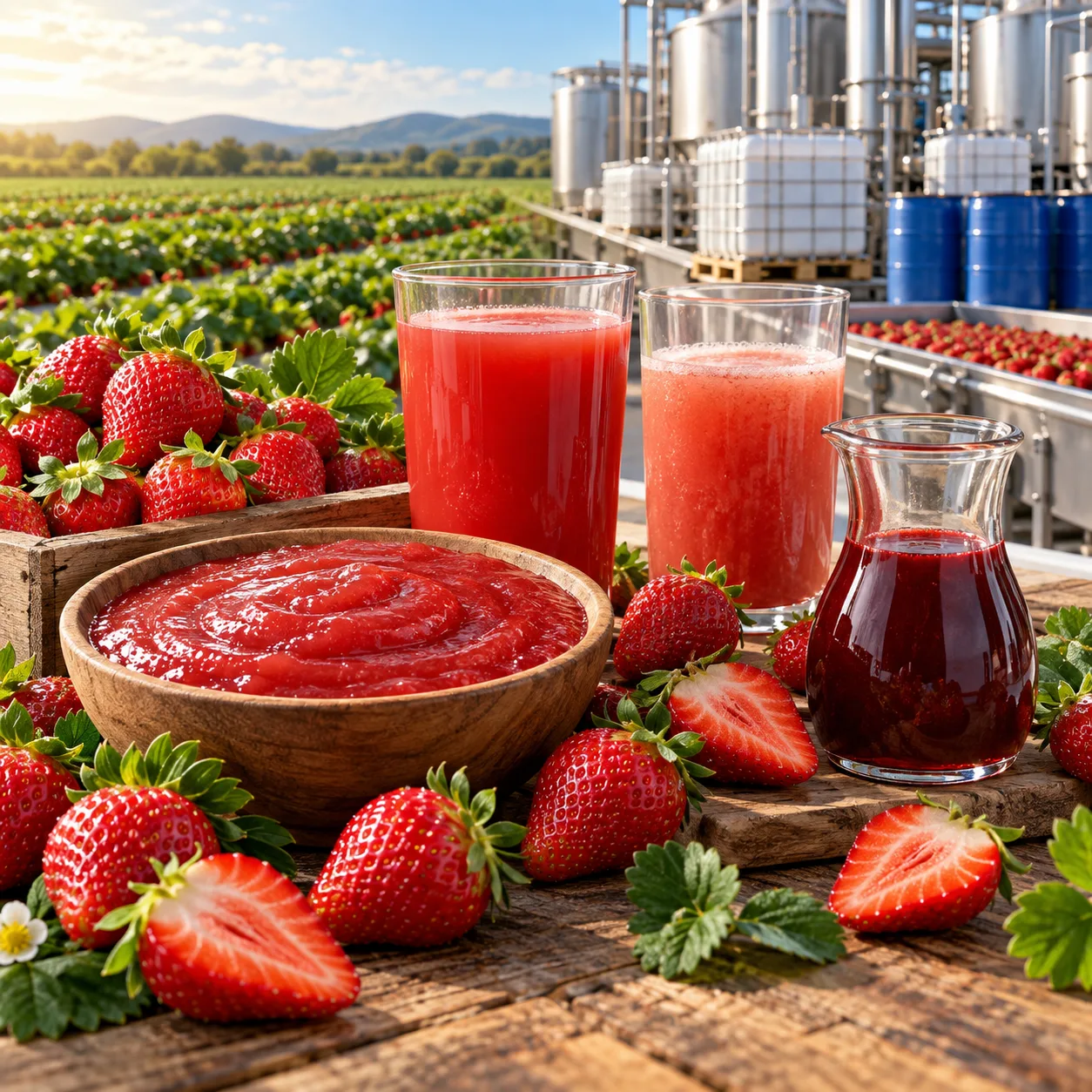
Strawberry puree for commercial food and beverage manufacturing, delivering recognizable strawberry flavor, natural red color, fruit solids and smooth texture in conventional and organic formats.
Recognizable berry flavor, color and fruit body.
Cultivated strawberry (Fragaria × ananassa) is known for its bright red color, aromatic flavor and balance of natural sweetness and acidity. Although commonly called a berry, the strawberry is botanically an aggregate accessory fruit, with the small structures visible on its surface containing the actual seeds.
Commercial strawberry puree is generally produced from sound, ripe fruit that is washed, sorted, crushed or pulped, screened and pasteurized before packing. Processing retains more natural fruit solids than clarified juice, giving puree greater body, texture and visual fruit identity.
Puree may be supplied with seeds, finely screened or substantially seedless. Variety, harvest maturity and processing influence sweetness, acidity, color and aroma, so industrial buyers should approve the exact commercial specification rather than relying on fruit name alone.
- Bright, characteristic strawberry flavor and aroma
- Natural red to deep-red color
- Single-strength puree with natural fruit solids
- Seeded and refined seedless options may be available
- Conventional and certified-organic programs may be available
- Aseptic and frozen supply formats depend on supplier program
Key parameters for industrial qualification.
Strawberry puree specifications vary with cultivar, crop, maturity, screening and processing. Typical single-strength commercial products often fall within the ranges below, but purchasing limits should always be confirmed against the supplier's current specification and lot-specific certificate of analysis.
Soluble Solids / °Brix
Single-strength strawberry puree is commonly found around 6–12 °Brix, with many commercial specifications centered near 8 °Brix. Natural crop variation can influence soluble-solids content.
pH & Titratable Acidity
Commercial puree commonly falls around pH 3.0–4.0. Titratable acidity, generally expressed as citric acid, is important to sweetness perception, flavor balance and finished-product formulation.
Consistency & Bostwick
Puree flow behavior depends on fruit solids, particle size and processing. Bostwick consistency may be specified when pumping, depositing or finished product texture requires tighter control.
Screen Size & Seeds
Fine screening can produce a smoother, largely seedless puree, while coarser processing retains more seeds and visible fruit identity. Screen or particle-size requirements should match the intended application.
Color & Sensory Profile
Commercial puree should have a characteristic red strawberry appearance with clean fruit aroma and flavor and no fermented, oxidized, moldy or otherwise objectionable notes.
Microbiological Criteria
Supplier specifications normally establish limits for total plate count, yeast, mold and applicable indicator or pathogenic organisms. Required limits depend on the process, pack format and customer's downstream application.
Typical ranges are provided for preliminary sourcing only. Confirm Brix, pH, acidity, consistency, screen size, microbiological limits and sensory requirements against the current commercial specification and certificate of analysis.
Specifications purchasing teams should define.
Aseptic vs. Frozen
Aseptic puree is thermally processed and filled into sterile packaging, while frozen puree relies on controlled low-temperature storage. Available shelf life and storage conditions should be confirmed for the exact supplier product.
Seeded vs. Seedless
Seeded puree can deliver stronger visible fruit identity, while refined seedless puree is useful for smoother beverages, cultured products, fillings and applications where seed particles are undesirable.
Packaging & Logistics
Commercial formats may include foodservice pails, bag-in-box units, aseptic drums, frozen drums or totes. Buyers should compare net weight, pallet configuration, minimum order quantity, lead time and freight conditions.
Documentation
Product approval may require a specification sheet, certificate of analysis, allergen statement, nutritional information, country-of-origin declaration, microbiological data, traceability records and applicable organic or food-safety certificates.
Origin & Crop Variation
Strawberry variety, growing region, maturity and weather can affect natural Brix, acidity, color and aroma. Manufacturers with tight finished-product targets may establish incoming tolerances and approved origins.
Storage & Shelf Life
Frozen puree requires maintained frozen storage, while aseptic products may permit refrigerated or ambient unopened storage depending on the process. Always follow supplier-specific handling and post-opening instructions.
Major uses for strawberry puree.
Smoothies & Beverage Bases
Strawberry puree provides recognizable fruit flavor, color and body in smoothies, juice drinks, lemonades, refreshers, frozen beverages and other beverage bases. Screening level should match the desired mouthfeel.
Yogurt & Cultured Dairy
Strawberry is widely used in stirred and fruit-on-the-bottom yogurt, drinkable yogurt and cultured dairy preparations. Puree can form part of a stabilized fruit preparation containing sweeteners, pectin or other texture-control ingredients.
Plant-Based Dairy Alternatives
Applications include plant-based yogurt, cultured alternatives, desserts and beverages where strawberry puree contributes recognizable fruit identity, color and acidity to oat, almond, coconut, soy and other bases.
Ice Cream & Frozen Desserts
Puree is used in ice cream, gelato, sorbet, frozen yogurt, fruit bars and frozen novelties. Formulators should account for the fruit's water, acidity and sugar contribution when balancing freezing performance and texture.
Bakery & Pastry Fillings
Strawberry puree can be incorporated into pie fillings, pastry fillings, cake layers, bakery creams and fruit preparations. Additional starch, pectin or other stabilizers may be needed to achieve the required bake stability and viscosity.
Jams, Spreads & Fruit Preparations
Puree provides a consistent fruit base for jams, spreads, toppings and industrial fruit preparations. Soluble solids, acidity and pectin systems are adjusted according to the desired set, sweetness and processing method.
Confectionery & Fruit Snacks
Applications include gummies, fruit snacks, jellies, soft candies and confectionery fillings where puree contributes fruit flavor and color. Concentration and cooking conditions should be managed to protect aroma.
Snack & Nutrition Bars
Strawberry puree can be used in fruit layers, cereal bars, nutrition bars and snack fillings where manufacturers require real-fruit character together with controlled moisture and texture.
Sauces, Syrups & Toppings
Dessert sauces, pancake and waffle toppings, syrups and foodservice fruit preparations can use strawberry puree as the primary fruit component, with formulation adjusted for pourability and shelf-life requirements.
Fermented & Specialty Beverages
Puree can be used in fruit beer, mead, kombucha-style beverages and other fermented products. Seeds and suspended solids should be considered when selecting filtration, fermentation and filling equipment.
Account for fruit solids, acidity and color stability.
Texture & Pumpability
Strawberry puree contains insoluble fruit material, so viscosity and particle size can affect pumping, homogenization, dosing and filling. Equipment compatibility should be checked with the actual approved puree.
Sweetness & Acidity
Crop variation changes natural sugar-acid balance. Formulators should therefore consider both Brix and titratable acidity when setting added sugar, acid or other fruit components.
Color Stability
Strawberry's natural red pigments can be affected by oxygen, light, temperature and formulation pH. Finished color should be evaluated after processing and throughout the intended shelf life.
Heat Treatment
Extended or severe heating can reduce fresh strawberry aroma and alter color. Pilot testing under the intended pasteurization, hot-fill, baking or other thermal process is recommended.
Build a complete strawberry puree inquiry.
Define the puree
Specify single-strength strawberry puree, seeded or seedless preference, target Brix and pH where required, consistency, screen size, color and microbiological criteria.
Select the supply format
Indicate whether aseptic or frozen puree is required and identify the preferred pail, bag-in-box, drum, tote or other industrial packaging format.
Provide volume & destination
Include conventional or organic status, estimated order or annual volume, delivery destination, required timing and whether material is needed for samples, pilot production or continuing supply.
Compare suppliers against the complete requirement.
Strawberry is an agricultural ingredient and natural variation can occur between varieties, crops and origins. Technical specifications, certifications, packaging, availability and commercial terms should be confirmed against the current supplier specification and quotation before purchase.
See how puree ingredients perform in commercial formulations.
Questions strawberry puree buyers often ask
What is bulk strawberry puree used for?
Major applications include smoothies and beverages, yogurt and cultured dairy, plant-based products, ice cream and frozen desserts, bakery fillings, jams, fruit preparations, confectionery, snack bars, sauces, toppings and foodservice products.
What Brix is typical for strawberry puree?
Single-strength strawberry puree is commonly supplied within an approximate 6–12 °Brix range, with many products centered around 8 °Brix. Natural variation occurs by variety, maturity and crop, so the supplier specification should always define the purchasing limits.
What pH is typical for strawberry puree?
Commercial single-strength strawberry puree commonly falls around pH 3.0–4.0. Actual pH and titratable acidity should be confirmed on the lot-specific certificate of analysis when these parameters are critical to formulation.
What is the difference between seeded and seedless strawberry puree?
Seeded puree retains more of the fruit's visible seeds and coarse particles. Seedless or finely finished puree is screened to remove most seeds and is often preferred in smoother beverages, cultured products, sauces and fillings.
What is the difference between aseptic and frozen puree?
Aseptic puree is thermally processed and filled under sterile conditions, while frozen puree is preserved through controlled frozen storage. Shelf life, sensory characteristics and handling requirements vary by supplier and pack format.
Is organic strawberry puree available?
Organic strawberry puree may be available depending on origin, crop and supplier program. Request current organic certification covering the actual product and processing facility before purchase.
What pack sizes are available?
Commercial formats may include pails, bag-in-box systems, aseptic drums, frozen drums, totes and other industrial packaging. Available formats and minimum order quantities vary by supplier.
What information should I provide for a quote?
Share the required puree type, seeded or seedless preference, conventional or organic status, approximate quantity, target technical specifications, preferred processing and packaging format, delivery destination, required timing and documentation requirements.