Strawberry Juice Concentrate
Bulk strawberry juice concentrate for commercial food and beverage manufacturing, delivering concentrated strawberry flavor, natural fruit sugars, acidity and characteristic red berry color in a high-solids format. Conventional and organic options are subject to current crop and supplier availability.
Concentrated strawberry character for industrial formulation.
Strawberry, most commonly commercialized as Fragaria × ananassa, is valued for its recognizable sweet-tart flavor, bright red color and highly aromatic fresh-fruit character. The balance between sugars, organic acids, pigments and volatile aroma compounds changes with cultivar, growing region, maturity and harvest conditions.
Strawberry juice concentrate is produced by extracting juice from sound ripe fruit and removing a substantial portion of the natural water. Concentration increases soluble solids and reduces shipping and storage volume while retaining strawberry-derived sugars, acids, color compounds and flavor components.
Compared with strawberry puree, juice concentrate contains much less pulp and seed material and is therefore more suitable for formulations requiring a smoother texture or easier incorporation. Strawberry puree remains preferable where visible fruit body and pulp are important.
- Characteristic ripe strawberry flavor and aroma
- Natural fruit sugars and organic acids
- Red berry color from naturally occurring pigments
- Commercial concentrate commonly available around 65° Brix
- Lower pulp content than strawberry puree
- Conventional and organic options may be available
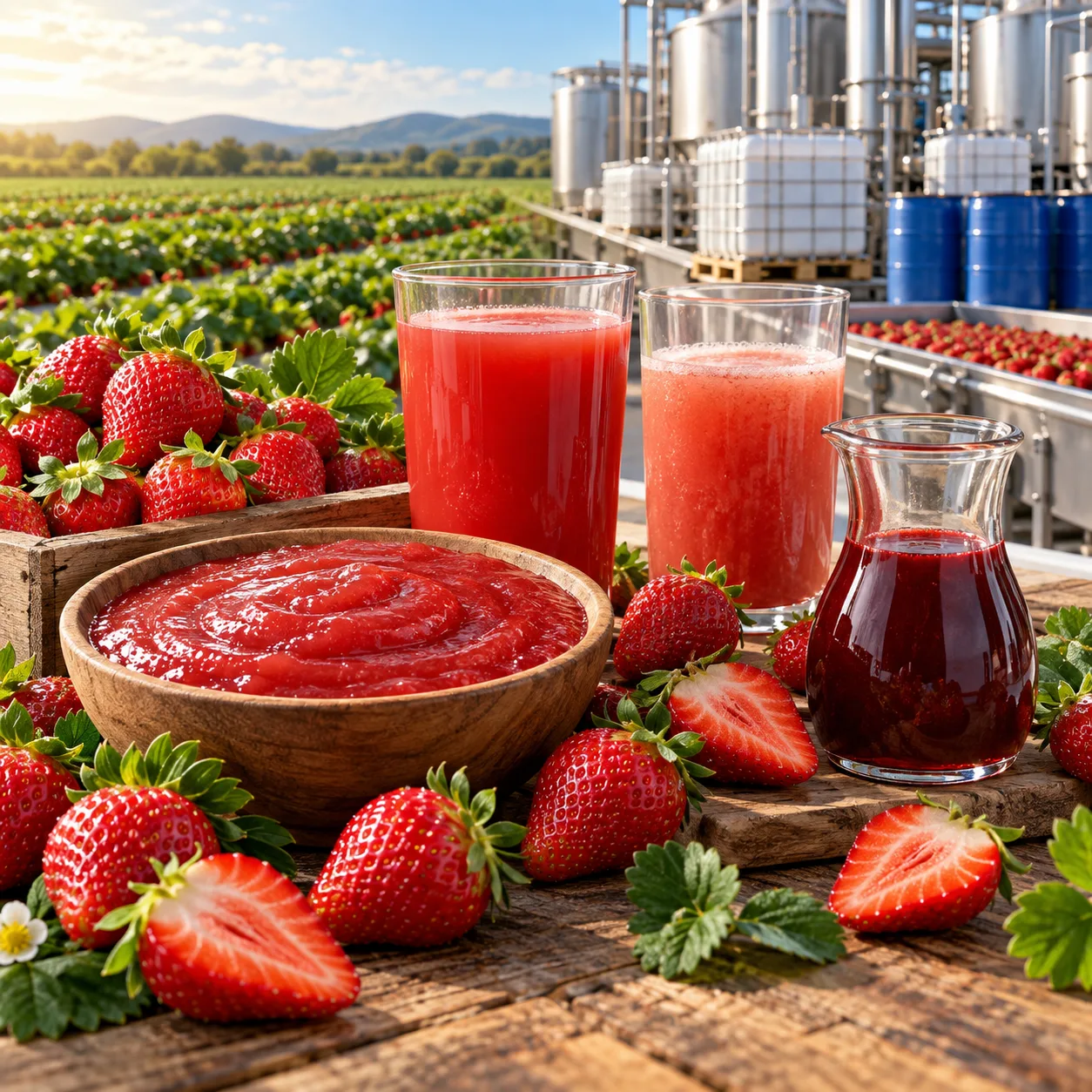
Typical commercial specifications to review.
Commercial strawberry juice concentrate is frequently supplied at approximately 65° Brix. Exact analytical values vary by processor, origin and crop, so formulation and purchasing decisions should always use the current supplier specification and certificate of analysis.
Soluble Solids / °Brix
A common industrial specification is approximately 65° Brix, often with a tolerance of about ±1° Brix. Brix directly affects ingredient yield, sweetness contribution, dilution calculations and freight efficiency.
pH
Commercial strawberry concentrate specifications commonly fall broadly around pH 2.8–4.2. Actual pH depends on fruit variety, maturity, crop conditions and processing.
Titratable Acidity
Acidity is often reported as citric acid equivalent. It influences strawberry flavor balance, reconstitution, finished-product pH and the amount of additional acid required in beverages, confectionery and fruit preparations.
Color
Commercial concentrate should have a characteristic red strawberry appearance. Color may be evaluated visually or instrumentally where lot-to-lot consistency is important.
Clarity & Insoluble Solids
Clarified concentrate contains relatively little suspended fruit material. Cloudier formats can retain more insoluble solids and pigment, so the desired grade should be matched to the visual and processing requirements of the finished product.
Microbiological Quality
Commercial specifications normally define limits for total plate count, yeast and mold. Buyers should review these limits together with the processing method, pack system and intended downstream heat treatment.
Specification note: Approximately 65° Brix is common for commercial strawberry juice concentrate, but pH, acidity, color, clarity and microbiological limits differ between suppliers. Use the actual commercial specification rather than generic values for purchasing approval.
Select the strawberry format according to the application.
Strawberry Juice Concentrate
Concentrate provides soluble strawberry solids, flavor, acidity and color with relatively little pulp. It is especially useful where manufacturers need concentrated fruit delivery without adding the texture of a puree.
Typical applications include beverages, confectionery, syrups, dairy preparations, fermentation, sauces and smooth fruit systems.
Strawberry Puree
Puree retains more of the fruit's pulp, seed fragments and natural suspended solids. It provides greater body and recognizable fruit texture but also introduces more water than high-Brix concentrate.
Puree is frequently preferred for smoothies, yogurt fruit preparations, bakery fillings, ice cream, desserts and products where visible or textural strawberry identity is important.
How strawberry concentrate behaves in food systems.
Flavor & Aroma
Strawberry contains delicate volatile aroma compounds responsible for its fresh-fruit character. Extended heat exposure can reduce these top notes, so addition point and overall thermal load should be evaluated in cooked formulations.
Natural Acidity
Strawberry provides noticeable but generally moderate fruit acidity. Citric or malic acid may still be used in beverages and confectionery where a sharper flavor profile or more tightly controlled finished pH is required.
Fruit Solids & Sweetness
High-Brix concentrate contributes naturally occurring fruit sugars and soluble solids. These should be included when calculating added sugar, syrup, total solids and finished-product Brix.
Color Stability
Strawberry's natural red pigments can be sensitive to heat, oxygen, light and pH. Finished-product color should therefore be tested through the intended process and shelf life rather than evaluated only in the raw concentrate.
Major uses for strawberry juice concentrate.
Juices & Fruit Beverages
Strawberry concentrate is used in juice drinks, mixed-fruit beverages, lemonades, flavored waters, smoothie bases and beverage concentrates. It pairs well with apple, grape, raspberry, peach, banana, lemon and tropical fruits.
Sports & Functional Beverages
Strawberry is a familiar flavor for hydration, wellness and nutritional beverages. Concentrate can contribute fruit solids, acidity, color and recognizable berry character alongside vitamins, minerals and other functional ingredients.
Yogurt & Dairy Products
Strawberry is one of the most established dairy flavor profiles. Juice concentrate can be incorporated into fruit preparations, drinking yogurt, cultured dairy products and dairy desserts, often together with puree or diced fruit.
Plant-Based Products
Strawberry concentrate can provide fruit flavor and color in oat, soy, almond and other plant-based drinks or cultured alternatives. Interaction with proteins, stabilizers and minerals should be checked during formulation.
Confectionery
Applications include gummies, fruit jellies, chews, hard candy, fondants and filled confectionery. The concentrate contributes strawberry solids and acidity while additional natural flavor may be used to strengthen fresh top notes.
Bakery & Fillings
Strawberry concentrate is used in bakery fillings, glazes, cake systems, pastry creams, icings and fruit preparations. Manufacturers should evaluate heat exposure, color retention and water contribution during baking.
Jams & Fruit Preparations
Concentrate can increase strawberry solids and flavor intensity in jams, preserves, spreads and industrial fruit preparations while allowing manufacturers to control water addition separately.
Frozen Desserts
Ice cream, sorbet, frozen yogurt, fruit bars and other frozen desserts use strawberry concentrate for flavor, color and soluble solids. The ingredient's natural sugars should be included when balancing freezing point and texture.
Syrups & Sauces
Commercial uses include dessert sauces, beverage syrups, ice-cream toppings, pancake syrups, fruit coulis-style preparations and sweet sauces requiring concentrated strawberry character.
Brewing & Fermentation
Strawberry concentrate can be used in specialty beer, cider, hard seltzer, fruit wine and other fermented beverages. Fermentable sugars, acidity and aroma retention should be evaluated according to whether the ingredient is added before or after fermentation.
Strawberry quality is strongly influenced by processing.
Heat Exposure
Prolonged heating can reduce fresh strawberry aroma and contribute cooked notes. In suitable products, later addition can help retain more delicate flavor components.
Oxygen & Light
Oxygen exposure and light can accelerate changes in natural berry color and aroma. Closed handling systems and appropriate finished-product packaging can help improve stability.
pH Environment
Natural strawberry pigments respond to formulation pH. Color should therefore be evaluated in the actual beverage, dairy, confectionery or dessert system rather than only in the raw ingredient.
Commercial formats for industrial use.
Frozen Drums
Lined steel drums are commonly used for commercial strawberry concentrate. Frozen storage is widely recommended because it helps preserve the fruit's characteristic color and flavor over longer storage periods.
Pails & Smaller Packs
Smaller commercial packs may be available for product development, foodservice and lower-volume production. These formats can reduce the amount of ingredient exposed after opening.
Other Bulk Systems
Depending on origin, product and supplier, larger bulk formats such as totes or other industrial systems may be available for high-volume users. Storage and unloading capability should be confirmed before ordering.
Storage note: Frozen storage around 0°F is commonly recommended for commercial strawberry juice concentrate to support color and flavor retention. Follow the exact temperature, thawing and shelf-life instructions provided by the specific supplier.
Compare more than price and Brix.
A 65° Brix strawberry concentrate from one source may not perform identically to another. Variety, fruit maturity, processing method, color, acidity, aroma intensity and clarification can all affect the required dosage and finished-product quality.
Crop & Origin
Strawberry is grown commercially in numerous regions, and processing availability follows seasonal harvest cycles. Crop conditions can influence fruit cost, Brix, flavor, color and total industrial supply.
Color & Sensory Approval
For products where strawberry is the primary flavor, approved reference samples can be useful because analytical specifications alone may not fully describe aroma quality or color intensity.
Organic Availability
Organic strawberry concentrate may have more limited supply than conventional product. Confirm current certification, origin, available quantity and crop position before committing to an organic formulation.
MOQ & Lead Time
Minimum order quantity and lead time depend on whether the product is stocked domestically, held frozen, imported or produced against seasonal crop supply. Share both the initial requirement and expected annual demand when requesting a quote.
Specify the requirement before comparing offers.
- Required Brix and tolerance
- Direct or acid-corrected Brix where applicable
- pH and titratable acidity
- Color specification
- Clarified or cloudy concentrate requirement
- Insoluble solids or turbidity limits where relevant
- Characteristic strawberry flavor and sensory standard
- Microbiological specification
- Conventional or organic certification
- Country of origin and processor
- Packaging format and net weight
- Storage temperature and shelf life
- Initial order and estimated annual volume
- Delivery destination and requested timing
- Current specification and certificate of analysis
Product availability, origin, crop characteristics, packaging and pricing can change during the year. Commercial decisions should be confirmed against the current supplier specification, approved sample, certificate of analysis and quotation.
See how strawberry concentrate fits commercial formulations.
Craft Beer
Using juice concentrates in brewing, fermentation and specialty fruit beer production.
Juice ConcentratesSports Drinks
Formulation considerations for fruit concentrates in hydration and functional beverage systems.
Juice ConcentratesSpoonable Yogurt
Sourcing and processing considerations for concentrated fruit ingredients in yogurt and dairy preparations.
Questions strawberry concentrate buyers often ask
What is bulk strawberry juice concentrate used for?
Major commercial applications include juices, fruit beverages, functional drinks, yogurt and dairy preparations, confectionery, bakery fillings, jams, fruit preparations, syrups, sauces, ice cream, frozen desserts, brewing and fermented beverages.
What Brix is commercial strawberry juice concentrate?
Commercial strawberry juice concentrate is commonly supplied around 65° Brix. Typical supplier tolerances are approximately ±1° Brix, although direct and acid-corrected specifications can differ. Confirm the exact measurement method and limits with the supplier.
What is the typical pH of strawberry concentrate?
Commercial specifications commonly fall broadly between about pH 2.8 and 4.2. Actual values vary with fruit variety, crop, origin, maturity and processing method.
What is the difference between strawberry concentrate and strawberry puree?
Juice concentrate contains much less water and generally much less pulp than puree, making it useful for concentrated fruit-solids delivery and smooth formulations. Puree retains more of the fruit tissue and is preferred where greater body and recognizable fruit texture are required.
Why is frozen storage commonly recommended?
Strawberry color and aroma can change during storage. Frozen storage is widely used for commercial concentrate because it helps slow changes in flavor and natural berry color compared with prolonged warmer storage.
Is organic strawberry juice concentrate available?
Organic strawberry concentrate may be available depending on crop, origin and supplier inventory. Request current organic certification and confirm commercial quantity, storage condition and lead time.
What pack sizes are available?
Commercial formats may include pails, lined steel drums and larger industrial systems depending on the product and supplier. Frozen drums are common for commercial strawberry juice concentrate.
What information should I provide for a quote?
Provide the required Brix, clarified or cloudy format, conventional or organic status, target acidity or color requirements, approximate initial and annual quantity, packaging preference, storage capability, destination and required delivery timing.