Pineapple Juice Concentrate
Bulk pineapple juice concentrate for beverages, fermentation, dairy, sauces, bakery, confectionery, frozen desserts and other commercial food applications, with conventional and organic sourcing options subject to availability.
Bright tropical aroma with a naturally sweet-acid profile.
Pineapple (Ananas comosus) is a tropical fruit valued for its distinctive aroma, natural sweetness and relatively pronounced acidity. Commercial processing fruit can come from varieties such as Smooth Cayenne, MD2 and other regional types, with variety, maturity and origin influencing juice yield, aroma, acidity and color.
Ripe pineapple juice contains natural sugars together with citric and other organic acids, creating the characteristic balance between sweetness and refreshing tartness. During concentration, much of the water is removed while soluble fruit solids remain, producing a more compact ingredient with significantly higher Brix than single-strength juice.
Pineapple concentrate is commercially important because its strong tropical profile works both as a primary fruit flavor and as a supporting ingredient in blends. It pairs particularly well with mango, passion fruit, orange, coconut, banana, guava, apple, berry and citrus systems.
- 60° Brix is a common commercial concentration
- 65° Brix grades are also commercially available
- Clarified and cloudy / pulp-containing formats may be offered
- Characteristic yellow to golden-brown concentrated appearance
- Conventional and certified organic programs may be available
- Aseptic and frozen commercial supply formats are available
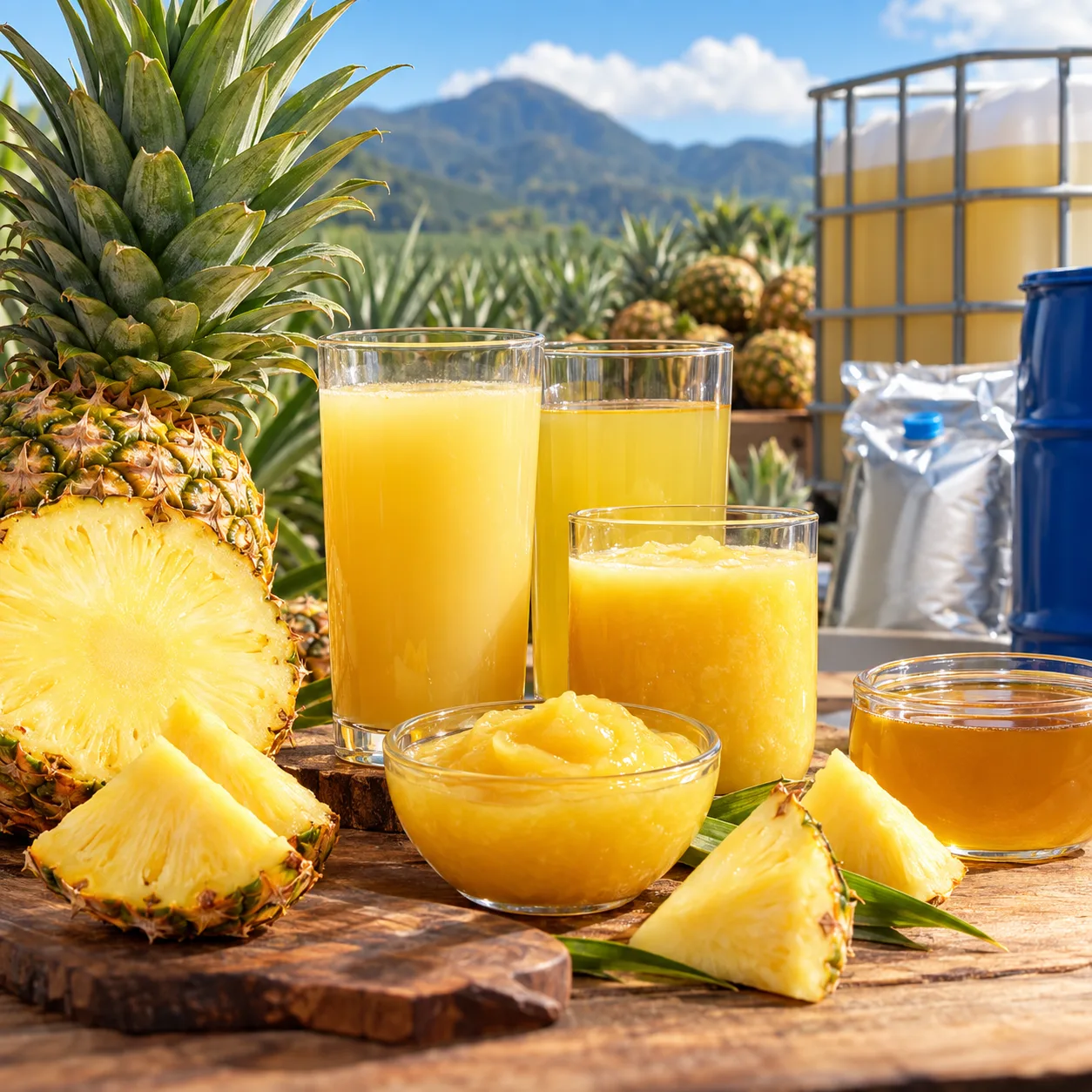
Choose concentration and clarity for the intended application.
60° Brix Pineapple Concentrate
Approximately 60° Brix is a widely traded commercial grade. It can retain measurable pulp and cloud material and is well suited to juice beverages, tropical drink bases, fruit preparations and other applications where a natural juice appearance is acceptable.
65° Brix Pineapple Concentrate
Higher-solids 65° Brix concentrate provides additional concentration and reduced water content. Both clarified and other commercial grades are available, depending on processor and origin.
Clarified Concentrate
Clarified pineapple concentrate has more suspended material removed and is useful in beverages, syrups, confectionery and other applications where lower turbidity, reduced sediment or smoother processing is preferred.
Cloudy / Pulp-Containing Concentrate
Cloudy grades retain more suspended fruit material and can produce a fuller juice appearance and mouthfeel. Commercial 60° Brix specifications may contain approximately 5–20% pulp by volume depending on product and test method.
Specifications commercial buyers should review.
Pineapple concentrate should be sourced against a current technical specification rather than Brix alone. Origin, fruit maturity, concentration process, pulp level and crop characteristics can materially affect flavor and analytical performance.
Soluble Solids / °Brix
Commercial pineapple concentrate is frequently supplied at approximately 60° Brix, while 65° Brix grades are also available. The target and permitted tolerance should be clearly defined in the purchasing specification.
pH & Titratable Acidity
Representative commercial grades commonly fall near pH 3.0–4.2. A 60° Brix specification may show acidity around 3.05 ±1.25% expressed as citric acid, while 65° Brix products may have somewhat different limits.
Brix-to-Acid Ratio
The relationship between soluble solids and acidity has a strong influence on pineapple flavor balance. Two concentrates with similar Brix can taste noticeably different if one is significantly more acidic.
Pulp & Turbidity
Cloudy pineapple concentrates may contain measurable pulp, while clarified products are filtered to reduce suspended solids. Pulp specification matters for beverage appearance, sedimentation, filtration and filling performance.
Color
Concentrated pineapple juice can range from dark yellow and amber to golden-brown. Color naturally becomes darker as concentration and heat exposure increase and may also deepen during extended storage.
Flavor & Aroma
The concentrate should have a clean, recognizable pineapple profile and be free from fermented, scorched, excessively caramelized or other objectionable notes. Aroma intensity varies with variety, origin and processing conditions.
Specific Gravity
Representative 60° Brix products may have specific gravity around 1.28–1.30, while 65° Brix concentrate can be approximately 1.31–1.33. Actual values should come from the supplier's product data.
Microbiological Specification
Typical commercial specifications establish limits for total plate count, yeast and mold. Representative grades may specify total plate count below 1,000 CFU/mL and yeast and mold below 100 CFU/mL.
Specification note: All analytical figures on this page are typical commercial reference points, not universal standards. Final purchasing and formulation should use the current supplier specification and lot-specific certificate of analysis.
Single-strength pineapple juice reference.
For U.S. beverage percentage-juice calculations, pineapple has a 12.8° Brix minimum single-strength reference. A commercial 60° Brix concentrate may use a reconstitution ratio around one part concentrate to 4.74 parts water, while a 65° Brix concentrate may use approximately one part concentrate to 5.37 parts water.
60° Brix Concentrate
A representative commercial formula reconstitutes one part 60° Brix concentrate with approximately 4.74 parts water to reach the single-strength juice reference. Actual calculation should use the supplied concentrate Brix.
65° Brix Concentrate
A representative 65° Brix commercial product uses approximately one part concentrate to 5.37 parts water. Beverage manufacturers should calculate reconstitution from the actual lot value and applicable labeling requirements.
Where pineapple juice concentrate is used.
Juices, Nectars & Juice Blends
Pineapple concentrate is widely used in tropical juice blends, nectars and mixed-fruit beverages. Its combination of sweetness, acidity and strong aroma allows it to provide primary pineapple identity or brighten heavier fruit systems.
Carbonated Drinks & Mocktails
Pineapple works well in sparkling beverages, tropical sodas, mocktails and mixers. Carbonation can enhance its bright acidic profile, while clarification may be useful where sediment and excessive foam need to be minimized.
Smoothies & Nutrition Beverages
Concentrate can increase pineapple flavor and fruit solids without adding as much water as single-strength juice. It is commonly paired with mango, banana, coconut, orange and passion fruit in smoothie and nutrition systems.
Brewing, Cider & Fermentation
Pineapple concentrate can supply fermentable fruit sugars, acidity and tropical aroma to beer, cider, mead, kombucha and other fermented beverages. Fermentation can substantially alter sweetness and aroma, so addition timing should be validated.
Yogurt & Plant-Based Products
Pineapple can be used in yogurt preparations, drinking yogurt and plant-based cultured foods. Its acidity requires attention in protein-containing systems, while puree may be combined with concentrate when visible fruit texture is desired.
Fruit Preparations, Jams & Compotes
Pineapple concentrate can intensify fruit flavor in jams, preserves, compotes, fruit layers and industrial preparations. It can be combined with pineapple pieces or puree where both concentrated flavor and recognizable fruit texture are required.
Sauces, Glazes & Marinades
Sweet-and-sour sauces, barbecue sauces, tropical glazes, marinades and prepared-food sauces can use pineapple concentrate for fruit sweetness, acidity and flavor. Its sugar contribution should be included in total solids and browning calculations.
Bakery & Fillings
Applications include pastry fillings, cake layers, bakery glazes, tropical bars and fruit preparations. Heat can reduce fresh pineapple aroma and promote cooked-sugar notes, so dosage should be assessed after the actual baking process.
Confectionery & Gummies
Gummies, chews, fruit snacks, hard candy and other confectionery products can use pineapple concentrate for recognizable tropical flavor, natural fruit acids and soluble solids.
Ice Cream, Sorbet & Frozen Desserts
Pineapple concentrate is suitable for sorbets, ice cream preparations, frozen yogurt, fruit ices and tropical frozen novelties. Its natural sugar and acid contribution should be included when setting sweetness and freezing behavior.
Protect tropical aroma and manage acidity.
Control Heat Exposure
Some of pineapple's characteristic volatile aroma compounds are sensitive to prolonged heat. Evaluate the concentrate after pasteurization, baking, hot-fill or other thermal processing rather than judging flavor only from the unprocessed ingredient.
Balance Acidity
Pineapple already contributes significant natural acidity. Added citric, malic or other acids should therefore be adjusted after the concentrate's contribution is measured in the complete formulation.
Account for Natural Sugars
Concentrate contributes naturally occurring fruit sugars and substantial soluble solids. Its contribution should be included in finished Brix, sweetness, calorie and total-carbohydrate calculations where relevant.
Manage Pulp & Sediment
Cloudy grades can contribute natural juice appearance but may increase sediment, turbidity or filling challenges. Clarified concentrate can be preferable when a smoother or visually cleaner finished product is required.
Pineapple naturally contains the proteolytic enzyme bromelain, but enzyme activity can be reduced substantially by processing and heat. Ordinary commercial pineapple concentrate should therefore not be assumed to provide a standardized functional level of active bromelain unless that activity has been specifically measured and documented by the supplier.
Compare Brix, acidity, pulp and origin—not price alone.
Pineapple concentrates offered at the same nominal Brix can differ materially in acidity, Brix-to-acid ratio, pulp level, aroma, color and origin. Those differences influence the required dosage and the sensory result in the finished product.
Information to include in a sourcing request
- Pineapple juice concentrate and required Brix
- Clarified, cloudy or pulp-containing preference
- Target acidity or Brix-to-acid ratio if important
- Color and flavor requirements
- Conventional or certified organic requirement
- Preferred origin or variety if applicable
- Initial sample or production-trial quantity
- Commercial order size and estimated annual volume
- Aseptic, frozen or other storage preference
- Preferred packaging format
- Required certifications and documentation
- Delivery destination and requested timing
Important commercial pineapple-processing origins can include Costa Rica, Thailand, the Philippines, Indonesia, Kenya and other tropical producing regions. Origin can affect crop timing, freight, flavor profile and supply continuity.
Pineapple is an agricultural product, and specifications, origin, crop availability and commercial pricing can change. Confirm the current product specification, pack size, minimum order quantity, certification status and quotation before purchase.
Match the supply program to plant requirements.
Aseptic Drums
Pineapple concentrate is commonly supplied in sterile aseptic bags inside steel drums. Commercial net weights can be around 250–270 kg depending on concentration, supplier and packaging configuration.
Frozen Packs
Frozen concentrate may be supplied in pails, cases or drums. Frozen storage can support longer shelf life and is especially relevant for non-aseptic formats.
Storage Life
Commercial shelf life depends strongly on process and package. Some current frozen or aseptic grades specify up to approximately three years under defined unopened storage conditions, while opened material generally requires substantially stricter handling.
Post-Opening Handling
Once an aseptic seal is broken, the original shelf-stable protection no longer applies. Follow the supplier's instructions for refrigeration, freezing, hygienic transfer and permitted use period after opening.
Review the current specification and lot documentation.
Certificate of Analysis
The lot-specific COA should be reviewed against the contracted specification for Brix, acidity, pH and microbiological requirements, together with any other parameters important to the application.
Ingredient & Allergen Information
Confirm whether the supplied material is 100% pineapple juice concentrate and request documentation covering allergens, processing aids, preservatives or other added ingredients if applicable.
Origin & Traceability
Country of origin, lot traceability and crop information can be important for quality programs, customer requirements and alternate-source planning.
Organic & Other Certifications
For organic projects, request current certification covering the specific product and processing facility. Kosher, Halal, GMO-status and recognized food-safety documentation can also be requested where required.
See how ingredient format affects formulation.
Plant-Based Yogurt
Plant-Based Yogurt with Juice Concentrates: Sourcing & Process Considerations
Juice ConcentratesFermentation Bases
Using Juice Concentrates in Fermentation Bases: Formulation Guide
Juice ConcentratesDistilled Spirits
Distilled Spirits with Juice Concentrates: Sourcing & Process Considerations
Questions pineapple concentrate buyers often ask
What is pineapple juice concentrate?
Pineapple juice concentrate is produced by extracting juice from ripe pineapple and removing part of its water. This produces a higher-solids ingredient with concentrated tropical flavor, natural sugars and acidity compared with single-strength pineapple juice.
What Brix is commercial pineapple juice concentrate?
Approximately 60° Brix is a common commercial standard, while 65° Brix concentrate is also widely available. Exact Brix tolerance should be confirmed with the supplier.
What pH and acidity are typical?
Representative commercial pineapple concentrates commonly fall around pH 3.0–4.2. A typical 60° Brix grade may have titratable acidity around 3.05 ±1.25% expressed as citric acid, although crop and processor differences are normal.
What is the difference between clarified and cloudy pineapple concentrate?
Clarified concentrate has much of the suspended pulp and cloud removed and is useful for smoother, cleaner-looking applications. Cloudy grades retain more suspended fruit material and may provide greater natural juice appearance and body.
What is bulk pineapple juice concentrate used for?
Applications include juices, nectars, smoothies, carbonated beverages, mocktails, beer, cider, fermentation products, yogurt, plant-based foods, sauces, marinades, jams, fruit preparations, bakery fillings, gummies, confectionery and frozen desserts.
What is the single-strength Brix reference for pineapple?
For U.S. percentage-juice calculations, FDA uses 12.8° Brix as the minimum single-strength reference for pineapple juice.
Is organic pineapple juice concentrate available?
Certified organic pineapple concentrate is commercially available from some processors, but supply varies by origin, crop and production program. Request current organic certification for the specific product being offered.
What should I include in a quote request?
Provide the required Brix, clarified or cloudy preference, acidity requirements, quantity, annual volume, conventional or organic status, preferred origin, packaging, storage method, destination, certifications and requested delivery timing.