Apricot Puree
Smooth apricot puree for beverages, dairy, baby food, bakery, fruit preparations, confectionery and frozen desserts, with conventional, organic, aseptic, frozen and concentrated formats subject to availability.
Sweet-tart stone-fruit character with natural body and orange color.
Apricot (Prunus armeniaca) is a stone fruit related to peach, plum and cherry. Ripe fruit develops yellow to deep orange flesh, a fragrant stone-fruit aroma and a flavor that balances natural sweetness with noticeable acidity.
Commercial puree is produced by washing and sorting ripe apricots, removing the stone, pulping the flesh and refining it to a controlled consistency. Compared with clarified juice, puree retains substantially more natural pulp and therefore contributes body, viscosity and recognizable whole-fruit character.
- Produced from ripe, destoned apricots
- Yellow-orange to deep orange natural fruit color
- Sweet-tart flavor with characteristic apricot aroma
- Single-strength and concentrated puree formats are available
- Aseptic and frozen processing options may be offered
- Conventional and certified organic grades are commercially available
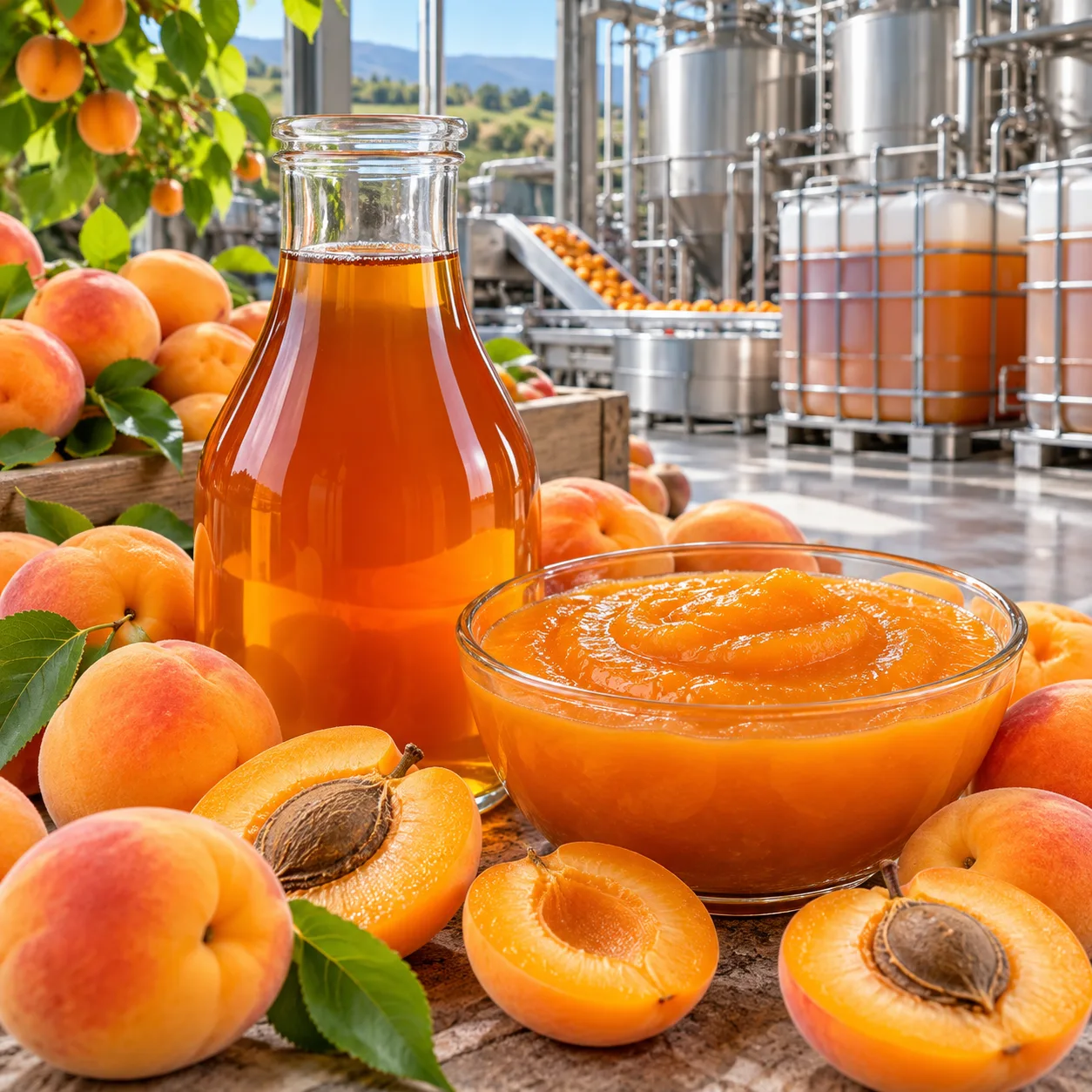
Variety and maturity directly influence flavor, color and consistency.
Flavor & Ripeness
Properly ripened apricots provide a fragrant, rounded stone-fruit profile with a balance of sweetness and tartness. Less mature fruit tends to be firmer and more acidic, while riper fruit generally develops greater sweetness and softer texture.
Crop maturity therefore affects the puree's Brix, acidity, aroma, color and natural viscosity.
Color & Texture
Commercial puree typically ranges from yellow-orange to deep orange depending on fruit variety and maturity. A good puree should be homogeneous and free from excessive browning or objectionable fibrous material.
Screen size and finishing conditions influence smoothness and can be important in beverages, baby food, yogurt preparations and fine bakery fillings.
Apricot is an agricultural ingredient. Brix, acidity, pH, color and flavor naturally vary between varieties, origins and crop years, so commercial approval should use agreed specification ranges.
Key parameters buyers commonly review.
Apricot puree is sold in both single-strength and concentrated formats. Published commercial specifications vary, but the following ranges are useful sourcing references rather than universal standards.
Physical & Chemical Parameters
- Soluble solids measured as °Brix
- pH and titratable acidity
- Characteristic yellow-orange to orange color
- Typical ripe-apricot aroma and flavor
- Controlled insoluble-solids level
- Screen or finisher size where required
- Bostwick consistency for process control
Published Commercial Examples
Single-strength products are commercially specified around 9–16 °Brix, with individual examples near 13 °Brix and pH ranges approximately 3.4–4.6.
Concentrated puree is commonly supplied near 30–32 °Brix. Published concentrated specifications may also define acidity, Bostwick consistency and fine screening around approximately 0.6–0.7 mm.
The current supplier specification and lot-specific Certificate of Analysis should always take precedence over general reference ranges.
Single-strength and concentrated puree serve different formulation needs.
Single-Strength Apricot Puree
Single-strength puree retains the natural water and pulp balance of processed apricots. It is well suited to products where fruit body, authentic mouthfeel and direct apricot character are important.
Commercial examples commonly range from approximately 9–16 °Brix, depending on cultivar, maturity and processor.
Apricot Puree Concentrate
Puree concentrate has part of its natural water removed while retaining fruit pulp. Commercial products around 30–32 °Brix provide higher fruit solids and greater transport efficiency than single-strength puree.
Concentrated puree can be useful in bakery, confectionery and fruit preparations where formulators need stronger apricot impact without introducing as much water.
Apricot contributes both flavor and structure.
Viscosity
Natural pulp gives apricot puree significantly more body than clarified juice. Bostwick consistency may be specified when pumping, depositing or filling performance needs to remain consistent between lots.
Acidity Balance
Apricot has useful natural acidity that can balance sweet dairy, bakery and confectionery systems. The puree's acidity should be included when calculating the finished-product acid and sugar balance.
Color Stability
Heat, oxygen and storage conditions can shift apricot's orange color toward brown tones. Pilot trials should evaluate color after the full production process rather than only in the incoming puree.
Where apricot puree is used commercially.
Nectars, Smoothies & Beverage Bases
Apricot is naturally well suited to nectars because its pulp provides body and characteristic fruit texture. It is also used in smoothies, fruit drinks, juice blends and thicker beverage bases.
Apricot pairs particularly well with peach, apple, orange, mango, passion fruit and other stone or tropical fruits.
Yogurt & Dairy Products
Apricot puree is widely applicable to spoonable yogurt, drinking yogurt, fruit-on-the-bottom preparations, cultured dairy products, dairy desserts and plant-based alternatives.
Fruit acidity, puree viscosity and particle size should be considered when designing dairy fruit preparations.
Baby Food & Toddler Products
Its smooth texture and mild sweet-tart flavor make apricot puree suitable for infant fruit blends, pouches and toddler foods.
It is frequently compatible with apple, pear, peach, banana, grains and other mild ingredients. Baby-food programs may require additional residue and microbiological controls.
Bakery Fillings & Pastries
Apricot puree is used in pastry fillings, Danish products, cakes, cookies, breakfast products, glazes and layered bakery applications.
Its characteristic acidity helps balance high-sugar preparations, while puree concentrate can increase fruit intensity with less water.
Jams, Preserves & Fruit Preparations
The puree provides natural fruit solids, flavor and color in jams, preserves, compotes, toppings and industrial fruit preparations.
It may be combined with diced fruit, concentrate or pectin systems to achieve the desired fruit identity, Brix and texture.
Ice Cream & Frozen Desserts
Apricot puree works in ice cream, gelato, frozen yogurt, sorbet, popsicles and frozen novelties where its aromatic stone-fruit profile remains recognizable in sweet formulations.
Fruit sugars and puree solids should be included when calculating freezing behavior and total solids.
Confectionery & Fruit Snacks
Applications include gummies, fruit chews, jellies, confectionery fillings, fruit bars and fruit leather.
Brix, moisture and acidity need to be balanced with pectin, gelatin or other gelling and drying systems.
Sauces, Glazes & Culinary Products
Apricot puree is useful in dessert sauces, syrups, glazes, chutney-style products and savory sauces. Its combination of fruit sweetness and acidity pairs well with spice, ginger, chili, mustard and roasted flavors.
Formats for product development through industrial production.
Bag-in-Box
Smaller aseptic formats are available for pilot production, foodservice and manufacturers that do not consume full drums. Commercial examples include approximately 20 kg and 42 lb bag-in-box packs.
Aseptic Drums
Lined steel drums are a common industrial format. Published supplier programs include approximately 190–230 kg drums depending on product concentration, processor and packaging system.
Totes & Larger Bulk Supply
Higher-volume programs may be supplied in larger aseptic totes or IBC systems. Commercial examples include approximately 1,000 kg containers and larger bulk delivery formats.
Packaging and storage conditions vary substantially between aseptic, refrigerated and frozen products. Confirm unopened shelf life, temperature requirements and post-opening handling for the exact product quoted.
Specify single strength or concentrate before comparing offers.
Technical Requirements
- Single-strength or concentrated puree
- Target Brix and acceptable tolerance
- pH and titratable acidity
- Bostwick or viscosity requirement
- Screen size and particle specification
- Color and sensory expectations
- Microbiological acceptance limits
- Additive or preservative restrictions
Commercial Requirements
- Conventional or certified organic grade
- Preferred origin where required
- Trial quantity and forecast annual demand
- Bag-in-box, drum, tote or bulk preference
- Aseptic, refrigerated or frozen handling capability
- Delivery destination in the United States
- Required delivery timing
- Certification and documentation requirements
Apricot is a seasonal stone fruit and puree availability can depend on harvest and processing campaigns. Recurring buyers should communicate expected annual volume and acceptable specification ranges in advance.
Documents commonly reviewed during supplier approval.
Technical Documentation
- Current technical product specification
- Lot-specific Certificate of Analysis
- Microbiological specification
- Ingredient and additive declaration
- Allergen statement
- Storage and shelf-life information
- Packaging specification
Certification & Supply Documents
- Organic certificate when applicable
- Food-safety certification information
- Baby-food documentation where required
- Kosher or Halal documentation when requested
- GMO status where required
- Country-of-origin and traceability information
- Commercial quotation and delivery terms
See how fruit puree performs in finished products.
Apricot puree sourcing questions
What is commercial apricot puree?
Commercial apricot puree is produced from ripe apricots that are washed, destoned, pulped and refined into a smooth fruit puree. It retains natural pulp, fruit solids, color and recognizable apricot flavor.
What is the typical Brix of apricot puree?
Published single-strength commercial apricot purees commonly fall around 9–16 °Brix depending on fruit maturity and processor. Concentrated puree is also widely available around 30–32 °Brix.
What is the typical pH?
Published apricot puree specifications commonly show pH around 3.0–4.6. Exact pH and acidity vary with crop, origin, maturity and whether the product is single strength or concentrated.
What is apricot puree concentrate?
Apricot puree concentrate is produced by removing part of the natural water from the puree while retaining fruit pulp. Commercial products around 30–32 °Brix provide greater fruit-solid density and transport efficiency than single-strength puree.
What is bulk apricot puree used for?
Major applications include nectars, smoothies, yogurt, dairy preparations, baby food, bakery fillings, jams, confectionery, frozen desserts, fruit preparations, sauces and snack products.
Is organic apricot puree available?
Certified organic apricot puree and puree concentrate are available from selected processors. Current organic certification, origin and crop availability should be confirmed before purchase.
How is commercial apricot puree packaged?
Commercial formats can include approximately 20 kg or 42 lb bag-in-box packs, lined steel drums around 190–230 kg and larger tote or IBC systems. Frozen formats are also available from selected suppliers.
What information should I provide for a quote?
Provide the required single-strength or concentrated format, conventional or organic grade, approximate volume, preferred packaging, destination and delivery timing, together with any requirements for Brix, pH, acidity, consistency, particle size, microbiology, origin or certification.