Apricot Juice Concentrate
Concentrated apricot juice for commercial beverage and food manufacturing, delivering characteristic stone-fruit sweetness, balanced acidity and apricot aroma in a transport-efficient bulk ingredient.
Concentrated stone-fruit character for industrial formulations.
Apricot (Prunus armeniaca) is a stone fruit related to peach, plum and cherry. Ripe apricots have yellow to deep orange flesh and a characteristic flavor combining natural sweetness, moderate acidity and aromatic floral and stone-fruit notes.
In juice concentrate production, water is removed from the juice to increase soluble-solids content. The resulting ingredient occupies less storage and transportation volume than single-strength juice while providing concentrated fruit solids, sweetness, acidity, color and flavor for further formulation.
Apricot juice concentrate should be distinguished from apricot puree concentrate. Juice concentrate generally contains less insoluble fruit material, while puree concentrate retains more pulp and therefore contributes greater body and viscosity. The appropriate format depends on the intended finished product.
- Characteristic sweet-tart apricot and stone-fruit profile
- Yellow-orange to amber appearance depending on processing and crop
- High soluble-solids content compared with single-strength juice
- Useful for flavor, fruit solids and natural sweetness contribution
- Conventional and certified-organic options may be available
- Frozen or aseptic formats depend on the individual supplier program
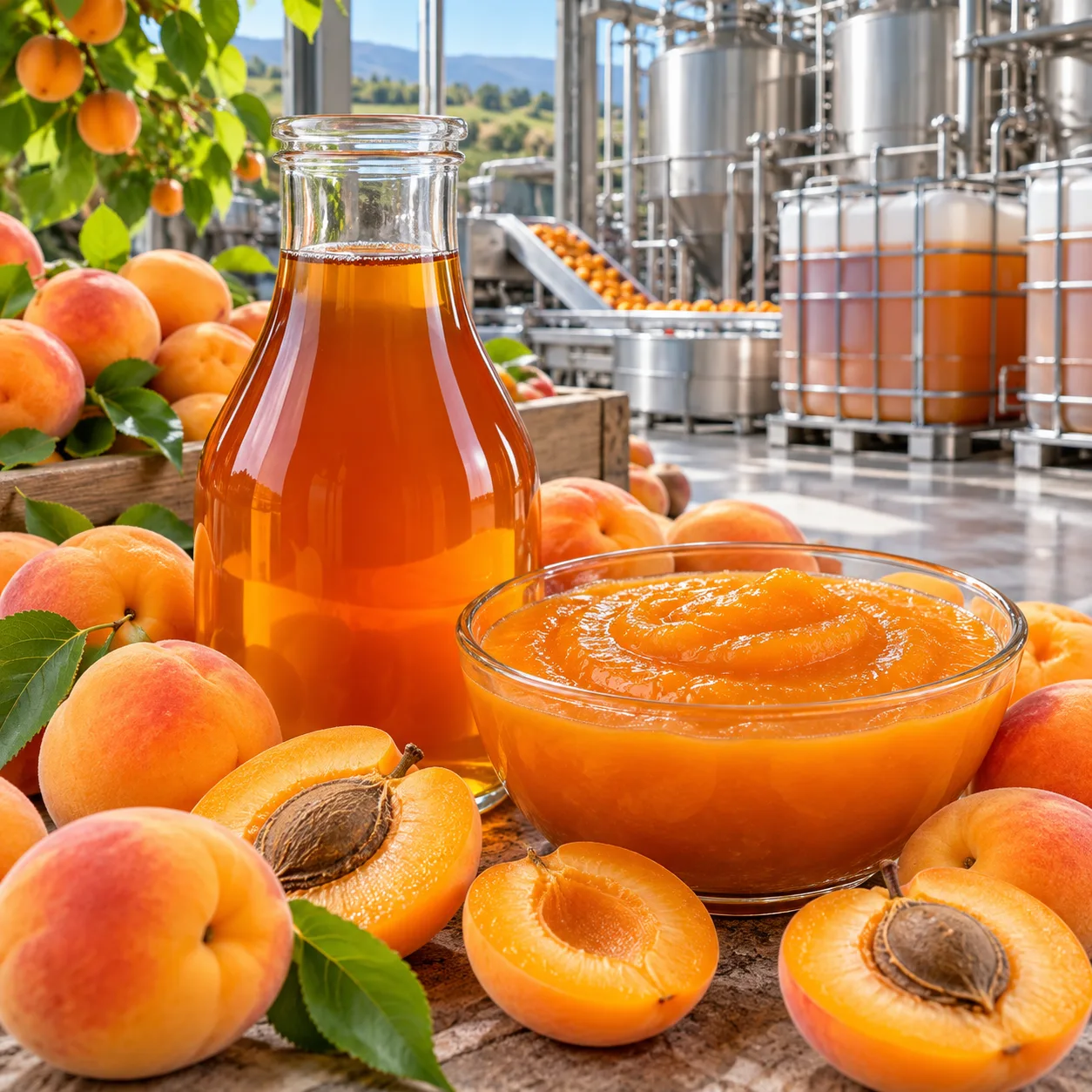
Key parameters for commercial evaluation.
Apricot concentrate specifications vary according to fruit variety, crop, processing method and manufacturer. Commercial buyers commonly evaluate the following parameters when qualifying material for production.
Soluble Solids / °Brix
Apricot juice concentrate is commonly supplied at approximately 65–68 °Brix. Higher Brix represents greater removal of water and therefore a higher concentration of soluble fruit solids. The exact target and tolerance should be confirmed for each product.
pH & Titratable Acidity
Commercial apricot concentrates commonly fall within an acidic pH range, often approximately 3.0–4.0. Titratable acidity is also important because it influences flavor balance, reconstitution and finished-product formulation.
Color & Appearance
Typical appearance ranges from golden orange to darker orange or amber. Variety, clarification, heat exposure and storage can influence final color, so visual requirements should be agreed during product approval.
Flavor & Aroma
The concentrate should have characteristic ripe-apricot flavor without fermented, oxidized, burnt or other objectionable notes. Sensory strength may vary by origin and concentration process.
Clarity & Fruit Solids
Juice concentrate may be produced to different clarity levels. Applications requiring clear beverages can have different specifications from products where natural suspended fruit material is acceptable.
Microbiological Criteria
Commercial specifications commonly establish limits for total aerobic count, yeast, mold and relevant pathogens. The required limits should reflect the intended process, packaging system and finished-product food-safety program.
Typical values are provided for preliminary evaluation only. Brix, pH, acidity, color and microbiological limits should always be confirmed against the current supplier specification and lot-specific certificate of analysis.
Define the requirement before comparing offers.
Packaging & Handling
Commercial apricot concentrate may be packed in pails, lined drums, aseptic systems or other industrial containers. Packaging choice depends on order size, processing method, storage capabilities and expected usage rate.
Storage & Shelf Life
Frozen concentrate is typically maintained under frozen storage to preserve flavor and color, while aseptic products may follow different temperature requirements. Always use the storage temperature and shelf-life instructions stated by the supplier.
Documentation
Product approval may require a technical data sheet, certificate of analysis, nutritional information, allergen statement, country of origin, microbiological data, traceability documentation and applicable organic or food-safety certificates.
Crop & Origin
Apricots are agricultural products, so crop size, variety, harvest maturity and geographical origin can affect availability, flavor, acidity and color. Buyers with continuous programs may qualify alternative origins or suppliers.
Major uses for apricot juice concentrate.
Juices, Nectars & Beverage Blends
Apricot concentrate is used in fruit drinks, nectars, smoothies and multi-fruit beverages. It pairs well with peach, apple, orange, mango and other fruits and can contribute both sweetness and recognizable stone-fruit flavor.
Functional & Nutrition Beverages
The concentrate can provide fruit solids and flavor in wellness drinks, nutritional beverages and fruit-based formulations where a concentrated ingredient is more practical than single-strength juice.
Dairy & Cultured Products
Applications include yogurt preparations, drinkable yogurt, cultured dairy, dairy alternatives and dessert systems. Apricot is frequently paired with creamy bases because its acidity and aromatic profile balance dairy richness.
Brewing & Fermented Beverages
Apricot concentrate can be used in fruit beers, cider-style products, kombucha and other fermented beverages where it supplies fermentable sugars together with distinctive stone-fruit character.
Jams, Jellies & Fruit Preparations
Concentrated fruit solids and apricot flavor make the ingredient suitable for jams, spreads, fruit preparations, syrups and toppings. Formulators should adjust sugar, acid and gelling systems according to the final application.
Bakery & Snack Fillings
Apricot concentrate is used in bakery fillings, fruit layers, pastries, cereal-bar preparations and snack applications where concentrated fruit flavor is needed without introducing the full water content of single-strength juice.
Confectionery
Applications include gummies, fruit snacks, jellies, candies and confectionery fillings where apricot concentrate contributes natural fruit identity, sweetness and acidity.
Frozen Desserts & Ice Cream
Suitable for sorbets, ice cream, frozen yogurt, fruit bars and related desserts, where its concentrated flavor can remain noticeable after dilution with other formulation components.
Sauces, Glazes & Culinary Products
Apricot's sweet-acid profile works well in glazes, marinades, chutney-style products, barbecue sauces and fruit sauces, particularly when paired with spices, mustard, chili or savory ingredients.
Foodservice & Prepared Foods
Industrial kitchens and foodservice manufacturers can use concentrate in beverage bases, dessert sauces, fruit preparations and culinary systems requiring consistent apricot flavor in bulk quantities.
Account for concentration, sweetness and fruit solids.
Reconstitution
Concentrate can be diluted toward a single-strength juice target or used directly at lower inclusion levels as a formulation ingredient. The required water addition depends on the concentrate Brix and desired finished-product soluble-solids level.
Sweetness & Acidity
Removing water increases the concentration of natural sugars and acids. Formulators should therefore evaluate concentrate dosage together with sweeteners, acidulants and other fruit components to achieve the desired balance.
Heat & Color Stability
Pasteurization, baking and extended storage can influence apricot aroma and orange color. Finished formulations should be tested under the actual thermal process and intended shelf-life conditions.
Juice vs. Puree Concentrate
Juice concentrate is generally preferred when a more fluid ingredient or cleaner beverage system is required. Puree concentrate may be more suitable when body, pulp and thicker fruit texture are important to the finished product.
Build a complete apricot concentrate inquiry.
Define the product
Specify apricot juice concentrate rather than puree concentrate, required Brix, acidity or pH requirements, conventional or organic status and any clarity or microbiological criteria.
Select the supply format
Indicate whether your facility requires frozen or aseptic material and identify the preferred pail, drum, bag-in-box or other industrial pack format.
Provide volume & destination
Include estimated order or annual volume, delivery destination, required timing and whether the request is for sampling, pilot production or ongoing commercial supply.
Compare offers against the complete specification.
Apricot is a seasonal agricultural ingredient and natural variation can occur between crops and origins. Technical specifications, availability, certifications, packaging and commercial terms should be confirmed against the current supplier specification and quotation.
See how fruit concentrates perform in commercial formulations.
Craft Beer
Using Juice Concentrates in Craft Beer: Formulation Guide
Juice ConcentratesFunctional Beverages
Functional Beverages with Juice Concentrates: Sourcing & Process Considerations
Juice ConcentratesSpoonable Yogurt
Using Juice Concentrates in Spoonable Yogurt: Formulation Guide
Questions apricot concentrate buyers often ask
What is bulk apricot juice concentrate used for?
Commercial applications include fruit beverages and nectars, functional drinks, yogurt and dairy preparations, brewing and fermentation, jams, syrups, sauces, bakery fillings, confectionery and frozen desserts.
What Brix is typical for apricot juice concentrate?
Commercial apricot juice concentrate is frequently supplied at approximately 65–68 °Brix. Exact targets and tolerances vary by manufacturer, so the current supplier specification and lot certificate of analysis should always be reviewed.
Is apricot juice concentrate the same as apricot puree concentrate?
No. Juice concentrate is produced primarily from the juice fraction and is generally more fluid or clarified. Apricot puree concentrate retains more insoluble fruit solids and pulp, producing greater body and viscosity.
What technical specifications should I request?
Important parameters can include Brix, pH, titratable acidity, color, clarity, sensory characteristics, microbiological limits, concentration process, packaging, storage temperature and shelf life.
Can apricot concentrate be reconstituted?
Yes. Water can be added to a concentrate to reach a target single-strength soluble-solids level. The actual dilution ratio depends on the incoming concentrate Brix and the target specification for the finished juice or beverage.
Is organic apricot juice concentrate available?
Organic apricot concentrate may be available depending on crop, origin and supplier program. Request current organic certification and lot-specific documentation before purchase.
What pack sizes are available?
Commercial formats may include pails, bag-in-box systems, lined drums and other industrial bulk packs. Frozen and aseptic options depend on the product and supplier.
What information should I provide for a quote?
Share the required Brix, conventional or organic status, approximate quantity, preferred processing and packaging format, delivery destination, required timing and any acidity, microbiological, certification or documentation requirements.