Rhubarb Juice Concentrate
Bulk rhubarb juice concentrate for commercial food and beverage manufacturing, providing concentrated tartness, characteristic rhubarb flavor and soluble solids in a reduced-water format for beverages, preserves, bakery, confectionery, sauces and desserts.
Distinctive tart stalks used like fruit in food manufacturing.
Rhubarb belongs to the genus Rheum and is botanically a vegetable, although its edible stalks are commonly used in the same way as fruit. The stalks range from greenish-red to deep pink or red depending on variety, maturity and growing conditions.
Commercial rhubarb is valued for its sharp, clean acidity and distinctive vegetal-fruity flavor. Unlike naturally sweet fruits such as apple, grape or mango, fresh rhubarb contains relatively little sugar, so it is commonly paired with sugar, apple, strawberry, raspberry and other sweeter ingredients.
Juice concentrate is produced from the edible stalks by pressing the prepared rhubarb and removing part of the water from the juice. The leaves are not used as a food ingredient. Concentration creates a more efficient source of rhubarb solids, acidity and flavor for industrial production.
- Strong characteristic rhubarb tartness
- Low natural sweetness compared with most fruits
- Pink, red or greenish color depending on raw material and processing
- Commercial concentrate commonly available around 65–70° Brix
- Clarified and cloudy juice formats may be available
- Conventional and organic supply depends on crop and supplier
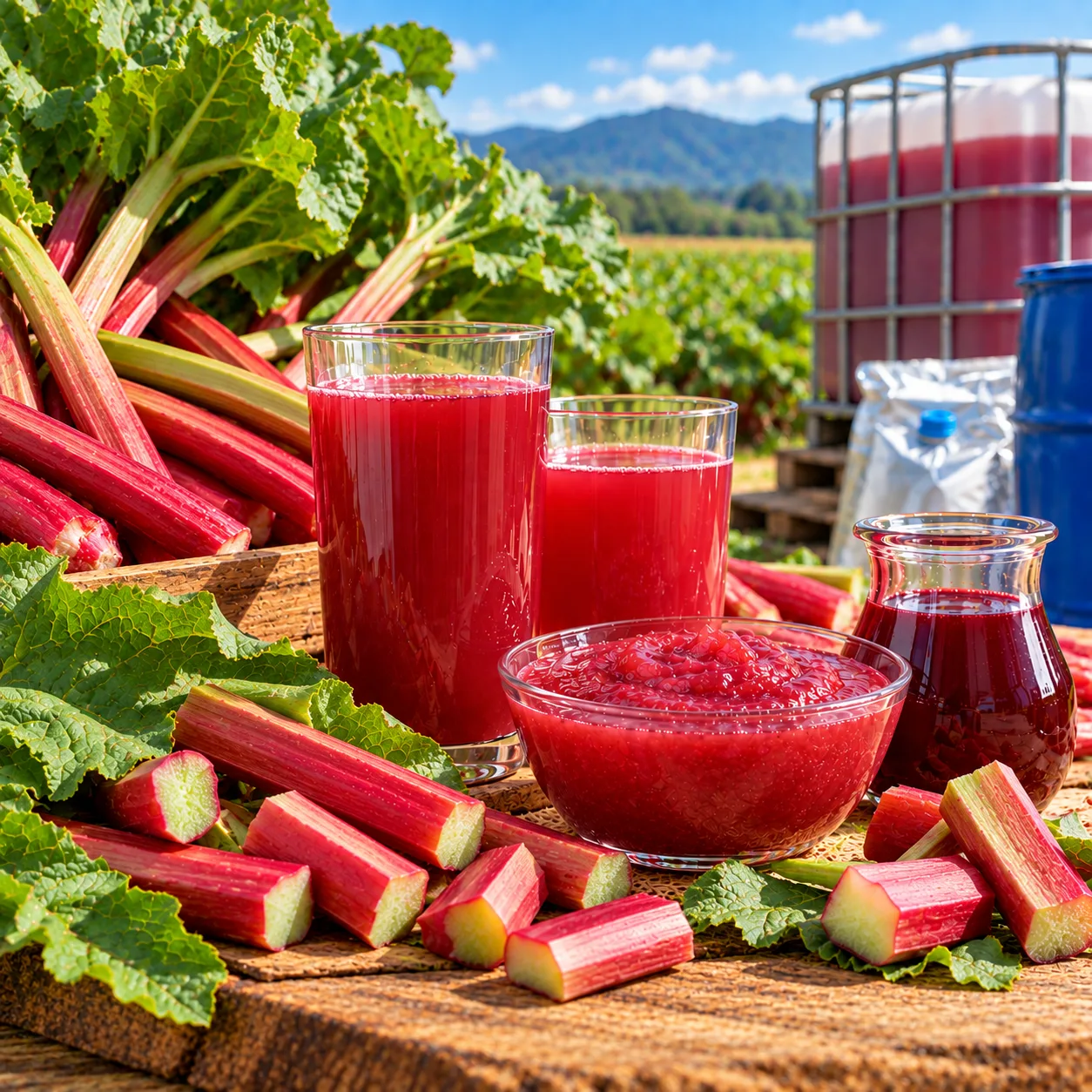
Specifications to confirm before commercial purchase.
Rhubarb concentrate is a comparatively specialized ingredient, so specifications can differ between processors. Brix, acidity, color, clarity and sensory intensity should be defined according to the intended formulation rather than assumed from the ingredient name alone.
Soluble Solids / °Brix
Commercial rhubarb juice concentrate is commonly available at approximately 65–70° Brix. The actual concentration and tolerance should be confirmed because Brix affects dilution, ingredient yield, freight efficiency and total recipe solids.
pH
Rhubarb juice is naturally acidic. pH is important when the ingredient is used in beverages, dairy products, preserves and other systems where acidity influences flavor, protein stability or the overall processing design.
Titratable Acidity
Total acidity is a major sensory parameter because rhubarb can provide considerably more tartness than many sweet fruit ingredients. Buyers should review titratable acidity together with Brix to understand sweet-to-sour balance.
Color
Rhubarb concentrate may range from pale pink or amber tones to stronger red shades depending on variety, extraction and processing. Do not assume that all rhubarb concentrates will contribute an intense red finished-product color.
Clarity & Cloud
Clarified concentrate is useful for clear drinks and alcoholic beverages, while cloudier material can contribute greater fruit identity in cordials, sauces and other applications. Specify the desired appearance before supplier comparison.
Flavor & Aroma
Approved concentrate should show characteristic clean rhubarb aroma and tart flavor without fermented, oxidized, excessively cooked or other undesirable notes. Sensory evaluation is especially important for premium beverage applications.
Specification note: Approximately 65–70° Brix is a useful commercial reference for rhubarb concentrate, but exact Brix, acidity, color, clarity and storage requirements vary. Purchase against the current supplier specification and lot-specific certificate of analysis.
Rhubarb is primarily a source of tartness and distinctive flavor.
Strong Natural Acidity
Rhubarb contributes pronounced tartness and can provide complexity beyond simple added food acid. This makes it particularly useful in products designed around a refreshing, sharp or sweet-sour flavor profile.
Low Natural Sweetness
Unlike apple, grape and many tropical fruit concentrates, rhubarb does not primarily function as a sweetening fruit ingredient. Sugar, juice concentrate or other sweeteners are normally balanced separately against its natural acidity.
Fruit Pairing
Strawberry-rhubarb is a classic pairing, but rhubarb also works effectively with raspberry, apple, pear, cherry, citrus and floral or botanical flavors. These combinations can soften its acidity while retaining its recognizable character.
Heat & Color
Cooking and storage can change both flavor freshness and natural color. Bakery, preserve and beverage manufacturers should evaluate rhubarb concentrate in the actual production process rather than judging performance only from the raw ingredient.
Major uses for rhubarb juice concentrate.
Juices, Cordials & Soft Drinks
Rhubarb concentrate is used in juice blends, cordials, lemonades, flavored waters, carbonated beverages and specialty soft drinks. It can provide a sharp flavor contrast to sweeter apple, berry and citrus components.
Alcoholic Beverages
Rhubarb is used in cider, fruit wine, mead, beer, hard seltzer, cocktail bases and botanical alcoholic beverages. Clarified concentrate can be particularly useful where manufacturers want rhubarb character without excessive haze.
Jams, Preserves & Compotes
Rhubarb concentrate can strengthen flavor and acidity in jams, fruit spreads, compotes and preserve systems, especially in strawberry-rhubarb and mixed-fruit formulations.
Bakery Fillings
Applications include pie fillings, pastry centers, Danish fillings, cakes, cereal bars and baked fruit preparations. Concentrate allows manufacturers to increase rhubarb flavor without introducing the full water volume of single-strength juice.
Confectionery
Rhubarb's tart profile works well in gummies, jellies, chews, hard candy and filled confectionery. It can be combined with strawberry, raspberry or apple and balanced with sugar or glucose systems.
Dairy & Plant-Based Products
Yogurt preparations, cultured dairy products, desserts and plant-based alternatives can use rhubarb concentrate alone or in fruit blends. Its acidity should be considered carefully when working with protein-rich formulations.
Frozen Desserts
Rhubarb concentrate can be incorporated into sorbet, ice cream, frozen yogurt, fruit bars and granita-style products. Sugar and total solids should be balanced against its naturally high tartness.
Syrups & Dessert Sauces
Commercial uses include fruit syrups, dessert sauces, toppings, coulis-style products and beverage bases where manufacturers need concentrated acidity and recognizable rhubarb character.
Savory Sauces & Chutneys
Rhubarb can provide fruit acidity in chutneys, glazes and specialty sauces paired with spices, ginger, onion, chili or sweeteners. It is especially useful in sweet-savory applications requiring more complexity than straight vinegar or citrus.
Foodservice & Premixes
Concentrate can be incorporated into commercial beverage bases, cocktail mixes, dessert preparations and fruit systems intended for restaurants, bakeries, cafés and further-processing customers.
Manage tartness, dilution and sensory balance.
Reconstitution
High-Brix concentrate can be diluted toward single-strength juice or used directly at lower dosage. Water addition should be calculated from the actual concentrate Brix and the target finished-product solids.
Sweet-Acid Balance
Small dosage changes can noticeably alter tartness. During scale-up, monitor Brix, pH and titratable acidity alongside sensory evaluation rather than adjusting the formulation by taste alone.
Heat Exposure
Concentrate can tolerate many conventional food processes, but extended heating may shift fresh rhubarb flavor toward more cooked notes. Addition point should therefore match the desired sensory profile.
Commercial formats for industrial use.
Drums
Industrial rhubarb concentrate is commonly supplied in lined drums, with aseptic or frozen formats available depending on the producer. Drum packaging is suitable for commercial beverage, bakery and food-processing operations.
Bag-in-Box
Bag-in-box formats can support development work, foodservice and lower-volume commercial production. Commercial examples include approximately 25 kg bag-in-box packs.
Larger Bulk Formats
Totes, IBCs or other large-volume systems may be available for selected supply programs. Buyers should confirm unloading equipment, storage requirements and minimum-order quantities before specifying bulk packaging.
Storage note: Rhubarb concentrate may be supplied chilled, frozen or aseptically packed depending on the supplier. Follow the individual specification for warehouse temperature, shelf life, thawing and use after opening.
Specialized crops require more sourcing planning.
Rhubarb concentrate is less commoditized than apple, grape or orange concentrate. Crop timing, available origin, color, variety and processor capacity can therefore have a greater effect on supply continuity, MOQ and pricing.
Crop Season & Availability
Rhubarb is seasonal, with European commercial processing commonly associated with spring and summer production. High-volume users should discuss annual requirements before the main processing season where possible.
Origin
Commercial juice and concentrate supply is available from European producing regions including Poland, Germany, the Netherlands and the United Kingdom. Origin can influence crop timing, variety, color and commercial availability.
Organic Supply
Organic rhubarb concentrate may be available from selected processors, but supply can be more limited than conventional material. Confirm certification, origin, available quantity and production timing early in the sourcing process.
MOQ & Lead Time
Minimum order and lead time can differ significantly between stocked material and crop-specific imported supply. Include both the immediate requirement and expected annual volume when requesting quotations.
Specify the requirement before comparing offers.
- Required °Brix and tolerance
- pH and titratable acidity
- Clarified or cloudy format
- Color and appearance requirement
- Characteristic rhubarb sensory profile
- Microbiological specification
- Conventional or organic certification
- Country of origin and processor
- Packaging format and net weight
- Frozen, chilled or aseptic storage requirement
- Initial quantity and estimated annual volume
- Delivery destination and requested timing
- Current technical specification
- Lot-specific certificate of analysis where applicable
Product availability, concentration, color, origin and packaging can vary by crop and supplier. Compare quotations against the same technical requirement and validate the selected concentrate in the actual finished-product formulation before commercial production.
Explore commercial formulation considerations.
Confectionery
Using juice concentrates in gummies, jellies, chews and other confectionery applications.
Juice ConcentratesIngredient Sourcing
Technical, documentation and sourcing considerations for controlled commercial food applications.
Juice ConcentratesFoodservice
Using concentrated fruit ingredients in beverage bases, sauces, desserts and foodservice preparations.
Questions rhubarb concentrate buyers often ask
What is bulk rhubarb juice concentrate used for?
Major commercial applications include juice drinks, cordials, alcoholic beverages, jams, preserves, bakery fillings, confectionery, yogurt preparations, frozen desserts, fruit syrups, dessert sauces, chutneys and other products requiring a distinctive tart fruit profile.
What Brix is commercial rhubarb juice concentrate?
Commercial rhubarb concentrate is commonly available around 65–70° Brix. Exact soluble-solids specifications and tolerances vary by processor, so confirm the current technical specification before formulation or purchasing.
Is rhubarb actually a fruit?
Botanically, rhubarb is a vegetable. The edible stalks are nevertheless used commercially much like fruit because of their tart flavor and their suitability for drinks, preserves, desserts, fillings and sweet applications.
Why is rhubarb so tart?
Rhubarb stalks naturally contain substantial organic acidity while containing relatively little natural sugar. This produces the sharp flavor that makes rhubarb useful in sweet-sour formulations and explains why it is frequently paired with sweeter fruits and added sugar.
What is the difference between clarified and cloudy rhubarb juice?
Clarified products have most suspended solids removed and are useful in clearer beverages and alcoholic drinks. Cloudy products retain more suspended material and can provide greater visual fruit identity in cordials and other formulations.
Is organic rhubarb juice concentrate available?
Organic rhubarb concentrate may be available depending on origin, crop and supplier. Request current organic certification and confirm the concentration, pack format, available quantity and delivery timing.
How is bulk rhubarb concentrate packaged?
Commercial packaging can include bag-in-box systems, lined drums, frozen drums, aseptic drums and other bulk formats depending on the processor. Approximately 25 kg bag-in-box and industrial drum formats are commercially available.
What information should I provide for a quote?
Provide the required Brix, clarified or cloudy format, acidity requirements, conventional or organic status, approximate initial and annual volume, packaging preference, storage capability, destination and requested delivery timing.