Peach Puree
Peach puree for commercial food and beverage manufacturing, providing ripe stone-fruit aroma, natural sweetness and acidity, smooth fruit body and attractive yellow-orange color in a versatile bulk ingredient.
Aromatic stone fruit with broad food and beverage applications.
Peach (Prunus persica) is a stone fruit related to apricot, plum, cherry and almond. The edible flesh surrounds a hard central pit and can range from pale cream to golden yellow depending on cultivar.
Commercial peaches are often classified as clingstone or freestone according to how strongly the flesh adheres to the pit. Processing programs frequently use yellow-fleshed varieties selected for good color, yield, aroma and resistance to texture loss during handling.
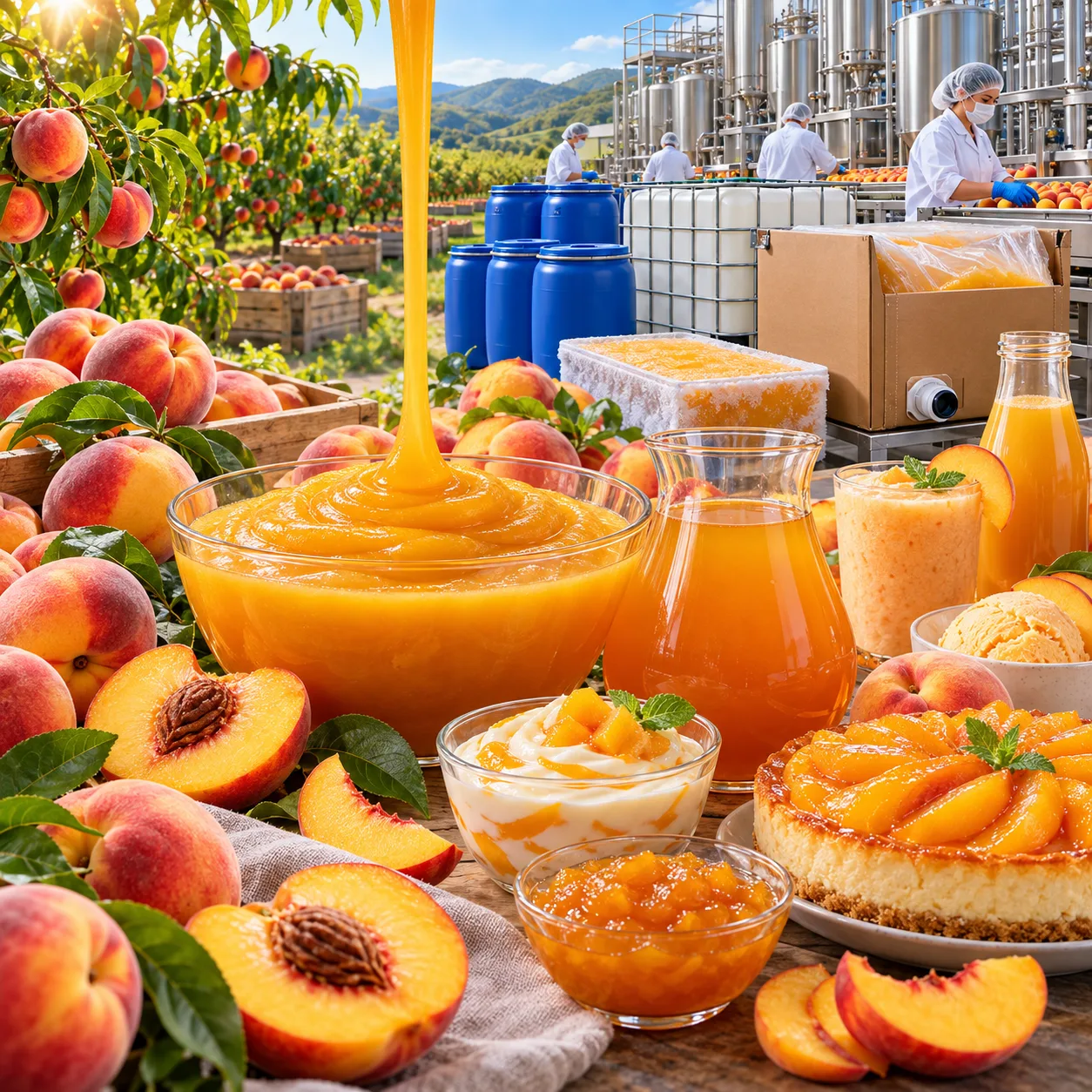
Peach puree is generally produced from sound ripe fruit that is washed, sorted, destoned, pulped and refined through a finishing screen. Ascorbic acid or citric acid may be used by some processors to help control oxidation, after which the puree is pasteurized and packed aseptically or frozen.
- Sweet, aromatic and characteristically ripe-peach flavor
- Yellow to orange-ochre natural appearance
- Smooth fruit body with suspended pulp
- Yellow clingstone and freestone types are widely processed
- Conventional and certified-organic options may be available
- Aseptic and frozen formats depend on supplier capabilities
Key parameters for commercial qualification.
Peach puree specifications vary with cultivar, fruit maturity, origin, finishing method and processing conditions. The ranges below are useful commercial references, but the supplier's approved specification and lot-specific certificate of analysis should control purchasing decisions.
Soluble Solids / °Brix
Single-strength peach puree commonly falls around 10–15 °Brix. Some commercial programs use broader limits depending on natural crop variation, so Brix should be confirmed for the exact material offered.
pH & Titratable Acidity
Commercial peach puree commonly falls approximately around pH 3.5–4.3. Titratable acidity may typically be around 0.3–0.8% as citric acid, depending on variety, maturity and processor.
Consistency / Bostwick
Flow behavior is important for pumping, dosing and filling. Representative industrial puree specifications may use Bostwick consistency to control batch-to-batch texture and processing performance.
Pulp & Particle Size
Finishing controls skin fragments, fibers and coarse fruit material. Smooth puree intended for beverages, baby foods and dairy products may require tighter screen specifications than bakery or culinary applications.
Color & Sensory Profile
Typical appearance ranges from yellow and golden orange to soft ochre. Flavor should be fresh, sweet-acidic and characteristic of ripe peach without oxidation, fermentation, scorching or caramelized notes.
Microbiological Criteria
Supplier specifications normally establish limits for total viable count, yeast, mold and relevant pathogens. Aseptic products may have very low microbiological limits based on the validated processing and filling system.
These values are indicative rather than universal. Confirm Brix, pH, titratable acidity, consistency, screen size, microbiological limits and sensory requirements against the supplier's current specification and COA.
Define single-strength, concentrated and packaging requirements.
Single Strength vs. Concentrated
Standard peach puree is generally supplied near natural single strength, while concentrated peach puree around 30–32 °Brix is also commercially available. Concentrated material reduces water and freight volume but requires different dosage and reconstitution calculations.
Aseptic vs. Frozen
Aseptic peach puree is thermally processed and filled into sterile packaging. Frozen puree depends on an uninterrupted cold chain. Storage requirements, shelf life and sensory characteristics should be reviewed for the exact product.
Packaging & Handling
Commercial formats can include approximately 20 kg bag-in-box units, larger 42 lb boxes, aseptic drums around 200–220 kg, pails and industrial totes. Actual options and minimum quantities vary by supplier.
Storage & Shelf Life
Supplier programs vary significantly. Some aseptic peach purees offer refrigerated shelf lives around 12–18 months, while other shelf-stable formats may permit limited ambient storage. Always follow product-specific guidance.
Documentation
Commercial qualification may require a technical specification, certificate of analysis, nutritional data, allergen statement, country-of-origin declaration, microbiological information, traceability records and applicable organic or food-safety certificates.
Origin & Crop
Cultivar, climate, harvest maturity and processing season influence Brix, acidity, aroma and color. Manufacturers requiring tight consistency may specify approved varieties, origins or incoming analytical tolerances.
Major uses for peach puree.
Smoothies & Beverage Bases
Peach puree provides recognizable stone-fruit flavor and body in smoothies, nectars, juice drinks, lemonades, teas and fruit beverages. It blends well with mango, apricot, apple, pear, citrus and berries.
Carbonated & Specialty Drinks
Puree can be incorporated into peach sodas, sparkling fruit drinks, mocktails and specialty beverages where a more authentic fruit profile and suspended fruit solids are desired.
Yogurt & Cultured Dairy
Peach is widely used in stirred yogurt, fruit-on-the-bottom preparations, drinkable yogurt, cultured dairy beverages and desserts, typically through a stabilized fruit preparation.
Plant-Based Products
Applications include oat, almond, coconut and soy-based yogurt alternatives, beverages and desserts where peach provides natural fruit sweetness, aroma and warm yellow-orange color.
Baby & Toddler Foods
Smooth peach puree is suited to infant fruit blends, pouches and toddler foods when the ingredient meets the required contaminant, microbiological and quality specifications for the intended program.
Bakery & Pastry Fillings
Peach puree can be used in pastries, cakes, turnovers, cookies, cereal bars and bakery fillings. Its flavor pairs well with vanilla, almond, cinnamon, cream and other stone fruits.
Jams & Fruit Preparations
Puree provides a consistent fruit base for jams, spreads, toppings and industrial fruit preparations. Soluble solids, acidity and pectin systems can then be adjusted to the required finished texture.
Confectionery & Fruit Snacks
Applications include gummies, jellies, fruit snacks, chews and fillings where peach puree contributes real-fruit flavor, color and fruit solids.
Ice Cream & Frozen Desserts
Peach puree performs well in ice cream, sorbet, frozen yogurt, fruit bars and plant-based frozen desserts where its aromatic flavor remains recognizable in creamy systems.
Sauces, Syrups & Toppings
Puree can be used in dessert sauces, beverage syrups, toppings, chutneys and selected savory-sweet sauces where fruit sweetness, acidity and body are useful.
Mead, Beer & Fermented Beverages
Peach puree can contribute fermentable sugars, aroma and fruit solids to mead, fruit beer, sour ales, kombucha-style beverages and other fermented products. Pulp should be considered in filtration planning.
Foodservice & Culinary Products
Bulk puree provides a convenient fruit base for restaurants, commissaries and industrial kitchens producing sauces, beverages, desserts and seasonal peach products without processing fresh fruit on site.
Plan around aroma, oxidation, acidity and fruit texture.
Oxidation & Browning
Peach tissue is susceptible to enzymatic and oxidative browning. Commercial processors may use deaeration, ascorbic acid, citric acid and controlled thermal processing to help protect color and flavor.
Sugar-Acid Balance
Peach flavor depends on both soluble solids and acidity. Brix and titratable acidity should be reviewed together when balancing added sugar, acidulants or other fruit ingredients.
Pulp & Texture
Suspended peach pulp contributes mouthfeel but can affect pumping, settling and filling. Screen size and consistency should therefore match the intended process equipment and finished-product texture.
Heat & Aroma
Peach aroma is relatively delicate and can be reduced by excessive heat. Finished flavor should be evaluated after the actual pasteurization, hot-fill, baking or other commercial thermal process.
Build a complete peach puree inquiry.
Define the puree
Specify single-strength or concentrated peach puree, target Brix, pH or acidity, consistency, screen size, color and microbiological requirements where applicable.
Select the supply format
Indicate whether aseptic or frozen puree is required and identify the preferred bag-in-box, pail, drum, tote or other industrial packaging format.
Provide volume & destination
Include conventional or organic status, estimated shipment or annual volume, delivery destination, required timing and whether material is needed for samples, pilot trials or continuing commercial production.
Compare suppliers against the complete requirement.
Peaches are agricultural raw materials and natural variation occurs between cultivars, crops and origins. Technical specifications, certifications, packaging, storage requirements, availability and commercial terms should be confirmed against the current supplier specification and quotation.
See how puree ingredients perform in commercial formulations.
Questions peach puree buyers often ask
What is bulk peach puree used for?
Commercial applications include smoothies and beverages, yogurt and dairy products, plant-based foods, baby foods, bakery fillings, fruit preparations, sauces, confectionery, frozen desserts, fermented beverages and foodservice products.
What Brix is typical for peach puree?
Single-strength commercial peach puree commonly falls around 10–15 °Brix, although wider supplier ranges can occur depending on cultivar, maturity and processing. Exact purchasing limits should be confirmed on the current specification and certificate of analysis.
What pH is typical for peach puree?
Commercial peach puree commonly falls approximately within pH 3.5–4.3. Titratable acidity is often expressed as citric acid and should also be reviewed when formulation balance is important.
Do peach varieties affect puree characteristics?
Yes. Yellow and white peaches, as well as clingstone and freestone types, can differ in sweetness, acidity, aroma, flesh color, texture and processing performance.
What is the difference between aseptic and frozen peach puree?
Aseptic peach puree is thermally processed and filled into sterile packaging, while frozen puree relies on controlled frozen storage. Storage requirements, shelf life and sensory characteristics vary by supplier.
Is organic peach puree available?
Organic peach puree may be available depending on crop, origin and supplier program. Buyers should request current organic certification and product-specific documentation.
What pack sizes are available?
Commercial formats may include bag-in-box systems around 20 kg or 42 lb, aseptic drums around 200–220 kg, larger drums, totes and other industrial packaging depending on supplier capabilities.
What information should I provide for a quote?
Provide the required peach puree format, conventional or organic status, approximate quantity, target Brix, pH, consistency or screen requirements where relevant, preferred processing and packaging format, destination, timing and required documentation.