Lemon Juice Concentrate
Bulk lemon juice concentrate for beverages, sauces, dressings, confectionery, bakery, frozen desserts, fermentation and other commercial applications, with conventional and organic sourcing options subject to current availability.
High natural acidity with a clean, recognizable citrus profile.
Lemon (Citrus limon) is an acidic citrus fruit valued for its juice, peel oil and distinctive fresh aroma. Commercial varieties such as Eureka and Lisbon are widely associated with juice processing, while Meyer lemon has a softer, more aromatic profile and is used in selected specialty programs.
The juice is naturally dominated by citric acid rather than sugar, giving lemon its characteristic sharp sourness. Lemon aroma comes from volatile citrus compounds that are sensitive to heat, oxygen and prolonged storage, making processing conditions particularly important where fresh lemon character is required.
Industrial lemon concentrate is produced by extracting and screening the juice, adjusting pulp as required and removing water under vacuum. Because acidity represents a substantial portion of the finished concentrate, lemon products are often traded by acid strength such as 400 GPL or 500 GPL in addition to Brix.
- 400 GPL is a widely used commercial lemon concentrate grade
- 500 GPL grades provide higher acid concentration
- Clarified, low-pulp and standard-pulp formats may be available
- Appearance commonly ranges from bright yellow to brownish yellow
- Frozen and aseptic commercial supply programs are available
- Conventional and certified organic grades may be sourced
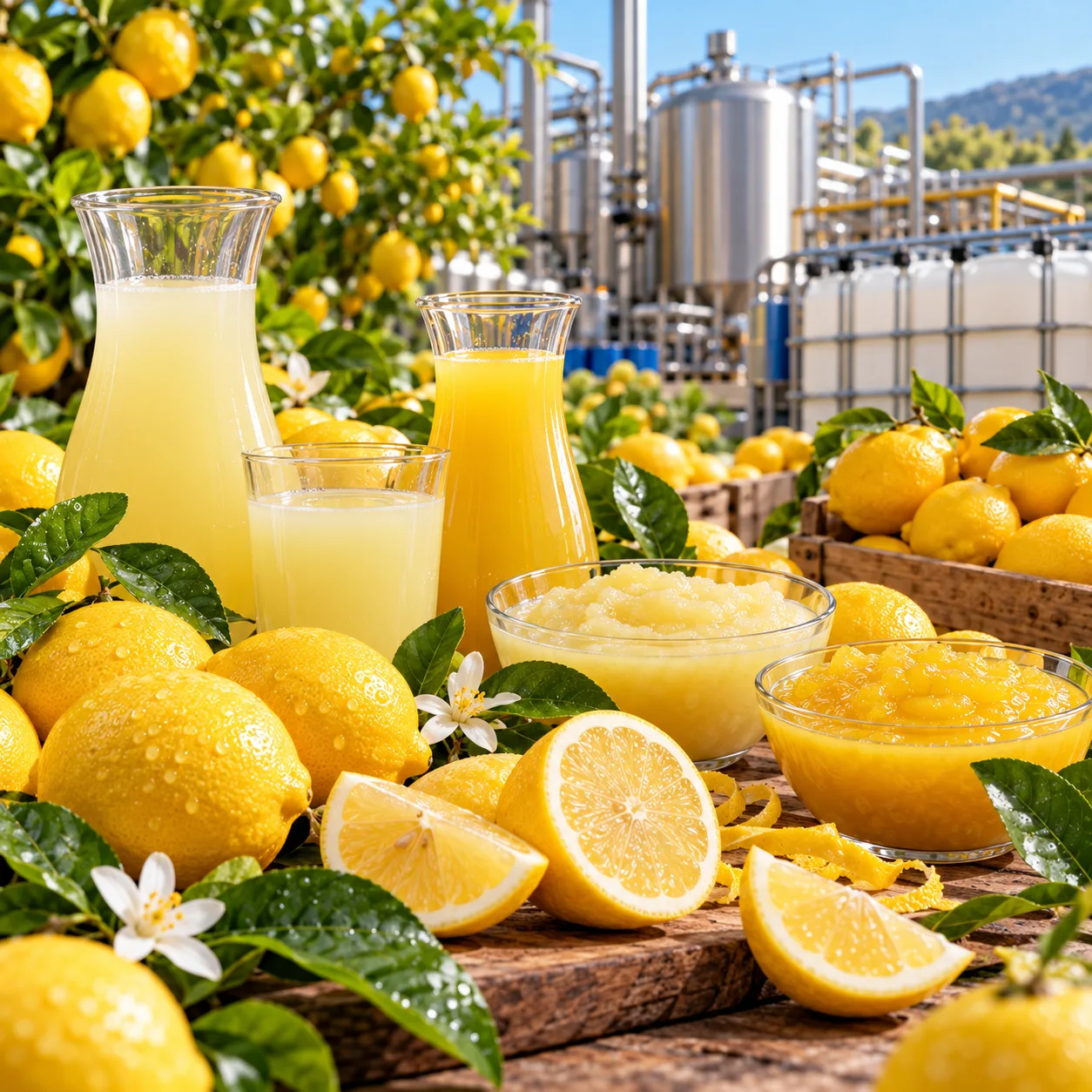
Acid strength is a major purchasing parameter.
400 GPL Lemon Concentrate
A common industrial grade, 400 GPL concentrate typically provides approximately 390–415 grams per liter of citric-acid strength. Representative commercial products are around 45–53° direct Brix with roughly 30–33% acidity as citric acid.
500 GPL Lemon Concentrate
500 GPL concentrate is more acid-dense and may be selected where higher acidity per unit weight is valuable. Representative grades fall around 47–59° Brix with approximately 37–40.5% acidity and about 490–515 GPL.
Clarified / Low-Pulp
Clarified and low-pulp concentrates are useful in soft drinks, clear beverages, syrups, confectionery and processing systems where sediment or suspended solids need to be minimized.
Standard-Pulp Concentrate
Standard grades can retain more natural pulp and cloud. Representative commercial 400 GPL products may specify pulp ranges such as approximately 6–10%, while organic low-pulp grades may specify 0–2%.
Commercial note: GPL, Brix and acidity should be reviewed together. A higher GPL grade is not simply a higher-Brix version of the same product; it provides a different acid concentration and therefore a different cost-in-use.
Typical specification points for commercial buyers.
Lemon concentrate should be purchased against a complete technical specification. Direct Brix, corrected Brix, acidity, GPL, pH, pulp and sensory profile all affect formulation performance.
Direct & Corrected °Brix
High citric-acid content affects refractometer readings, so suppliers may report both direct and acid-corrected Brix. A current 400 GPL clarified specification lists approximately 46° direct Brix with a broader supplier tolerance and corrected Brix around the low-50s.
Titratable Acidity
Acidity is one of the most important lemon specifications. Representative 400 GPL products are around 31–33% as citric acid, while 500 GPL products may approach approximately 37–40.5%.
pH
Lemon concentrate is strongly acidic. Representative 400 GPL products commonly specify pH around 1.5–2.7. Finished-product pH should be measured after full dilution and addition of all formulation ingredients.
Specific Gravity
Representative 400 GPL concentrates may have specific gravity around 1.19–1.30 depending on Brix and acid concentration. Use supplier density data when converting plant dosing between weight and volume.
Pulp & Clarity
Pulp can vary from very low levels in clarified grades to materially higher levels in standard concentrate. Specify pulp according to beverage appearance, filtration, sediment and filling requirements.
Flavor & Aroma
Commercial product should provide clean, characteristic lemon flavor and be free from fermented, scorched, heavily caramelized or otherwise objectionable notes. Aroma strength can differ by origin and processing history.
Color
Typical concentrate ranges from bright yellow to brownish yellow. Thermal exposure and oxidation can darken the ingredient during processing and storage.
Microbiological Specification
Commercial limits vary by process and packaging. Representative frozen grades may specify total plate count below 1,000 CFU/mL and yeast and mold below 100 CFU/mL, while aseptic products may use tighter limits.
Specification note: These values are representative commercial references, not universal standards. Final purchasing and formulation should use the supplier's current technical specification and lot-specific certificate of analysis.
Lemon differs from most fruits in U.S. juice-percentage calculations.
For U.S. percentage-juice calculations, the FDA table lists lemon at a minimum single-strength reference of 4.5% anhydrous citric acid by weight. The 4.5 value is an acid reference, not a °Brix value.
400 GPL Reconstitution
Representative commercial 400 GPL specifications use approximately one part concentrate to 6.1–6.2 parts water to reach the supplier's single-strength acid reference. Always use the actual supplier instructions for production.
Finished Beverage Calculations
Where a beverage makes a juice-content declaration, use the applicable FDA method and the actual concentrate specification rather than treating lemon like a conventional sweet-fruit concentrate with a simple Brix reference.
Where lemon juice concentrate is used.
Lemonade & Juice Beverages
Lemon concentrate is widely used in lemonade, juice blends and citrus drinks where it provides both authentic lemon character and a significant portion of the required acidity.
Lemon-Lime & Carbonated Drinks
Clarified or low-pulp concentrate fits carbonated soft drinks, sparkling waters, citrus sodas and mixers where a clean appearance and strong acid contribution are important.
Iced Tea & Ready-to-Drink Tea
Lemon is a major flavor partner for black and green tea. Concentrate can provide standardized acidity and citrus character in bottled tea, tea concentrates and foodservice bases.
Sports & Hydration Beverages
Lemon works well in electrolyte drinks and sports beverages because small inclusion rates can provide substantial acidity and a familiar refreshing citrus profile.
Cocktail & Mocktail Mixers
Sour mixes, cocktail syrups, lemonades, spritzers and alcohol-free mixers use lemon concentrate to provide consistent acidity without dependence on fresh-fruit preparation.
Brewing & Fermentation
Beer, hard seltzer, kombucha, cider blends and other fermented beverages can use lemon concentrate for acidity and citrus flavor. Addition timing should be tested because fermentation and heat can reduce fresh aroma.
Sauces & Dressings
Vinaigrettes, mayonnaise-based dressings, seafood sauces, dipping sauces and culinary preparations can use lemon concentrate for controlled citrus acidity and flavor.
Marinades & Savory Foods
Lemon concentrate works in meat, poultry, seafood and vegetable marinades and in prepared foods where repeatable acid strength is more practical than fresh lemon juice.
Confectionery & Gummies
Hard candy, gummies, chews and fruit snacks can use lemon concentrate for sour citrus character and fruit-derived solids. Its significant acidity should be included in pectin or gelatin system development.
Bakery & Dessert Fillings
Lemon concentrate is used in lemon curd-style fillings, cakes, icings, pastry creams, cheesecakes and glazes. Dosage should be evaluated after baking because heat can reduce fresh citrus aroma.
Ice Cream & Frozen Desserts
Sorbet, sherbet-style products, frozen yogurt, granita and frozen bars use lemon concentrate for strong acidity and citrus flavor. Sweetness and freezing point need to be balanced against the acid load.
Syrups & Foodservice Bases
Lemon concentrate can be incorporated into fountain syrups, slush bases, tea syrups and other foodservice concentrates where controlled dilution and consistent flavor are priorities.
Manage acidity first, then protect fresh citrus aroma.
Calculate Acid Contribution
A relatively small quantity of lemon concentrate can contribute substantial citric acid. Account for the concentrate before adding separate citric, malic or phosphoric acid to avoid excessive sourness or unnecessarily low pH.
Protect Volatile Aroma
Lemon's characteristic top notes are volatile and can be reduced by prolonged heating or open mixing. Minimize unnecessary heat exposure where fresh citrus aroma is a key product attribute.
Manage Dairy & Protein Systems
Highly acidic concentrate can destabilize milk and plant proteins. Dilution, addition sequence, stabilizer selection and final pH should be validated carefully in dairy beverages, desserts and protein products.
Control Browning
Lemon concentrate can darken with excessive heat, oxygen exposure or prolonged storage. Frozen storage and appropriate handling can help preserve a brighter color and fresher flavor.
For commercial scale-up, evaluate lemon concentrate in the finished formulation rather than only as an incoming ingredient. Sugar, salt, proteins, hydrocolloids, thermal processing and storage can all change perceived acidity and citrus intensity.
Compare GPL, acidity, pulp and sensory profile together.
Two products both sold as lemon juice concentrate can differ in acid strength, Brix, pulp, origin and flavor. The buying specification should therefore define the grade clearly before quotations are compared.
Information to include in a sourcing request
- Lemon concentrate grade: 400 GPL, 500 GPL or existing specification
- Required direct and/or corrected Brix
- Target acidity expressed as citric acid
- Clarified, low-pulp or standard-pulp requirement
- Critical color and flavor requirements
- Conventional or certified organic status
- Preferred origin or lemon variety if relevant
- Sample or pilot-production quantity
- Commercial order size and estimated annual volume
- Frozen, refrigerated or aseptic preference
- Preferred package size
- Required certifications and documentation
- Delivery destination and requested timing
Commercial lemon supply comes from several citrus-producing regions, and crop conditions, fruit maturity and processing season can affect acidity, aroma, price and availability. Larger annual programs may benefit from qualifying more than one approved origin.
Commercial note: Evaluate cost-in-use rather than price per pound alone. A 500 GPL concentrate may carry a higher unit price but also provides more citric-acid strength per unit weight than a 400 GPL grade.
Bulk formats for development through large-scale production.
Drums
Industrial lemon concentrate is commonly packed in lined steel drums. Current commercial programs include drum formats around 240 kg net weight, while exact fill weight depends on concentration and supplier.
Bag-in-Box & Smaller Packs
Aseptic bag-in-box and smaller frozen packages are available from some suppliers and can be useful for product development, foodservice or lower-volume manufacturing.
IBCs & Tanker Supply
Higher-volume industrial programs may be supplied in approximately 1,000 kg IBCs or tanker quantities where plant receiving, turnover and storage systems support bulk handling.
Storage Life
Representative 400 GPL commercial products specify up to approximately three years under frozen storage, while refrigerated and ambient allowances vary substantially by process and package.
Frozen storage is commonly preferred for conventional lemon concentrate because it helps limit enzymatic or oxidative quality changes. Aseptic products may permit different storage conditions, but the exact supplier specification should always control.
Approve analytical values and sensory performance together.
Certificate of Analysis
Review the lot-specific COA against the contracted specification for GPL or acidity, direct and corrected Brix, pH, microbiological limits and any pulp requirement.
Sensory Approval
Acidity alone does not define good lemon concentrate. Maintain an approved reference or agreed sensory description where fresh lemon aroma and avoidance of cooked notes are commercially important.
Ingredient & Allergen Documentation
Confirm whether the offered grade is 100% lemon juice concentrate and review any added ingredients, processing aids, preservatives or flavors where applicable.
Organic & Other Certifications
For organic projects, confirm current certification covering the exact product and supplying facility. Kosher, Halal, GMO-status, origin, traceability and recognized food-safety documentation may also be required.
See how ingredient format affects formulation.
Sauces & Glazes
Using Juice Concentrates in Sauces & Glazes: Formulation Guide
Juice ConcentratesOatmeal & Hot Cereals
Oatmeal & Hot Cereals with Juice Concentrates: Sourcing & Process Considerations
Juice ConcentratesNutrition Products
Using Juice Concentrates in Nutrition Products: Formulation Guide
Questions lemon concentrate buyers often ask
What is lemon juice concentrate?
Lemon juice concentrate is produced by extracting juice from lemons and removing a substantial portion of its water. It provides concentrated lemon acidity, citrus flavor and soluble fruit solids for commercial food and beverage manufacturing.
What does 400 GPL mean?
GPL is a commercial measure of acid concentration expressed in grams per liter. A 400 GPL lemon concentrate is generally standardized around approximately 400 grams per liter of citric-acid strength.
What is the difference between 400 GPL and 500 GPL lemon concentrate?
500 GPL concentrate has greater acid concentration. Representative 400 GPL products are around 30–33% acidity as citric acid, while 500 GPL products may be roughly 37–40.5%. Exact Brix and acidity depend on the supplier specification.
What Brix is commercial lemon concentrate?
Representative 400 GPL grades commonly fall around 45–53° direct Brix, while 500 GPL grades may fall roughly around 47–59°. Suppliers may also report acid-corrected Brix because of lemon's unusually high citric-acid concentration.
What pH is typical?
Representative commercial lemon concentrate specifications commonly fall around pH 1.5–2.7. Use the actual lot COA where pH is important to processing or finished-product formulation.
What does the FDA 4.5 reference mean for lemon juice?
For U.S. percentage-juice calculations, FDA lists 4.5% anhydrous citric acid by weight as the minimum single-strength reference for lemon. The 4.5 figure is an acid reference rather than 4.5° Brix.
What is bulk lemon juice concentrate used for?
Applications include lemonade, juice blends, carbonated beverages, tea, sports drinks, cocktail mixers, brewing, sauces, dressings, marinades, confectionery, bakery, dairy desserts, syrups and frozen desserts.
Is organic lemon juice concentrate available?
Yes. Certified organic 400 GPL lemon concentrate is commercially available from some suppliers, including low-pulp and standard-pulp grades. Request current certification for the exact product offered.
What should I include in a quote request?
Provide the required GPL or acidity, Brix specification, pulp level, quantity, annual volume, organic or conventional status, preferred origin, packaging, storage capability, destination, certifications and requested delivery timing.