Deionized Apple Juice Concentrate
High-solids apple concentrate processed to provide relatively neutral sweetness with substantially reduced apple acidity, color and flavor for commercial food and beverage formulation.
Apple-derived soluble solids with a more neutral sensory profile.
Apples naturally contain sugars, organic acids, minerals, color compounds and characteristic aroma components. Standard apple juice concentrate retains much of that recognizable apple character. Deionized apple juice concentrate is processed further after juice extraction and clarification to reduce acidity, color and flavor-producing components.
The result is a light-colored, high-Brix ingredient that retains much of the fruit's soluble carbohydrate fraction while contributing considerably less apple flavor than conventional apple juice concentrate. This makes it useful where formulators need fruit-derived sweetness and soluble solids without making apple the dominant flavor.
- Produced from sound, mature apples and clarified apple juice
- Typically concentrated to approximately 70 °Brix
- Lower acidity than conventional apple juice concentrate
- Light color and relatively neutral flavor profile
- Highly soluble and easy to incorporate into liquid formulations
- Conventional and organic programs may be available
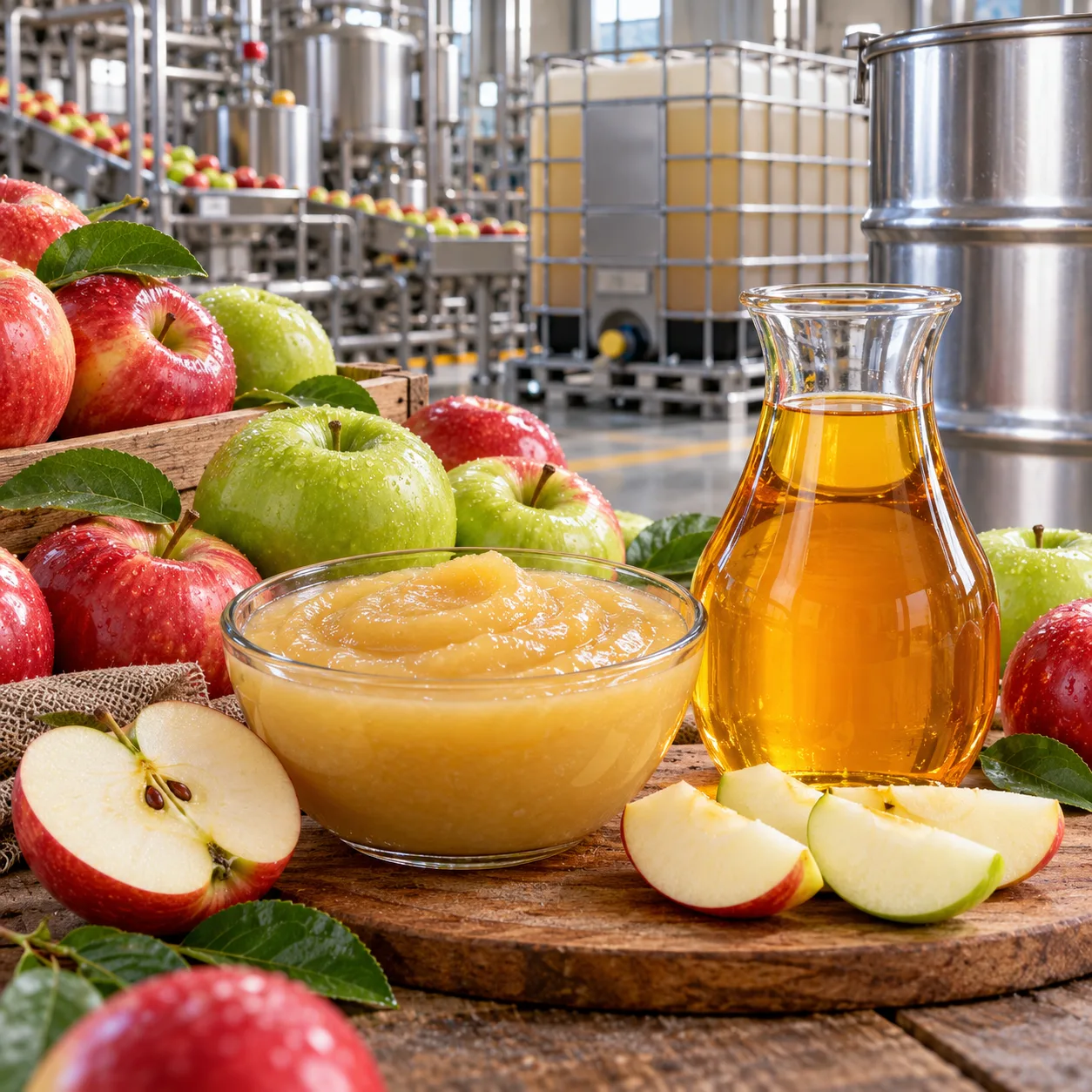
Why deionization changes the way apple concentrate functions.
The Apple Raw Material
Commercial apple juice is produced from mature apples that are normally washed, sorted, crushed and pressed. Apple variety, maturity, growing region and crop conditions influence the natural sugar-to-acid ratio, juice color and aromatic profile before processing.
For industrial concentrate production, processors generally blend and standardize incoming juice to achieve predictable characteristics before clarification and concentration.
Deionized vs. Standard Apple Concentrate
Conventional clear apple concentrate retains characteristic malic acidity, amber color and recognizable apple aroma. Deionized concentrate undergoes additional treatment that removes or reduces a substantial proportion of these components.
This produces a more neutral ingredient that can contribute sweetness and solids behind strawberry, berry, tropical, citrus, botanical, chocolate, dairy or savory flavor systems without introducing the same level of apple character.
The degree of deacidification, decolorization and flavor reduction can vary between processors. Approve the commercial product by specification and sample rather than assuming all deionized apple concentrates are identical.
Key parameters for commercial evaluation.
The following values represent common commercial reference points rather than a universal specification. Final requirements should always be based on the supplier's current specification and lot-specific Certificate of Analysis.
Physical & Chemical Characteristics
- Soluble solids commonly specified around 70–71 °Brix
- Low titratable acidity compared with standard apple concentrate
- Commercial low-acid grades may specify acidity at approximately 0.05% or below
- pH depends on deionization process and supplier specification
- High clarity when reconstituted to single-strength conditions
- Very pale color compared with normal clear apple concentrate
Quality Parameters
Industrial specifications may also establish requirements for turbidity, color transmittance, clarity, pectin, starch, alcohol, microbiological counts and contaminants relevant to apple juice processing.
Because the ingredient is often selected specifically for its neutral character, consistency of color, acidity and residual apple flavor can be as commercially important as Brix.
Brix alone does not define equivalence between suppliers. Compare acidity, color, clarity, residual flavor, microbiological criteria and processing status when qualifying alternative sources.
Why formulators select deionized apple concentrate.
Neutral Sweetness
Reduced apple flavor allows the concentrate to contribute sweetness and soluble fruit solids while leaving more room for the primary flavor system of the finished product.
Lower Acid Contribution
Deacidification reduces the amount of natural apple acidity introduced with the ingredient. This provides formulators greater control over the finished product's acid balance compared with conventional apple concentrate.
High Solids Efficiency
At approximately 70 °Brix, the concentrate supplies a large amount of soluble solids with relatively little water, supporting efficient transport, storage and formulation.
Where deionized apple concentrate is most useful.
Beverages & Juice-Based Drinks
Deionized apple concentrate can contribute soluble solids and sweetness to fruit drinks, flavored waters, tea beverages, smoothies, functional drinks and other beverage systems without adding the stronger apple flavor associated with conventional concentrate.
Its lower acid contribution can also give formulators more control when the finished beverage has its own targeted acid system.
Bakery & Cereal Products
The ingredient can be incorporated into cereal bars, breakfast products, bakery fillings, cakes, biscuits and other baked foods as a concentrated source of fruit-derived soluble solids.
Formulators should evaluate moisture, browning behavior and finished water activity together with the complete sugar system.
Confectionery & Fruit Snacks
Applications include gummies, fruit chews, bars, confectionery fillings and related products where sweetness is required without a dominant apple note.
Brix, reducing sugars, acidity and total solids should be considered together with pectin, gelatin or other gelling systems.
Fruit Preparations, Jams & Fillings
Deionized apple concentrate can provide background soluble solids in strawberry, raspberry, cherry, tropical and other fruit preparations while allowing the named fruit to remain the principal flavor.
It can also support viscosity, sweetness and solids targets in fillings, spreads and industrial fruit bases.
Dairy & Plant-Based Products
Yogurt preparations, cultured products, dairy desserts and plant-based foods can use deionized apple concentrate where a mild fruit-derived sweetening component is desired.
Protein stability, final pH and fermentation behavior should be evaluated within the complete formulation.
Sauces, Syrups & Condiments
The concentrate can contribute solids and sweetness to barbecue sauces, glazes, marinades, table sauces, syrups and other formulated products without necessarily creating a recognizable apple flavor.
Its relatively neutral profile can work alongside tomato, chili, spices, fruit, smoke flavors and savory ingredients.
Frozen Desserts
Ice cream, sorbet, frozen novelties and fruit-based frozen desserts can use deionized apple concentrate as part of the soluble-solids and sweetening system.
The contribution should be included when calculating total sugars, freezing behavior and finished-product solids.
Fermentation & Specialty Foods
Its fermentable carbohydrate content can also make deionized apple concentrate relevant to selected fermented beverages and specialty food processes where a relatively neutral carbohydrate source is useful.
Fermentation rate, residual sugar and sensory impact should be confirmed experimentally for the specific process.
Evaluate it as a functional ingredient, not simply as apple juice.
Sweetness & Solids
At approximately 70 °Brix, relatively small additions can make a meaningful contribution to finished-product soluble solids. Formulate by weight and account for the concentrate when calculating total batch solids and water addition.
Acid Balance
Because deionized concentrate contributes much less apple acidity than conventional apple concentrate, the finished product may require its own acid adjustment to achieve the desired flavor and processing target.
Color & Flavor
One of the main advantages is reduced sensory interference. Even so, residual color and flavor vary by processor, so bench evaluation should be conducted in the actual finished-product base.
Process Validation
Validate pumping, dilution, mixing, heat treatment and finished-product stability at pilot scale. High-Brix concentrate is viscous and may require controlled warming or appropriate transfer equipment depending on storage temperature.
Industrial formats and logistics.
Aseptic Drums
Deionized apple concentrate is commonly traded in industrial drums with inner barrier bags. Commercial net weights vary by supplier, with approximately 250–275 kg drum formats found in international trade.
Bulk Systems
Larger programs may be supplied in totes, IBC systems, flexitanks or other bulk configurations where available. Suitability depends on quantity, transportation route and receiving capabilities.
Storage
Refrigerated, frozen or other storage conditions may be specified depending on processing and packaging. Confirm required temperature, shelf life and post-opening handling with the individual supplier.
Define more than Brix before comparing offers.
Technical Requirements
- Target Brix range
- Maximum titratable acidity
- Required pH range where relevant
- Color transmittance specification
- Clarity and turbidity limits
- Residual flavor expectations
- Microbiological limits
- Pectin, starch or other analytical requirements
Commercial Requirements
- Conventional or certified organic grade
- Required country of origin
- Trial quantity and annual volume
- Drum, tote, flexitank or other format
- Storage capability
- Delivery destination
- Required shipment schedule
- Certification and documentation requirements
Deionized apple concentrate can vary meaningfully in residual acidity, color and sensory neutrality even when two offers have the same Brix. Compare full technical specifications and representative samples before approving an alternate source.
Information commonly requested during supplier approval.
Technical & Quality Documents
- Current product specification
- Lot-specific Certificate of Analysis
- Microbiological specification
- Ingredient and processing declaration
- Allergen statement
- GMO status where required
- Storage and shelf-life information
Commercial & Certification Documents
- Country-of-origin documentation
- Organic certification when applicable
- Food-safety certification information
- Kosher or Halal documentation when requested
- Packaging specification
- Traceability and lot identification
- Commercial quotation and delivery terms
See how juice concentrates perform in finished products.
Deionized apple concentrate sourcing questions
What is deionized apple juice concentrate?
Deionized apple juice concentrate is produced from clarified apple juice that undergoes additional processing to reduce naturally occurring acids, color and characteristic apple flavor while retaining a high concentration of soluble fruit solids. It is typically used where manufacturers want fruit-derived sweetness with less apple identity.
How is it different from standard apple juice concentrate?
Standard apple concentrate retains recognizable apple acidity, amber color and fruit flavor. Deionized concentrate is processed further to create a lighter, lower-acid and more neutral ingredient, making it more useful as a background soluble-solids component in other flavor systems.
What is the typical Brix?
Commercial deionized apple juice concentrate is commonly supplied at approximately 70 °Brix, with specifications around 70 ±1 °Brix widely used. Confirm the exact range against the supplier's current technical specification.
How low is the acidity?
Strongly deacidified commercial grades may specify titratable acidity around 0.05% or below, while other products can have different limits. The deionization process and required grade determine the final acidity, so buyers should specify a maximum acceptable value.
What is deionized apple juice concentrate used for?
Major applications include beverages, bakery and cereal products, confectionery, fruit preparations, sauces, syrups, dairy and plant-based foods, frozen desserts and other formulations requiring concentrated fruit-derived solids with relatively neutral sweetness.
Is organic deionized apple concentrate available?
Organic grades may be available depending on crop, processing capability and supplier program. Request current certification covering the actual product and production facility before purchase.
How is it packaged?
Industrial formats can include aseptic bags in drums, frozen drums, totes, IBC systems and flexitanks. Drum weights around 250–275 kg are common from some international suppliers, although packaging varies by processor and destination.
What information should I provide for a quote?
Provide the required Brix, maximum acidity, conventional or organic status, approximate quantity, packaging preference, destination, delivery timing and any requirements for color, clarity, microbiology, certification or country of origin.