Apple Puree
Versatile apple puree for baby food, beverages, dairy, bakery, fruit preparations, sauces and snacks, with conventional, organic, aseptic, frozen and concentrated formats subject to availability.
Natural fruit body, mild sweetness and broad formulation versatility.
Apple (Malus domestica) is one of the most widely processed fruits in commercial food manufacturing. Its relatively mild flavor, natural sweetness, malic acidity and familiar consumer profile allow apple puree to function both as a primary fruit ingredient and as a supporting base for other fruits.
Commercial puree is produced by washing and sorting ripe apples, milling the fruit and refining it through controlled screens before thermal processing and filling. Unlike clarified apple juice, puree retains natural pulp and suspended fruit solids that contribute body, texture and fruit-derived viscosity.
- Produced from sound, ripe apples
- Sweet-tart profile dominated by natural malic acidity
- Light cream, beige or golden appearance depending on process
- Single-strength and concentrated puree formats are available
- Aseptic and frozen processing programs may be offered
- Conventional and certified organic grades are commercially available
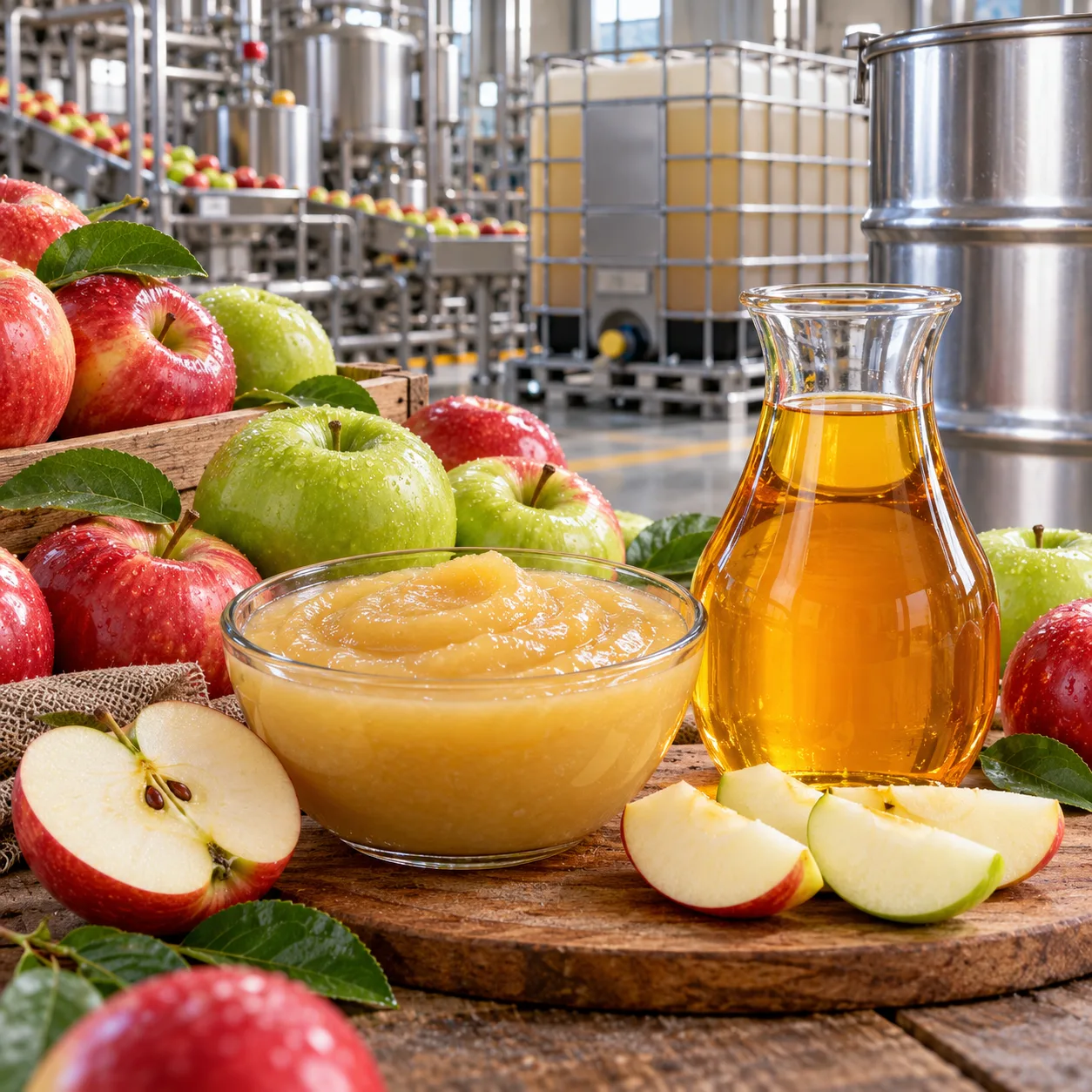
Variety and crop maturity influence sweetness, acidity and texture.
Flavor & Apple Variety
Apple varieties differ significantly in soluble solids, malic acidity, aroma and flesh texture. Sweeter cultivars can provide a rounder flavor, while more acidic apples contribute a brighter profile that can be useful in blended fruit systems.
Industrial processors may use single varieties or controlled blends depending on crop availability and the desired finished specification.
Color & Oxidation
Freshly milled apple flesh is naturally susceptible to enzymatic browning. Commercial processing therefore controls oxygen exposure, processing time and temperature to maintain an acceptable light cream-to-golden color.
Some product specifications permit ascorbic acid for color protection, while other projects may require puree without added antioxidant. This should be defined during sourcing.
Apple puree is an agricultural ingredient. Variety, crop year, growing region and maturity can affect Brix, acidity, color, aroma and consistency, so commercial approval should use agreed specification ranges.
Key specifications used in industrial apple puree purchasing.
Apple puree specifications vary according to whether the product is single strength or concentrated, the screen size, apple varieties used and the supplier's processing system.
Physical & Chemical Parameters
- Soluble solids measured as °Brix
- pH and titratable acidity
- Acidity commonly expressed as malic acid
- Screen size and particle distribution
- Bostwick consistency for concentrated puree
- Light cream to golden apple color
- Characteristic apple aroma without fermentation or heat damage
Published Commercial References
A published organic single-strength specification lists 12–14 °Brix, pH 4.0–4.7, acidity of approximately 0.20–1.00% as malic acid and a 0.5 mm screen.
Concentrated commercial products commonly fall around 30–32 °Brix, with published examples around pH 3.3–4.2. Some suppliers also offer higher-solids concentrated grades around 38 °Brix.
These values are commercial references rather than universal limits. Always use the current supplier specification and lot-specific Certificate of Analysis for purchasing and production approval.
Single-strength and concentrated apple puree solve different formulation needs.
Single-Strength Apple Puree
Single-strength puree retains the natural water-to-pulp balance of processed apples and is useful where formulators want recognizable apple body, moderate viscosity and a mild fruit base.
Commercial references commonly fall around 11.5–14 °Brix, although actual soluble solids vary with apple variety and harvest maturity.
Apple Puree Concentrate
Puree concentrate has part of its natural water removed while retaining fine pulp and fruit body. Around 30–32 °Brix is a common commercial grade, while higher-solids products such as 38 °Brix are also available from selected processors.
Concentration reduces water load and can be useful in bakery, fillings, snacks and other products where higher fruit solids are needed without excessive moisture.
Consistency, color and apple-specific quality parameters matter.
Consistency & Screen Size
Industrial puree is refined through controlled screens to achieve predictable texture. Published apple puree specifications include screen sizes around 0.4–0.8 mm depending on the intended application.
Concentrated grades may also specify Bostwick flow to improve consistency in pumping, dosing and depositing.
Patulin Control
Because patulin can be associated with damaged or mold-affected apples, apple processors and industrial buyers may include patulin testing within raw-material and finished-product quality programs.
Required limits should be defined according to destination market, customer requirements and intended use.
Microbiology
Commercial aseptic specifications commonly include limits for total plate count, yeast, mold and coliforms together with applicable pathogen requirements.
Heat-resistant molds and acid-tolerant spoilage organisms may also be included in more detailed industrial specifications.
Where apple puree is used commercially.
Baby Food & Fruit Pouches
Apple puree is a major base ingredient in infant fruit preparations, pouches and toddler foods because of its mild flavor, smooth texture and compatibility with many other fruits and vegetables.
Baby-food programs may require tighter controls for pesticide residues, patulin, microbiology, traceability and raw-material approval.
Smoothies & Beverage Bases
Apple puree provides natural body and moderate sweetness in smoothies, fruit drinks and blended beverage bases. Its relatively neutral fruit profile allows stronger ingredients such as berries, tropical fruits or vegetables to remain dominant.
Particle size, suspension and viscosity should be evaluated for drinkable products.
Yogurt & Dairy Preparations
Apple puree is used in spoonable yogurt, fruit-on-the-bottom preparations, drinking yogurt, cultured dairy desserts and plant-based alternatives.
It combines particularly well with cinnamon, vanilla, caramel, berries, pear and other familiar flavor systems.
Bakery, Cakes & Muffins
Apple puree contributes moisture, fruit solids and mild sweetness to cakes, muffins, breads, cookies and other bakery formulations.
It can also function as part of the moisture and texture system, but its contribution should be balanced against flour, fat, sugar and baking conditions.
Pie Fillings & Fruit Preparations
Applications include apple fillings, pastry layers, fruit preparations, compotes, breakfast products and dessert toppings.
Puree can be combined with apple pieces or diced fruit to provide both a continuous fruit base and visible texture.
Sauces & Savory Applications
Apple puree is used in apple sauces, glazes, chutneys, barbecue sauces, marinades and other savory formulations where fruit sweetness and malic acidity complement spices and roasted flavors.
Its mild profile makes it useful as a background fruit base without overwhelming the primary seasoning system.
Fruit Bars, Snacks & Confectionery
Apple puree can provide binding, fruit solids, sweetness and moisture in fruit bars, fruit leather, cereal products, gummies, chews and other fruit-based snacks.
Concentrated puree is especially useful where formulators need more fruit solids with less process water.
Frozen Desserts
Apple puree can be used in sorbet, frozen fruit bars, frozen yogurt and other desserts, either as the principal fruit or as a supporting base for stronger flavors.
Natural sugars and soluble solids should be included when calculating freezing-point behavior.
Formats for development through industrial production.
Bag-in-Box & Pails
Smaller aseptic or frozen formats can support pilot production, foodservice and lower-volume manufacturing. Commercial examples include approximately 20–22 kg buckets or bag-in-box style packs.
Aseptic Drums
Industrial apple puree is commonly supplied in pre-sterilized bags inside lined steel drums. Published commercial programs include approximately 210 kg organic puree drums and roughly 230–235 kg concentrated puree drums.
Larger Bulk Programs
Higher-volume users may have access to totes or other large bulk systems depending on supplier capability, puree viscosity and annual-volume commitments.
Confirm pallet configuration, storage conditions and post-opening handling before contracting supply.
Define solids, texture and antioxidant requirements before comparing offers.
Technical Requirements
- Single-strength or concentrated puree
- Required Brix and tolerance
- pH and malic-acid specification
- Screen size and particle requirements
- Bostwick or viscosity target where relevant
- Color and browning tolerance
- Patulin and microbiological requirements
- With or without added ascorbic acid
Commercial Requirements
- Conventional or certified organic grade
- Preferred apple origin or variety if required
- Trial quantity and forecast annual demand
- Bag-in-box, pail, drum or bulk preference
- Aseptic or frozen handling capability
- Delivery destination in the United States
- Required shipment schedule
- Certification and documentation requirements
Apple is widely processed, but crop characteristics and commercial availability can still vary by origin and harvest season. Recurring programs should establish an approved specification and annual-volume forecast rather than purchasing solely against Brix.
Documents commonly reviewed during supplier approval.
Technical Documentation
- Current product specification
- Lot-specific Certificate of Analysis
- Microbiological specification
- Ingredient and antioxidant declaration
- Allergen statement
- Storage and shelf-life information
- Packaging specification
Certification & Supply Documents
- Organic certificate when applicable
- Food-safety certification information
- Baby-food documentation where required
- Kosher or other requested certification
- GMO status where required
- Country-of-origin and traceability information
- Commercial quotation and delivery terms
See how apple puree can perform in finished products.
Apple puree sourcing questions
What is commercial apple puree?
Commercial apple puree is produced from sound ripe apples that are washed, milled, refined and thermally processed into a smooth fruit puree. Unlike clarified apple juice, it retains suspended pulp and natural fruit solids that provide body and texture.
What is the typical Brix of apple puree?
Single-strength commercial apple puree is commonly around 11.5–14 °Brix. Apple puree concentrate is commonly offered around 30–32 °Brix, while selected processors also supply higher-solids products around 38 °Brix.
What is the typical pH?
Published apple puree specifications commonly fall around pH 3.2–4.7. Exact pH and titratable acidity depend on apple varieties, maturity, crop conditions and processor specification.
What is apple puree concentrate?
Apple puree concentrate has part of the natural water removed while retaining fine fruit pulp. This increases fruit solids and reduces shipping volume while maintaining more body than clarified apple juice concentrate.
What is bulk apple puree used for?
Major applications include baby food, fruit pouches, smoothies, beverages, yogurt, bakery products, pie fillings, fruit preparations, sauces, fruit bars, confectionery and frozen desserts.
Why is patulin relevant to apple puree?
Patulin is a quality and food-safety parameter associated with mold-damaged apples. Industrial apple processors commonly control incoming fruit quality, and buyers may require product-specific patulin testing or documentation depending on the intended use.
Is organic apple puree available?
Yes. Certified organic apple puree and organic apple puree concentrate are commercially available from selected processors. Current organic certification should be confirmed for the exact product being quoted.
How is commercial apple puree packaged?
Commercial options can include approximately 20–22 kg smaller packs, aseptic drums around 210–235 kg and larger bulk systems. Frozen formats may also be available depending on the processor.
What information should I provide for a quote?
Provide the required single-strength or concentrated format, conventional or organic grade, approximate volume, packaging preference, destination and delivery timing, together with any specifications for Brix, pH, acidity, screen size, consistency, patulin, microbiology, antioxidant use, origin or certification.